The Palm Springs house long marketed as the “Marilyn Monroe Doll House” has sold for $2.81 million, and the sale comes with a story almost as interesting as the house itself. The buyer is local designer Violet Moran, who plans to restore the property while preserving its original design. The home was listed in February 2026 for $3.3 million and last sold in 2020 for $1.58 million.
Before going any further, one fact needs to be stated clearly and prominently, because the house’s famous nickname has misled many people over the years: Marilyn Monroe neither owned this property nor lived there permanently. She may have been an occasional visitor to the home, but she was not its owner and it was not her residence. The “Doll House” name is a marketing nickname that stuck, not a statement of ownership. With that honesty out of the way, the house itself is still a remarkable piece of desert modernism — and its sale is worth a closer look.
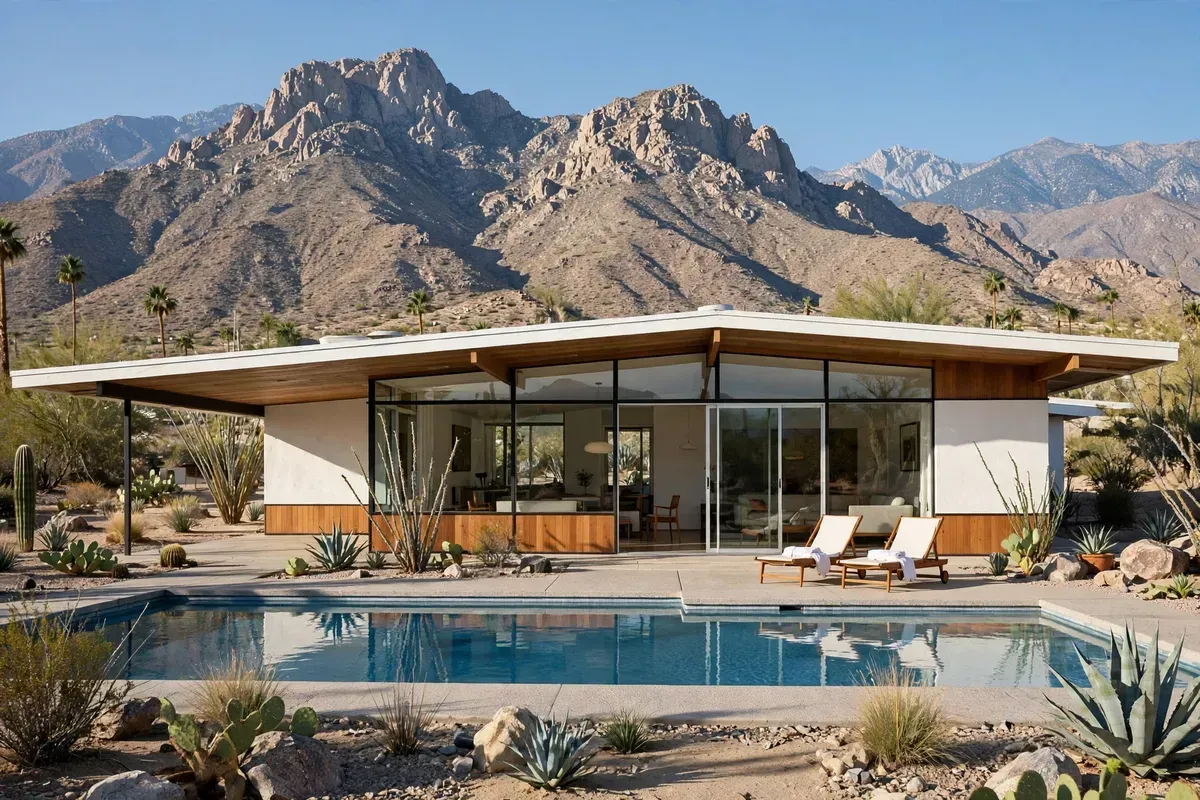
The Sale: $3.3M Ask, $2.81M Close
The numbers tell a straightforward story. Listed in February 2026 for $3.3 million, the home sold for $2.81 million — a discount of roughly $490,000 from the asking price. That is a significant gap, but it is not unusual for a characterful older home in a market where buyers weigh renovation costs carefully. The previous sale in 2020 at $1.58 million means the property still gained more than $1.2 million in value over six years, even after the discount from the 2026 asking price.
The buyer’s plans matter as much as the price. Violet Moran, a local designer, intends to restore the home while preserving its original design. That is good news for preservation-minded fans of Palm Springs architecture, because the value of this house lies precisely in its originality. A gut renovation that erased its 1961 character would destroy the very thing that makes it special.
A 1961 Desert Modernist Original
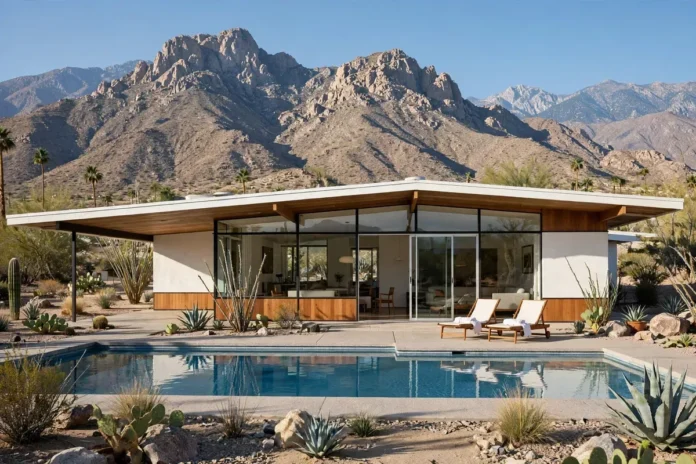
Built in 1961 in the Vista Las Palmas neighbourhood of Palm Springs, the home measures nearly 3,000 square feet with four bedrooms and four bathrooms. It was designed by Desert Modernist architect Charles Du Bois and built by the Alexander Construction Company, two names that carry real weight in Palm Springs architectural history. The Alexander company built thousands of mid-century homes across the desert, and Du Bois was among the architects who gave the city its distinctive low-slung, light-filled modernist vocabulary.
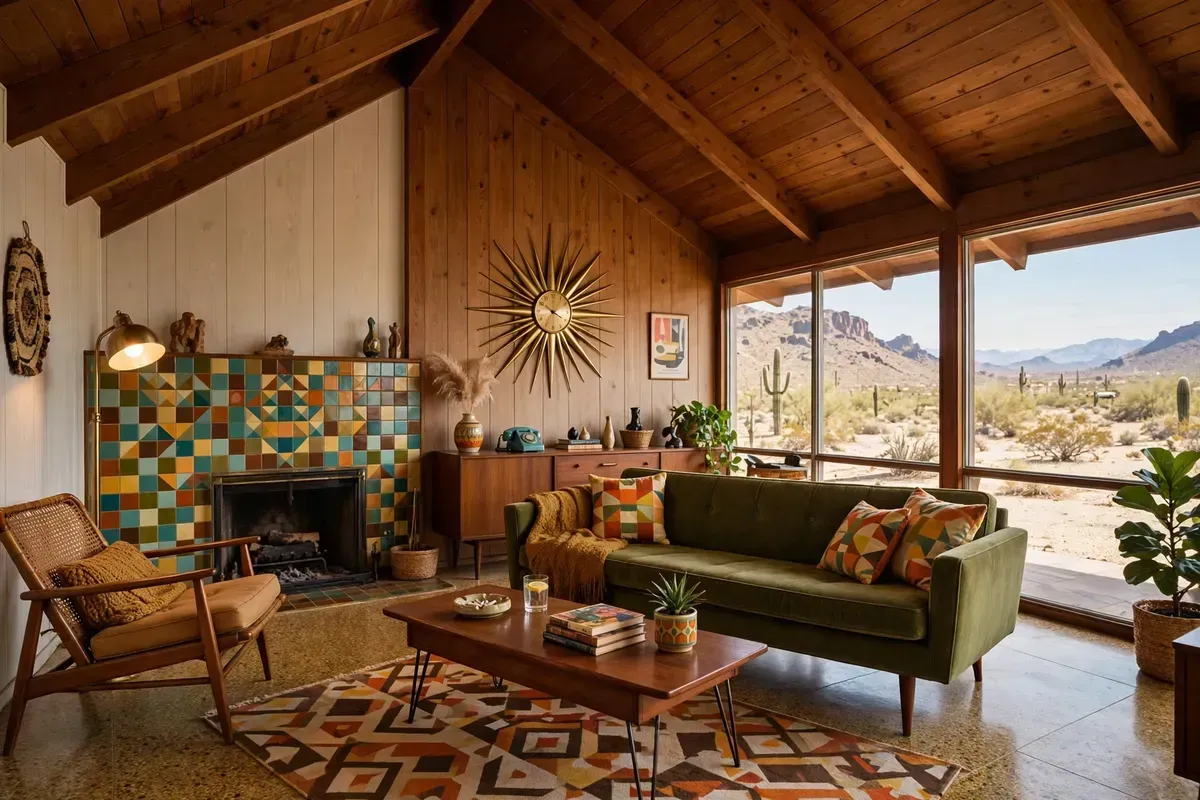
The house’s original features read like a checklist of mid-century desert style: vintage tiling, coloured vanities, a semicircular entertaining bar, and vaulted ceilings. Outside, the property offers a swimming pool, a hot tub, a fire pit, and a covered patio — the classic Palm Springs formula for indoor-outdoor living in a climate where the outdoors is usable for most of the year.
Why the “Doll House” Nickname Stuck
So how did a house Monroe never owned come to be known by her name? The answer lies in a mix of local lore, real-estate marketing, and the enduring power of Monroe’s image. Palm Springs has always traded on its Hollywood connections, and a charming mid-century home with a rumoured celebrity visitor is an easier sell than the same home without a story. Over time, the nickname hardened into something that many listings and articles repeated without the crucial qualification.
This is a pattern worth recognising. Celebrity house stories often blur the line between “owned,” “lived in,” “rented,” and “visited once.” Responsible coverage draws those lines sharply, and in this case the sharp version is: Monroe may have visited occasionally, but she did not own the home and did not live there permanently. The house’s real claim to fame is its architecture, not its guest list.
Inside the Home: Original Details Worth Saving
The features the new owner plans to preserve are exactly the ones that define the era. Vintage tiling and coloured vanities are increasingly rare survivors: many mid-century homes have had these stripped out in favour of generic white-and-grey renovations. Keeping them preserves not just a look, but a piece of design history — the moment when bathrooms were allowed to be playful and colourful rather than purely functional.
The semicircular entertaining bar is another period treasure. In 1961, the home bar was the centrepiece of desert social life, a place where hosts mixed drinks for guests arriving from the pool. Combined with vaulted ceilings that open the interior up and a covered patio that extends living space outdoors, the house captures a very specific, very Californian way of life. Restoration that honours those details will keep the home feeling like itself rather than like a new build wearing a vintage costume.
Palm Springs and the Value of Preservation
The sale also reflects something larger about Palm Springs itself. The city is one of the world’s great open-air museums of mid-century architecture, and its housing market rewards originality. Buyers increasingly pay a premium for homes whose period features survive intact, while heavily altered homes can struggle to stand out. The Doll House, with its Du Bois pedigree and Alexander construction, sits squarely in the category the market now values most.
For the neighbourhood of Vista Las Palmas, the sale is another vote of confidence. The area is known for its concentration of architect-designed homes from the desert modernism boom, and each sensitive restoration strengthens the whole district. When a local designer buys with preservation in mind, it signals that the community’s architectural heritage is being stewarded by people who understand it.
What Buyers Should Learn From This Sale
There are two lessons here for anyone interested in celebrity-adjacent property. The first is to verify the story behind the nickname. A famous name attached to a house does not always mean ownership, and the difference matters for both value and honesty. The second is that original character is an asset. The Doll House’s $2.81 million sale, up sharply from $1.58 million in 2020, was driven by its architecture and its condition, not by a celebrity connection that does not hold up to scrutiny.
For fans of Hollywood history, the house remains a beautiful example of the Palm Springs Monroe knew and visited — a city of pools, patios, and modernist lines that defined an era of American glamour. Enjoying it on those terms, without overstating Monroe’s connection to it, is the honest way to appreciate it.
Frequently Asked Questions
Did Marilyn Monroe own the Palm Springs “Doll House”?
No. Marilyn Monroe neither owned the property nor lived there permanently. She may have been an occasional visitor, but the “Doll House” name is a marketing nickname, not evidence of ownership.
How much did the Marilyn Monroe “Doll House” sell for?
The home sold for $2.81 million to local designer Violet Moran. It had been listed in February 2026 for $3.3 million and last sold in 2020 for $1.58 million.
Who designed the Palm Springs “Doll House”?
The home was designed by Desert Modernist architect Charles Du Bois and built by the Alexander Construction Company in 1961, in the Vista Las Palmas neighbourhood of Palm Springs.
What original features does the house have?
Original features include vintage tiling, coloured vanities, a semicircular entertaining bar, and vaulted ceilings, plus a pool, hot tub, fire pit, and covered patio. The buyer plans to restore the home while preserving its original design.
Final Thoughts
The Palm Springs “Doll House” is a gem of a house with a misleading nickname. Sold for $2.81 million to an owner who plans to preserve it, the 1961 Charles Du Bois design stands on its own architectural merits — nearly 3,000 square feet of desert modernism in one of the city’s most storied neighbourhoods. Monroe’s legend may have helped the house’s fame, but its future rests on something more durable: good bones, original details, and an owner who values both. For more celebrity home stories told straight, see the Selena Quintanilla house, the Rose Leslie castle, and the Aaron Paul mansion sale.