Of all the winter-prep jobs in a house, dryer vent cleaning is the one most likely to have been skipped for years — not because it is hard, but because the vent is invisible. The lint trap gets emptied (most of the time), the machine sounds fine, and the duct disappears into a wall, so the lint building up inside it never announces itself until the dryer starts taking two cycles to dry a load, the laundry room smells faintly scorched, or worse. Fire services consistently identify lint build-up in dryers and their vents as a leading cause of dryer fires, and the risk peaks exactly when the machine works hardest: winter, with its heavy loads of towels, bedding and layered clothing, and its closed windows keeping heat and humidity in. An hour with a brush kit before the season is the whole fix.

The Signs a Vent Is Already Clogged
A vent rarely blocks overnight; airflow narrows gradually, and the dryer reports it in plain language for anyone listening. Clothes — especially heavy items like towels and jeans — come out damp after a full cycle, or need a second cycle that they never used to need. The top of the dryer and the laundry room itself get unusually hot during a run. There is a faint burning or musty smell while the machine works. Lint appears around the vent opening outside, or — the clearest test — the flap on the exterior vent hood barely opens, or does not open at all, while the dryer is running, because the exhaust air is too weak to lift it. Any one of these signs means cleaning is overdue; two or more means it should happen this week, and the dryer should be used sparingly, and never left running unattended, until it is done.
What a Proper Clean Actually Involves
Cleaning the lint trap is not vent cleaning; the trap catches only part of the lint, and the rest drifts into the duct run. A proper job works the full path from the machine to the outside air. Start by unplugging the dryer — and for a gas dryer, take extra care with the supply line, moving the machine only as far as the line comfortably allows or having a professional handle it. Pull the dryer away from the wall, disconnect the duct from the back of the machine, and vacuum out the lint from the dryer’s outlet and the duct opening with a crevice tool.
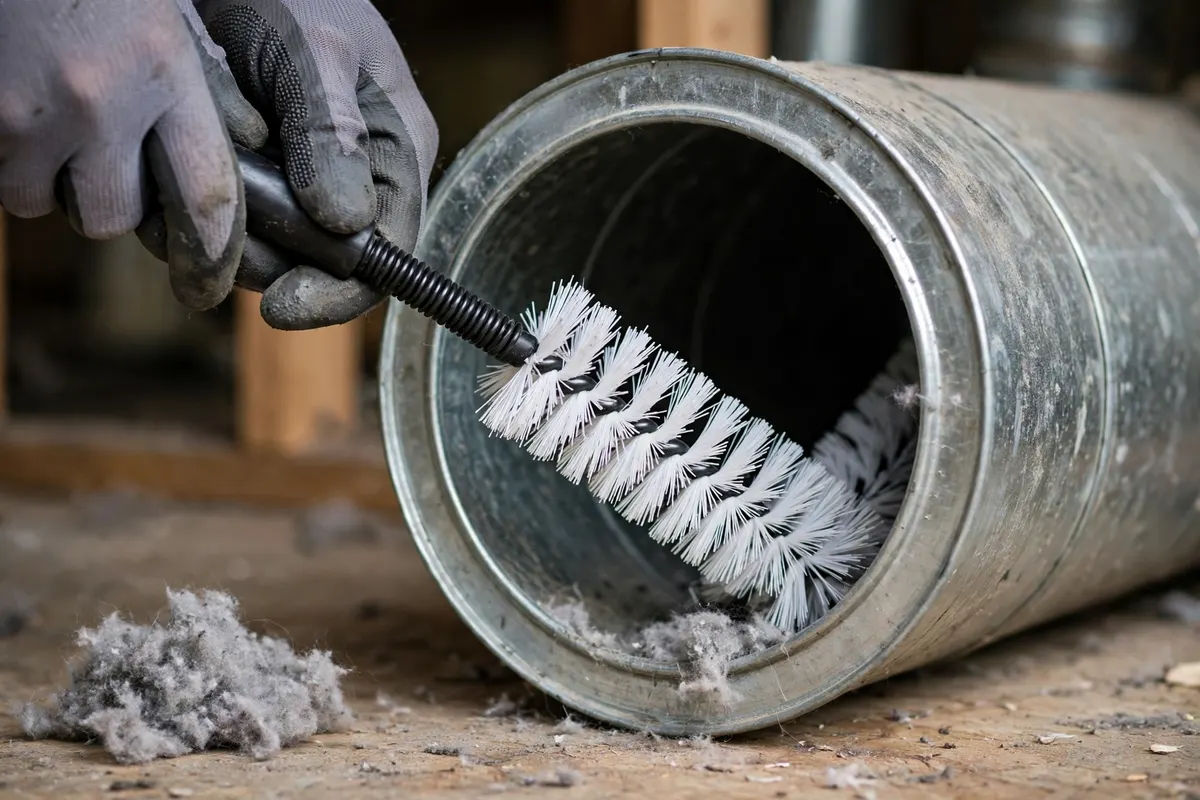
The duct itself is cleaned with a vent brush kit: a round bristle brush on flexible rods that extend section by section to reach the length of the run, turned by hand or with a drill at low speed, worked in and out along the whole duct so the brush scrubs the walls rather than just poking a hole through the blockage. Work from both ends where possible, and remove the loosened lint rather than pushing it deeper in. Finish outside: take the cover or flap off the exterior hood, clear the lint packed behind it (a very common choke point), and confirm the flap swings freely. Reconnect everything, push the dryer back without crushing the duct, plug in, and run the machine empty on a heat cycle while checking outside that the flap now lifts fully on a strong stream of warm air.
The Duct Itself: Where Many Houses Go Wrong
Cleaning reveals what the duct is made of, and in a lot of houses the answer is part of the problem. The ribbed white plastic or thin foil accordion hose sold everywhere traps lint in every corrugation, sags into lint-collecting dips, and the plastic versions are a poor choice anywhere near a heat appliance. The better standard, and what building codes in many places require, is smooth-walled rigid metal duct for the main run, with a short section of semi-rigid metal transition hose between the dryer and the wall. Smooth walls shed lint instead of catching it, and metal does not add fuel to a hot spot.
While replacing or reconnecting, keep three rules: keep the run as short and straight as the room allows, since every bend slows airflow and collects lint; join sections with foil tape rather than screws, because screw ends poking into the duct act as lint hooks; and never vent a dryer into an attic, crawl space, garage or anywhere indoors — the moisture load alone causes mould and rot, and for a gas dryer the exhaust is a genuine safety hazard that must go outside. A dryer that vents correctly and still dries slowly after a thorough clean may have an internal lint build-up or a failing element, which is a service call rather than more brushing.
The Habit Layer: Keeping It Clear Between Deep Cleans
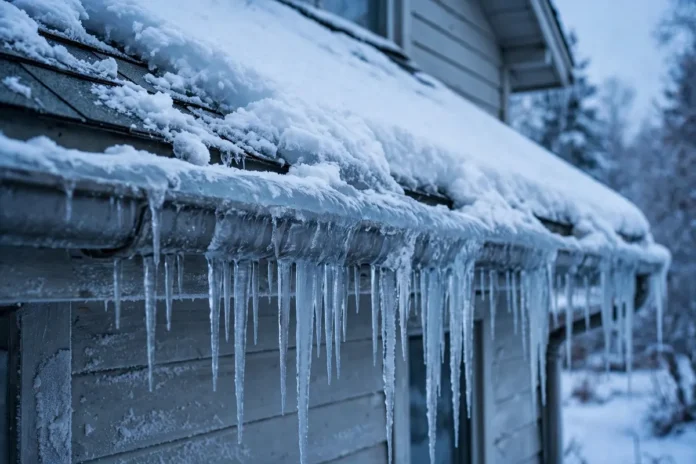
The annual clean is the anchor, but the weekly habits decide how fast the duct loads up again. Empty the lint trap after every single load — a clogged trap screen alone strangles airflow — and wash the screen with water and a soft brush every few months, since dryer-sheet residue builds an invisible film that blocks it; it is clean when water runs through the mesh instead of beading on it. Vacuum behind and under the dryer a few times a year, and check the exterior flap whenever passing it, the way the checks in this guide to test smoke and CO alarms turn a rare inspection into a routine. And treat the dryer like the heat appliance it is: run it when someone is home and awake, not overnight and not while the house is empty — the same discipline recommended for cooking fires in this guide to kitchen fire safety — and keep the area around it clear of the laundry baskets, cleaning bottles and stored clutter that accumulate in utility spaces. Winter adds one more check: snow and ice can block a low exterior vent hood, so after heavy snow, confirm the flap is clear and moving — a blocked hood reproduces every symptom of a clogged duct. It belongs on the same seasonal round as the jobs in this furnace maintenance checklist, because both appliances carry the house through the cold months.
Frequently Asked Questions
How often should a dryer vent be cleaned?
At least once a year for a typical household, and more often — every six months — for large households, heavy towel and bedding loads, or long duct runs with several bends. The lint trap, by contrast, needs emptying after every load.
What are the warning signs of a clogged dryer vent?
Loads taking two cycles to dry, the dryer and laundry room getting unusually hot, a faint burning smell during a run, lint collecting around the outdoor vent, and the exterior flap failing to open fully while the dryer runs. Any of these means cleaning is overdue.
Can dryer vent cleaning be done without professional help?
Usually yes, for a standard short run: unplug the dryer, disconnect the duct, work a brush kit through the full length, clean the exterior hood, and test the airflow afterwards. Long, hidden or complicated runs — and any gas dryer that must be moved far — are sensible jobs to hand to a professional.
What is the best type of dryer duct?
Smooth-walled rigid metal duct for the main run, with a short semi-rigid metal transition piece behind the dryer. Avoid plastic and thin foil accordion hose: their ribs trap lint, they sag, and they are the wrong material next to a heat appliance. Join metal sections with foil tape, not screws.
Is it safe to run the dryer overnight or while out?
No. A dryer is a heat appliance with a known lint-fire risk, and the conservative rule used for cooking appliances applies: run it while someone is home and awake, so a smell, a noise or an alarm gets noticed immediately. It costs nothing and removes the worst-case scenario.
Why does the exterior vent flap matter?
The flap is both a diagnostic and a seal. While the dryer runs it should lift fully on the exhaust air — if it barely moves, airflow is weak and the duct needs cleaning. At rest it should close flat to keep out weather, birds and rodents, which can block a vent from outside.