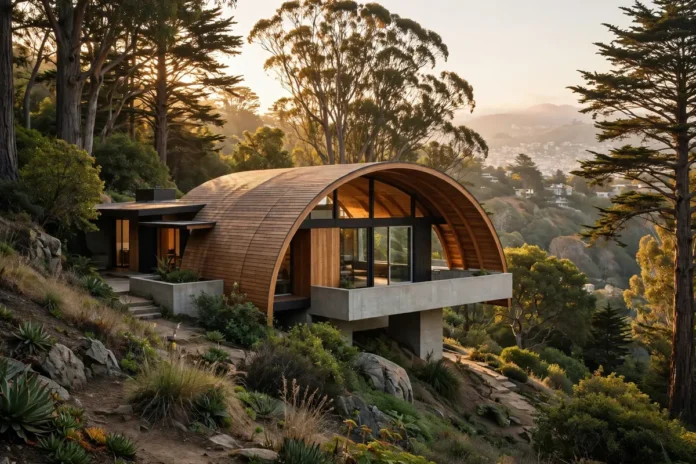
Interior designer Ken Fulk has sold the San Francisco home he owned for sixteen years — and the market did not make him wait. The “Tree House,” a mid-century landmark in Clarendon Heights, closed on October 28, 2026, for $9.995 million, roughly $2.1 million above its $7.9 million asking price. It had been on the market for less than two weeks.
For a designer whose work defines other people’s houses — Fulk is one of the most sought-after interior designers in America, known for layered, theatrical interiors for tech and celebrity clients — his own home was something else entirely: a preserved piece of Bay Area modernism, held with unusual restraint. The result of the sale suggests buyers agreed it was special.
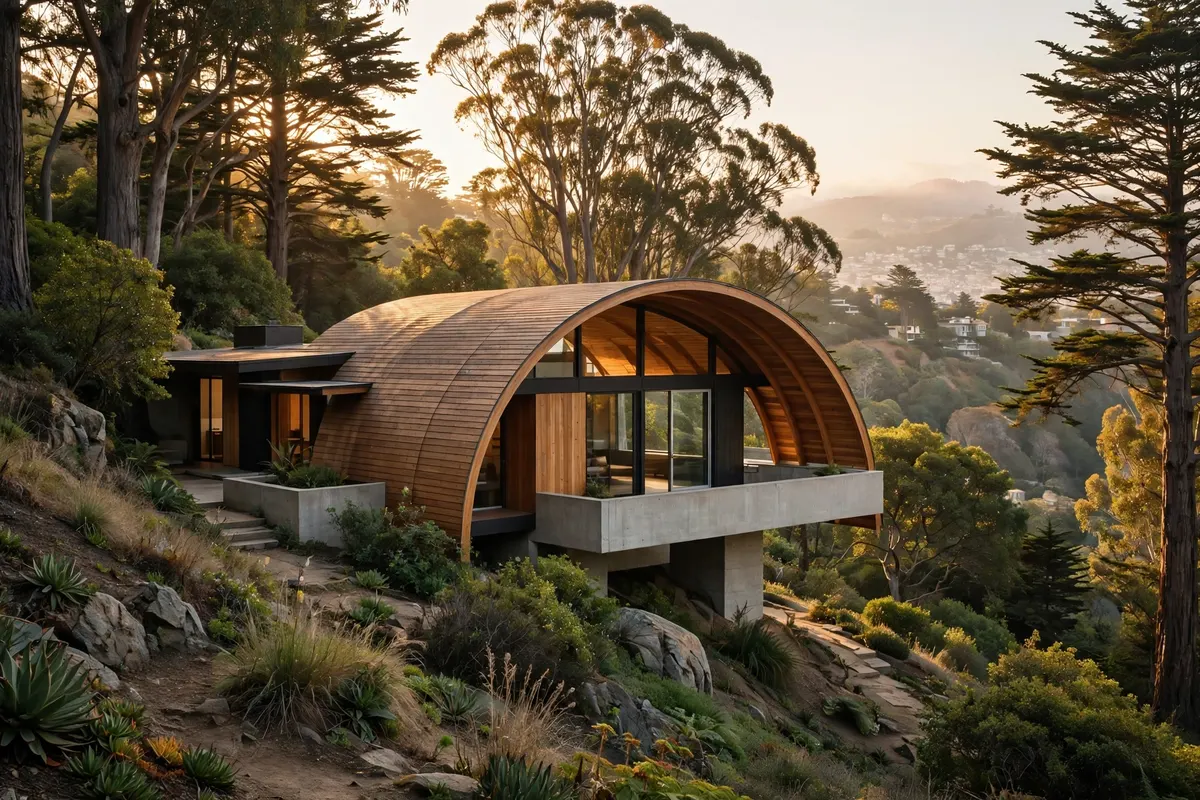
A 1959 Landmark: The Duncan House
The house was commissioned in 1959 by psychiatrist Cloyce Duncan and designed by Charles Warren Callister, a significant figure in Bay Area modernism. Completed in 1963, it became known as the Duncan House, and later — for the way it sits in its canopy of trees — as the Tree House.
Callister’s architecture is the story here as much as any owner. The design belongs to the woodsy, craft-driven strain of California modernism: natural materials, sweeping rooflines and rooms organised around views and greenery rather than around a street-facing façade. Houses like this survive in San Francisco in small numbers, and genuinely intact examples almost never come to market. At 3,200 square feet, with three bedrooms and three and a half bathrooms, it is compact by modern luxury standards — its value lies in the architecture, not the square footage.
Callister and the Bay Area Tradition
Callister belonged to the generation of Bay Area architects who shaped a distinctly regional modernism — houses built from wood and glass, planned around trees, slopes and views, and deliberately informal compared with the steel-and-stucco modernism of Southern California. The Duncan House is a textbook example of that tradition: its drama comes from its roofline, its materials and its setting rather than from size or ornament. That is also why its preservation matters to more than its owners. Every intact house of this period that survives raises the visibility of the rest, and the Tree House sale — widely reported precisely because the house is architecturally significant — will likely send a few more buyers looking for the remaining examples.
Sixteen Years, One Designer, Second Household
Fulk and his husband, classical pianist Kurt Wootton, bought the house in December 2010 for about $1.9 million; it had been listed that September at $2.3 million. Remarkably, they were only the second household ever to occupy it — the Duncan family had held it from its completion in 1963 until the 2010 sale.
That continuity is rare anywhere and almost unheard of in San Francisco. Two households across more than six decades means the house was never subjected to the cycle of gut renovations that has erased so many mid-century interiors. For readers interested in how this kind of layered, texture-first restraint looks when it is applied to decorating rather than architecture, our guide to Scandinavian Christmas decor ideas covers a similarly disciplined approach to natural materials.
The Sale: $2.1 Million Over Ask in Under Two Weeks
The Tree House was listed in mid-October 2026 at $7.9 million, with Neil Bassi of Sotheby’s International Realty as the listing agent. It sold in under two weeks and closed on October 28 at $9.995 million — about 26.5 percent over the asking price.
An over-ask result of that size usually signals one of two things: a deliberately conservative list price, or several buyers competing for something that cannot be replicated. Here, the second explanation fits better. There is no second Callister Tree House to bid on instead, and San Francisco’s supply of architecturally significant mid-century homes is fixed. When one comes up in preserved condition, the bidding reflects it. The buyer has not been publicly identified.
What the Price Gain Does and Does Not Mean
Set against the roughly $1.9 million paid in 2010, the $9.995 million result looks like an enormous gain, and the raw appreciation is real. But any gain figure has to be framed honestly: it is a gain before renovation and transaction costs. Fulk and Wootton owned the house for sixteen years; maintaining and restoring a 1960s wooden house on a wooded hillside is not cheap, and the costs of buying, holding and selling all come off the headline number. Designers also tend to invest in their own homes at a level most owners do not, and none of those figures are public.
What can be said is that architecturally important houses, kept intact, have held their value exceptionally well in San Francisco — a pattern very different from the market for large new-build mansions. The design world will also note the timing: the sale lands just as seasonal interiors coverage returns to warm woods and layered light, themes running through our Christmas kitchen decor ideas and layered lighting ideas guides.
Next Stop: Nob Hill
Fulk and Wootton are reported to be moving to Nob Hill, one of San Francisco’s oldest and grandest neighbourhoods — about as different in character from a wooded Clarendon Heights hillside as the city offers. What a designer of Fulk’s reputation does with a Nob Hill interior will be watched closely by the design press.
The Tree House, meanwhile, begins its third household in sixty-three years. If its history is any guide, the new owner has bought something that tends to be kept.
Frequently Asked Questions
How much did Ken Fulk’s Tree House sell for?
It sold for $9.995 million, and the sale closed on October 28, 2026. That was about $2.1 million — roughly 26.5 percent — above the $7.9 million asking price, after less than two weeks on the market.
Where is the Tree House?
It is in Clarendon Heights, San Francisco. No street address is published here.
Who designed the house?
It was designed by Bay Area architect Charles Warren Callister. Commissioned in 1959 by psychiatrist Cloyce Duncan and completed in 1963, it was originally known as the Duncan House.
How long did Ken Fulk own it?
Fulk and his husband, Kurt Wootton, bought the house in December 2010 for about $1.9 million and lived there for sixteen years. They were only the second household to occupy the house since 1963.
How big is the house?
It is 3,200 square feet with three bedrooms and three and a half bathrooms — modest in size for its price, which reflects the architectural significance of the house rather than its floor area.
Who bought the Tree House?
The buyer has not been publicly identified. The listing agent was Neil Bassi of Sotheby’s International Realty. Fulk and Wootton are reported to be moving to Nob Hill.