Closing costs are the fees and charges a buyer pays to complete a home purchase, on top of the down payment. They surprise many first-time buyers because they are itemised across several pages and split between the lender, the title company, the insurer and the tax authority. This guide explains the commonly cited range, each major fee and who charges it, the difference between the Loan Estimate and the Closing Disclosure, and how buyers reduce the final bill — including seller concessions and no-closing-cost trade-offs. Anyone who has been through mortgage pre-approval has seen an early version of these numbers; closing is where they become final.

How Much Are Closing Costs? The Commonly Cited Range
Closing costs are commonly cited as running between 2% and 5% of the purchase price. That range is a rule of thumb, not a tariff: the actual total depends on the state, local taxes and insurance, the lender, and how many prepaid items are collected at closing.
As a hypothetical example: on a $400,000 purchase, a 2% total would be $8,000 and a 5% total would be $20,000. Two buyers purchasing identical houses in different states can land far apart inside that range, because taxes, title charges and escrow requirements differ by location. The only figure that matters for a specific purchase is the one on the buyer’s own Closing Disclosure.
Lender Fees
Charged by the mortgage lender for making and processing the loan:
- Origination fee — the lender’s charge for originating the loan, sometimes flat, sometimes a percentage of the loan
- Application and processing fees — administrative charges for handling the file
- Underwriting fee — for the final review that approves the loan
- Credit report fee — the cost of the buyer’s credit reports
- Discount points — optional prepaid interest that buys a lower rate; one point equals 1% of the loan amount
- Appraisal fee — paid to a third-party appraiser but usually collected through the lender; the home appraisal explained guide covers the valuation itself
Some of these charges are negotiable, and origination charges vary widely between lenders — one reason comparing Loan Estimates from more than one lender is worthwhile.
Title, Escrow and Third-Party Fees
A second group pays for the legal transfer of the property:
- Title search and insurance — the search confirms the seller can transfer ownership free of undisclosed claims; the lender’s title policy is required, and an owner’s policy is optional protection for the buyer
- Escrow or closing fee — paid to the escrow company, title company or attorney who runs the closing
- Attorney fees — in states where an attorney conducts the closing
- Recording fees — charged by the local government to record the deed and mortgage
- Transfer taxes — levied by some states and cities on the transfer of property
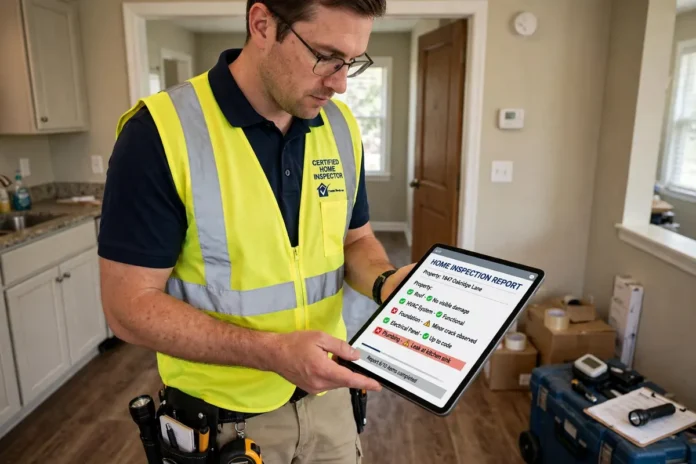
- Survey and inspection fees — where a survey or specific inspections are required
Which of these apply, and their size, depends heavily on the state and county.

Prepaid Items and Escrow Reserves
Not every dollar at closing is a fee. A large share is the buyer’s own future costs collected in advance:
- Prepaid interest — interest from the closing date to the end of that month
- Homeowner’s insurance premium — often the first full year, paid up front
- Property taxes — the portion covering the period around closing, split with the seller
- Escrow reserves — a cushion of a few months of taxes and insurance seeding the escrow account that pays those bills
Prepaids and reserves are not lender profit, but they raise the cash needed at closing, so they belong in the buyer’s budget from the start.
Loan Estimate vs Closing Disclosure: Compare Them Line by Line
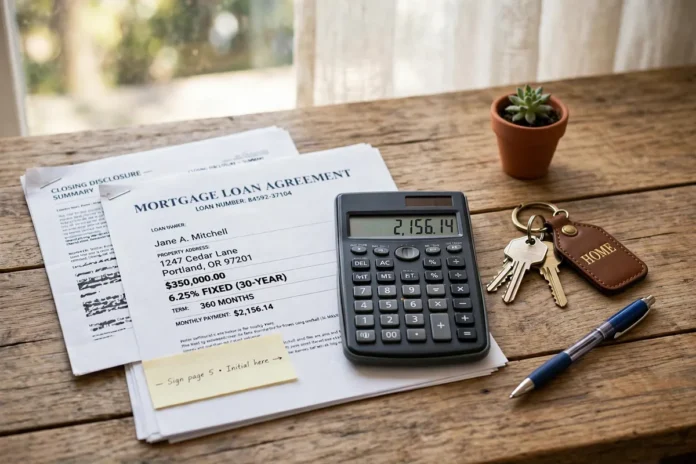
Two standard documents frame the process. The Loan Estimate, issued within three business days of application, is the lender’s good-faith estimate of the loan terms and closing costs. The Closing Disclosure, delivered at least three business days before closing, states the final figures.
Comparing the two line by line is one of the highest-value checks a buyer can make. Some charges — the lender’s own fees, recording charges, and services the buyer was not allowed to shop for — cannot increase beyond tolerance limits. Others, such as prepaid interest and insurance premiums, can change because they depend on the closing date and the policy chosen. Any fee that appears on the Closing Disclosure but not on the Loan Estimate deserves a question before signing.
Who Pays What — and Seller Concessions
By default, the buyer pays the costs of their loan and their share of the transaction charges, while the seller pays their own agent-related and transfer costs — subject to local custom. In some markets the seller customarily pays for the owner’s title policy. The signed contract, not habit, is what counts.
Buyers can also ask for seller concessions, where the seller pays a set amount toward the buyer’s closing costs. Concessions are negotiated in the offer, are capped by the loan programme, and trade a slightly higher price for less cash needed at closing. In a slower market they are easier to win; in a competitive one, asking may weaken the offer.
No-Closing-Cost Loans: The Trade-Off
A “no-closing-cost” loan does not make the costs disappear: the lender pays them and recovers the money through a higher interest rate, or adds them to the loan balance.
As a hypothetical example: a lender offers one loan with $9,000 of closing costs, and a second loan with nothing charged at closing but a rate 0.25 percentage points higher. On a $360,000 balance, that extra 0.25% is about $900 a year in additional interest at the outset — so the $9,000 saved is handed back in roughly a decade, and the loan costs more if kept beyond that point. The no-cost option suits buyers who expect to move or refinance within a few years, and penalises those who stay for decades. Always run the break-even on the buyer’s own two Loan Estimates.
Practical Ways to Lower the Bill
- Compare lenders — get Loan Estimates from several; origination charges are the biggest variable
- Shop the shoppable services — the Loan Estimate marks which services the buyer may choose, and prices differ
- Ask for waivers or credits — lenders may drop fees, especially when shown a competing estimate
- Negotiate seller concessions — build them into the offer where the market allows
- Time the closing — closing late in the month reduces the prepaid interest collected
- Check assistance programmes — some first-time buyer and local programmes offset part of the costs
- Question every new line — any charge that was not on the estimate should be explained before signing
Frequently Asked Questions
How much are closing costs on a house?
Closing costs are commonly cited as 2% to 5% of the purchase price. On a hypothetical $400,000 purchase that would be $8,000 to $20,000, but the true figure depends on the state, lender and prepaid items, and appears on the Closing Disclosure.
Who pays closing costs, the buyer or the seller?
The buyer pays most closing costs by default, including all loan-related fees. Sellers pay their own costs and, in some markets, items such as the owner’s title policy by custom. The purchase contract and any negotiated concessions can shift specific amounts.
Are closing costs the same as a down payment?
No. The down payment is the buyer’s equity in the home; closing costs are the fees, taxes and prepaid items charged to complete the purchase. A buyer needs cash for both.
What is the difference between a Loan Estimate and a Closing Disclosure?
The Loan Estimate is the lender’s early, good-faith estimate of loan terms and costs, issued after application. The Closing Disclosure gives the final figures and must be delivered at least three business days before closing. Buyers should compare them line by line.
Can closing costs be negotiated?
Some can. Lender fees vary between lenders and can be waived or offset with lender credits; shoppable services can be priced around; and seller concessions can be negotiated into the offer. Government charges such as recording fees and transfer taxes cannot.
Is a no-closing-cost loan a good deal?
It depends on how long the loan is kept: the lender recovers the costs through a higher rate, so the option favours buyers who expect to sell or refinance within a few years. Run the break-even on both Loan Estimates before deciding.
This article is general information, not financial advice.