
The bathroom is where winter is felt most literally: bare feet on a cold floor at 6 a.m., a mirror fogged to uselessness, a room that seems to shed its heat the moment the shower stops. It is also the room least often decorated, because everything in it has to survive steam, splashes and daily hard use. Cozy winter bathroom ideas therefore work differently from living-room cosiness. The warmth comes from thick textiles that can be washed, light that flatters instead of glaring, small rituals made comfortable — and it only counts as cosy if the steam and moisture are being managed at the same time, because a warm bathroom that grows mould is not a success story. This guide builds both halves together: the comfort layer, and the ventilation and care that let it survive the season.

Textiles Do the Heavy Lifting
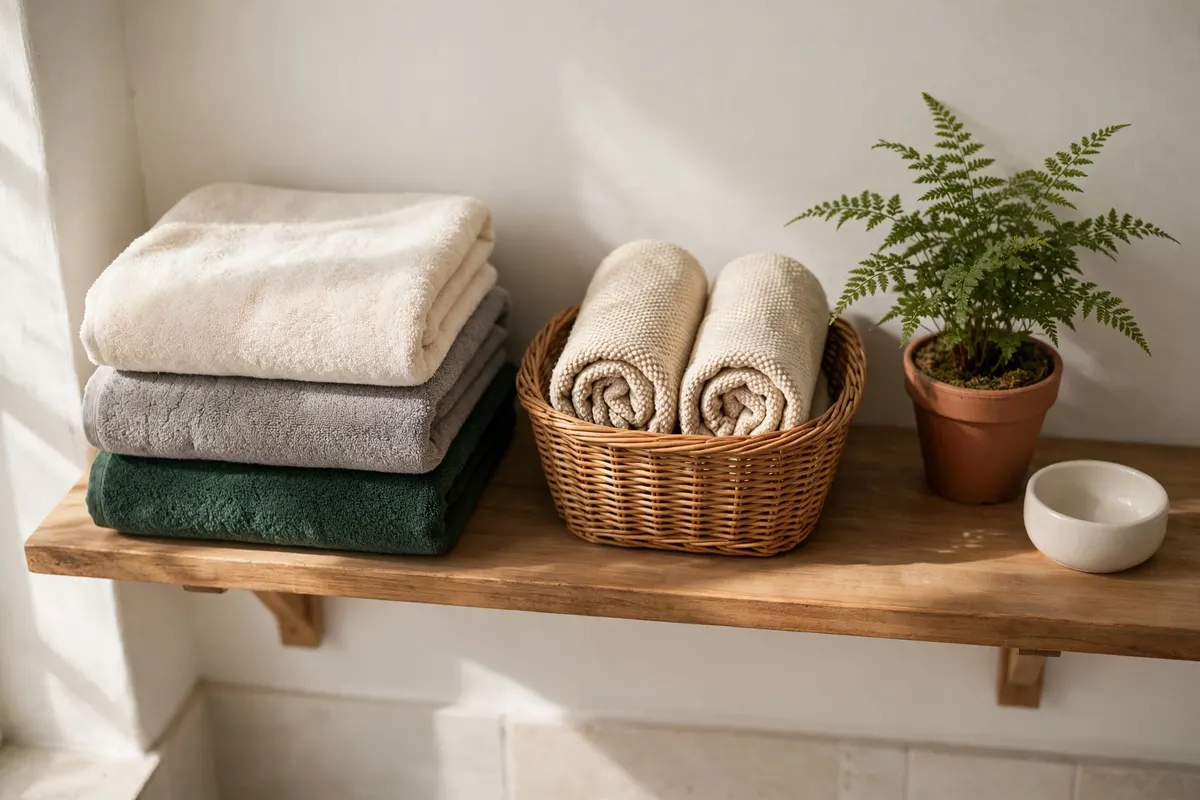
A bathroom’s temperature is hard to change without renovation, but its felt temperature is mostly textile. The winter swap starts with towels: the thickest, largest bath towels the household owns belong in service now, on a rail close enough to the bath and shower that nobody crosses the room wet. A heated towel rail, if one exists, doubles as gentle background heat and delivers the most luxurious sensation in a winter home — a warm towel — while also drying towels properly between uses. If there is no rail, towels dried fully elsewhere and rotated often beat towels left damp on a hook.
The floor is the other half of the battle. A thick, washable bath mat with real pile — ideally one in front of the bath and another at the basin for the morning routine — removes the cold-floor shock that defines a winter bathroom. Cotton and microfibre mats that can go through the wash weekly are the practical choice; check the backing still grips, since a mat that slides on tile is a fall waiting for a wet foot. Add a fabric shower curtain over the liner for softness, and a robe on a hook — textiles in warm neutrals, deep green, rust or warm grey shift the room’s mood without a single permanent change, the same layering logic used for seating in these cozy living room layering ideas, adapted for a room that gets wet.
Warm Light, Layered Like Any Other Room
Bathroom lighting is usually a single cold ceiling fitting, chosen for cleaning visibility, and it makes the room feel clinical at exactly the hours it is used most in winter — dark mornings and evenings. The fix is the layering principle from this guide to layered lighting ideas, applied within bathroom safety rules. Where fittings allow, warm-white bulbs (in the 2700–3000K range) instead of daylight ones change the room instantly. Task light at the mirror matters most: light from both sides of the face, or from above with a diffuser, prevents the harsh shadows that make morning routines miserable. Any fitting or switch work inside a bathroom follows strict safety zones and belongs to a qualified electrician — the decor-level changes are bulbs, shades rated for the space, and battery lights placed safely away from water, on a shelf well clear of the bath and basin. Unlit candles in glass holders give the look by day; for a bath, battery candles give the flicker without an open flame near towels and tissues.
The Steam Half of the Deal: Ventilation
Every comfort in this article fails if moisture wins, so the ventilation routine is part of the design, not an afterthought. Run the extractor fan during every shower and bath and for twenty to thirty minutes afterwards — on a timer or by habit — or, if there is no fan, open the window briefly afterwards to dump the wet air, even in cold weather; five minutes of open window loses far less heat than the condensation costs. Wipe down the worst condensation on windows and cold external walls on winter mornings, keep the door ajar after bathing when the household allows, and give the room a weekly check of the places mould starts: silicone seals around the bath, grout lines, the ceiling corners, window frames. Catching a speck of mould early is a wipe and a ventilate; catching it in March is a project.
The textiles that make the room cosy are also its moisture load, which sets their care routine: towels washed hot on the manufacturer’s guidance and dried completely, never left in a damp heap; bath mats washed weekly and dried fully; the curtain liner scrubbed or replaced when it films over. And spacing matters — towels spread on rails dry far faster than towels bunched on hooks, and faster drying means a fresher, drier room.
Small Comforts: The Ritual Layer
Once warmth, light and steam are handled, the remaining layer is the one that makes people describe a bathroom as cosy: small, deliberate comforts. A wooden bath tray across the tub — book, drink, battery candle — converts a functional wash into the winter ritual people actually look forward to. A stool or small bench holds folded towels and gives the room a furnished feel. Eucalyptus or a hardy fern brings scent and green into a hard-surfaced room; both tolerate bathroom humidity happily. Decant the everyday products into simple matching bottles and clear the visual noise off the surfaces, because calm is a texture too, and a shelf of twelve mismatched labels reads as clutter at any temperature.
For guests — and winter is the guest season — the bathroom carries a large share of whether a stay feels cared for. The additions are small: a fresh, thick guest towel set that is not the family’s everyday rotation, a spare roll and essentials visible without asking, a hook or rail space genuinely free. The full framework is in these cozy guest room ideas; the bathroom’s part of it is simply that a guest should find warmth, dry towels and working light without a single question. Finally, the cold spots: a draught from a window frame in January undoes the textiles’ work, so check the seals — ventilation stays, but draughts through gaps get sealed.
Frequently Asked Questions
How can a bathroom feel warmer without renovation?
Through textiles and light rather than construction: the thickest towels on a rail within reach, a heated towel rail if one exists, thick washable mats at the bath and basin, warm-white bulbs instead of daylight ones, and draughts at the window sealed. Felt warmth is mostly what touches skin and what the eye reads.
How long should the extractor fan run after a shower?
During the shower and for twenty to thirty minutes afterwards, until the mirror has cleared and the air feels dry. Without a fan, open the window for a few minutes after bathing instead — brief airing removes the moisture with surprisingly little heat loss.
What colours make a winter bathroom feel cosy?
Warm neutrals — cream, warm white, soft grey with warm undertones — plus one deeper accent such as deep green, rust or warm wood tones. Most bathrooms are fixed in white or cool tile, so the colour work is done by towels, mats, curtains and wood accessories, all of which swap back in spring.
How do thick towels and mats avoid becoming a mould problem?
By drying completely between uses: towels spread on rails or bars rather than bunched on hooks, mats washed weekly and hung to dry, and the room’s fan routine running after every bath and shower. Cosiness built on damp textiles fails within weeks; the ventilation habit is what lets the textiles stay.
Are candles safe in a bathroom?
Battery candles are the safe default — same flicker, no flame near towels, tissues and aerosols. If real candles are used, they belong in stable glass holders on a clear surface away from textiles and stored products, lit only during the bath and extinguished when leaving the room.
What makes the biggest difference for overnight guests?
A genuinely fresh, thick guest towel set, free hook and rail space, essentials visible without asking, and a warm, working light at the mirror. Guests judge a bathroom on dry towels and not having to ask for anything — the same small list, done properly, every time.