Graceland is the most famous celebrity home in America, and perhaps the most famous house in the world after the White House. It is the Memphis mansion where Elvis Presley lived for twenty years, from 1957 until his death in 1977, and it has been a museum ever since it opened to the public on June 7, 1982. Around 600,000 visitors walk through its doors every year, making it one of the most visited private homes on the planet.
What makes Graceland extraordinary is not its size alone, although at around 17,552 square feet it is substantial. It is the fact that the house remains almost exactly as Elvis left it. The furniture is original, the decor is famously, defiantly Elvis, and the grounds hold the Meditation Garden where he is buried. This is not a celebrity home preserved in amber by strangers. It is a family home that became a shrine, and it still feels like one.
The Story of the House Before Elvis
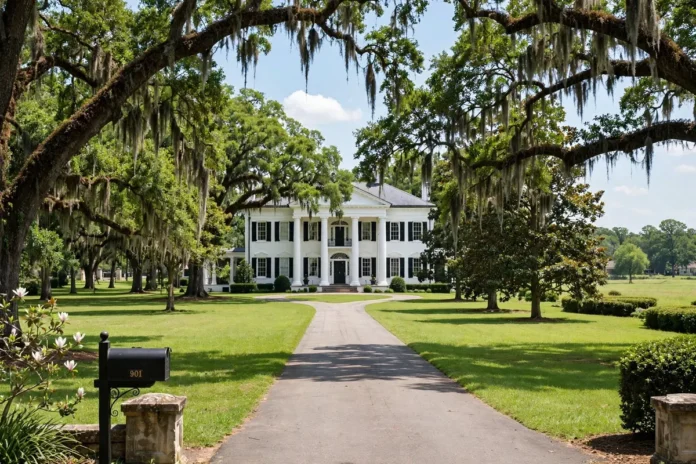
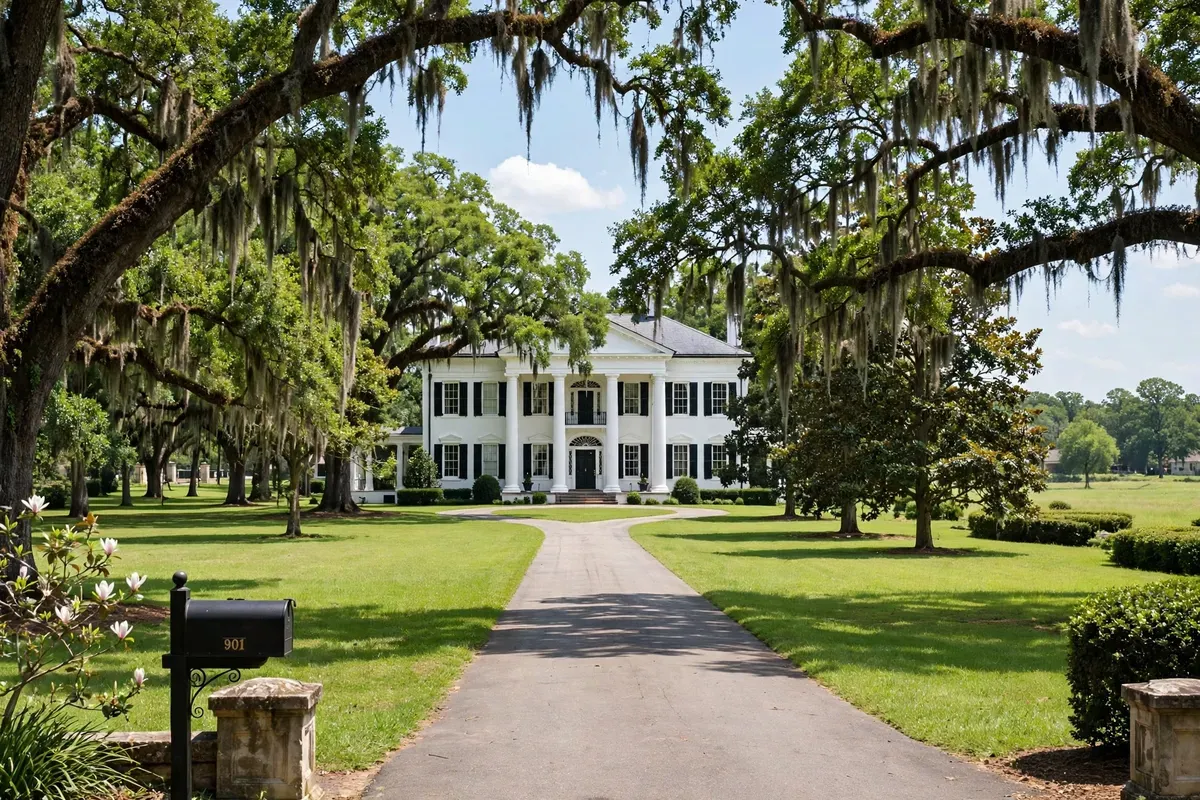
Graceland was not built for Elvis. The land was originally owned by a Memphis commercial printer, Stephen C. Toof, who named it after his daughter Grace. Grace later inherited the land and passed it to her niece, Ruth Moore, who with her husband built a Colonial Revival mansion on the site in 1939. The architects were Furbringer and Ehrman, and the original house measured about 10,266 square feet.
When Elvis bought the property from the Moores, he was just 22 years old, with a handful of chart hits and one movie to his name. The purchase price was a reported $102,500, and the deal, completed on March 19, 1957, included the house and 13.8 acres of land. He bought it intending to live there with his parents and grandmother, and he immediately began making it his own, eventually spending a reported $500,000 on expansions and modifications.
How Graceland Grew to 23 Rooms
Elvis expanded the mansion from its original footprint to around 17,552 square feet and 23 rooms, eight of which are bedrooms. The additions were not polite or restrained. They were Elvis: a Jungle Room lined with green shag carpet and Polynesian-style furniture, a Trophy Room displaying his gold records and awards, a TV room, and a racquetball court that later housed memorabilia before being restored to its playable 1977 form.
Outside, the estate gained the details that have become icons in their own right: the musical-note metal gates, the pink Alabama fieldstone wall along the street, and the swimming pool. The street itself was renamed Elvis Presley Boulevard by the Memphis City Council in 1971, a rare honour for a living artist and a sign of how completely Graceland had become part of the city’s identity.
Inside Graceland: Rooms That Tell a Life
A tour of Graceland is a tour through Elvis’s tastes, and those tastes were gloriously unfiltered. The living room, with its white sofas and blue-and-white motif, looks out toward a music room holding a grand piano. The dining room still displays the china from Elvis and Priscilla’s wedding. Meals, famously, were served late — around 9 or 10 in the evening — a schedule that suited a man who worked nights and slept days.
The Jungle Room deserves its reputation. Elvis reportedly bought much of its furniture himself, and the room’s carpeted walls and ceiling, carved wooden figures, and lush greenery make it feel less like a room and more like a hideaway. It is also, remarkably, where parts of his final studio sessions took place. The house’s decor is often described as kitsch, but that misses the point: Graceland was never decorated for critics. It was decorated for Elvis, and its honesty is exactly why people love it.
The Family Story Within the Walls
Graceland’s history is inseparable from the Presley family’s joys and losses. Elvis’s mother, Gladys, lived in the home but died while Elvis was serving in the U.S. Army in Germany. Priscilla lived at Graceland for five years before she and Elvis married in 1967, and their daughter Lisa Marie was born the following year, spending her earliest years in the house. After Elvis and Priscilla divorced, Lisa Marie returned frequently for visits.
Elvis died at Graceland on August 16, 1977, at just 42 years old. His father Vernon became executor of the estate until his own death two years later, and Priscilla then served as executor until the property officially became Lisa Marie’s when she turned 25 in 1993. After Lisa Marie’s death in January 2023, her daughter Riley Keough became the sole trustee of the estate. The house has therefore remained in family hands throughout its life as a museum, which is a large part of why it feels so personal.
From Private Home to Public Museum
Opening Graceland to the public was a practical decision as much as a sentimental one. Maintaining the estate reportedly costs around half a million dollars a year, and in the early 1980s Priscilla faced the real possibility of having to sell it. Instead, on June 7, 1982, Graceland opened as a house museum. The gamble worked: the mansion now draws around 600,000 visitors a year from around the world.
The estate has grown around the house without overwhelming it. The Guest House at Graceland, a 450-room hotel, and Elvis Presley’s Memphis, a 200,000-square-foot entertainment, restaurant, and museum complex, now surround the mansion grounds. Graceland was listed on the National Register of Historic Places in 1991 and designated a National Historic Landmark in 2006 — the first site recognised for significance in rock and roll history. In 2025, its holiday tours were voted the Best Holiday Historic Home Tour in a national readers’ poll for the eighth year running.
The Meditation Garden: Graceland’s Quiet Heart
Behind the house lies the Meditation Garden, the most solemn part of the estate. Elvis is buried there, alongside members of his family, and it is the final stop on most tours. Visitors often describe the garden as unexpectedly peaceful after the colour and noise of the house itself. It is a reminder that Graceland is not only a museum or a tourist attraction, but also a family’s burial ground, and visitors are asked to treat it with the respect that deserves.
That dual identity — part museum, part memorial — is what sets Graceland apart from every other celebrity home tour. Fans do not just come to see how Elvis lived. They come to pay respects to a figure who shaped popular music, and the house gives them a place to do it that feels intimate rather than corporate.
Frequently Asked Questions
When did Elvis Presley buy Graceland?
Elvis bought Graceland on March 19, 1957, for a reported $102,500. He was 22 years old at the time, and the purchase included the mansion and 13.8 acres of land in Memphis, Tennessee.
How big is Graceland?
The mansion measures around 17,552 square feet with 23 rooms, including eight bedrooms, set on 13.8 acres. The original 1939 house was about 10,266 square feet before Elvis expanded it.
When did Graceland open as a museum?
Graceland opened to the public as a house museum on June 7, 1982, five years after Elvis’s death. It was listed on the National Register of Historic Places in 1991 and designated a National Historic Landmark in 2006.
Who owns Graceland now?
Graceland has remained in the Presley family. After Lisa Marie Presley’s death in January 2023, her daughter Riley Keough became the sole trustee of the estate. It continues to operate as a museum, drawing around 600,000 visitors a year.
Final Thoughts
Graceland endures because it is more than a mansion. It is the house where a 22-year-old from Tupelo became the King of Rock and Roll, where he lived for twenty years, and where he is buried. Bought for $102,500 in 1957, expanded to 23 rooms, and open to the public since 1982, it remains the benchmark against which every other celebrity home is measured. For more tours of the homes of music legends, see the Drake house, the Johnny Rodriguez house, and the Selena Quintanilla house.