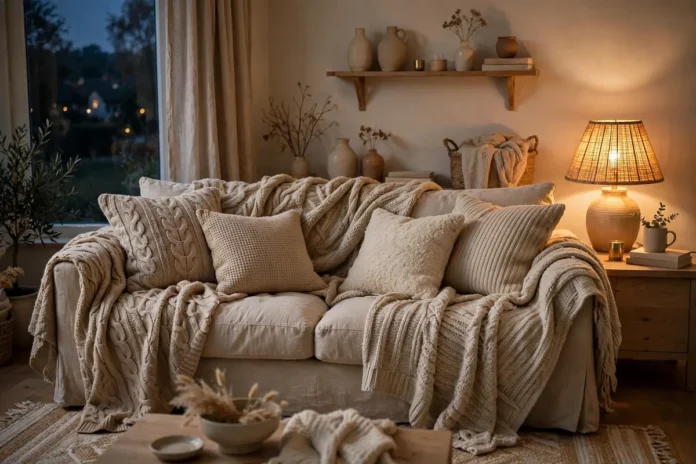
When US clocks go back on November 1, the change most homes feel is not the extra hour of sleep — it is the moment, sometime around dinner, when the windows go black and the house suddenly feels flat and dim. The usual culprit is not a lack of light but a lack of layers. A single ceiling fixture, however bright, flattens a room and leaves its corners in shadow. Layered lighting fixes that by combining three kinds of light that each do a different job. None of this requires an electrician — most of it comes down to moving lamps, changing bulbs, and adding a well-placed source or two.
The Three Layers, Simply Explained
Ambient light is the general background light of a room — the ceiling fixture, recessed lights, or a large pendant. Its job is safe, even illumination, not atmosphere.
Task light is focused light for doing something: a reading lamp beside a chair, under-cabinet strips over a kitchen counter, a desk lamp. It should be brighter than the ambient layer and aimed at the work, not at eyes.
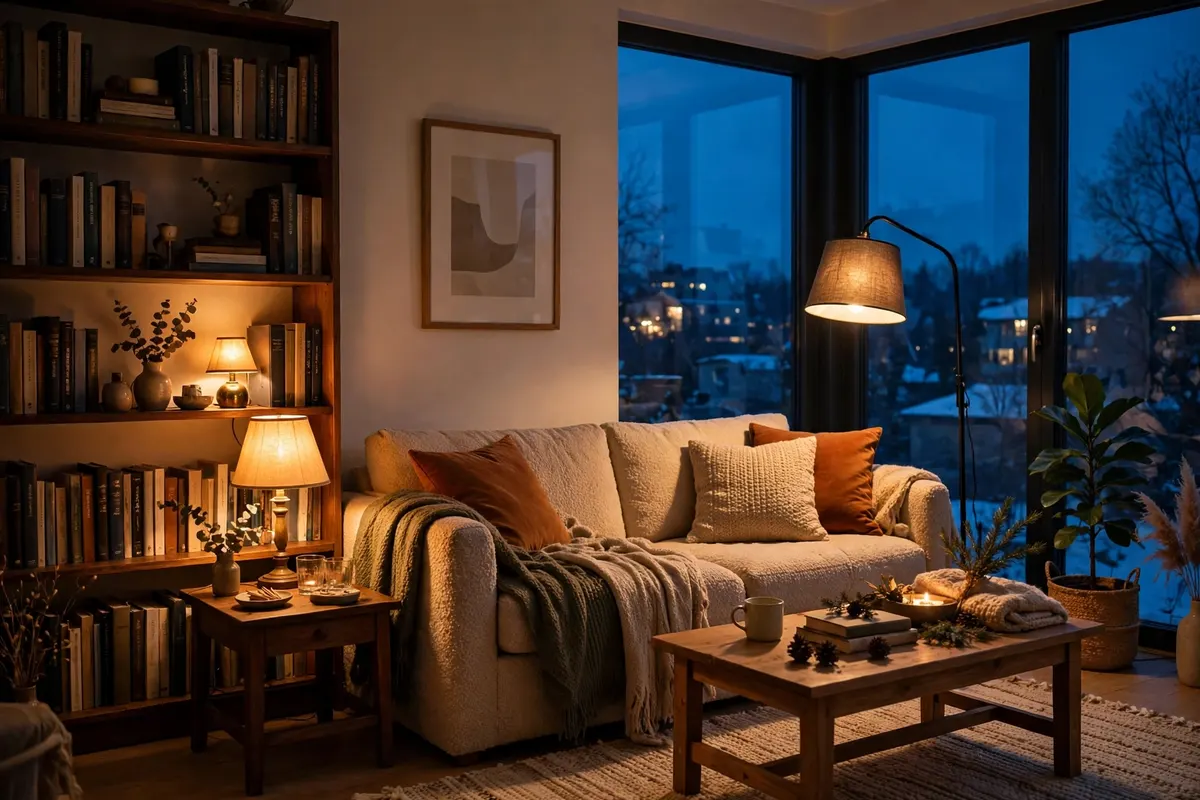
Accent light is the layer most homes are missing. It is low, warm, and decorative: a small lamp on a bookshelf, a picture light, candles, a softly glowing lamp in a dark corner. Accent light creates depth and tells the eye where to rest. It is rarely bright, and that is the point: gentle pools of light against softer shadow are what make a room feel cozy rather than exposed.
Color Temperature: Why Warm Light Wins in Winter
Bulbs are sold by color temperature, measured in kelvins: lower numbers look warm and golden, like candlelight; higher numbers look blue-white and office-like. For living rooms, bedrooms, and anywhere people relax in the evening, bulbs around 2700K give the warm feel most people associate with home. Around 3000K suits kitchens and bathrooms, where a touch more clarity helps.
The commonest quiet mistake is mixing temperatures in one room — a warm lamp beside a cool-white ceiling bulb makes both look wrong. Pick one temperature per room and check the box for the kelvin figure; “daylight” usually means a cold 5000K or more. Brightness is a separate choice, measured in lumens: a standard 60-watt-equivalent LED of about 800 lumens is a good default for lamps, with brighter bulbs reserved for task lights.
Room by Room: Where Each Layer Goes
Living room. Keep the ceiling light as backup rather than the main event. Add a floor lamp beside the main reading chair, a table lamp on a side table, and one small accent lamp in the darkest corner.
Kitchen. Kitchens live on task light. Under-cabinet lighting, whether fitted strips or inexpensive adhesive LED bars, removes the shadow a cook’s body casts over the counter.
Bedroom. Bedrooms want the gentlest scheme in the house. Two bedside lamps with warm bulbs handle reading and winding down, and signal the body that the day is ending. This is the same soft, layered approach behind our cozy winter bedroom ideas — low light, warm tones, and no glare near the bed. If the bedroom doubles as a dressing area, add one brighter task light near the wardrobe rather than raising the whole room’s brightness.
Hallway and entry. Entries are usually lit by one harsh ceiling bulb. A small lamp near the door, ideally on a timer, makes arriving home feel welcoming and leaves a low light burning for anyone moving around the house at night.
Dimmers and Smart Bulbs: The Cheapest Big Upgrade
If one upgrade outperforms its cost, it is control. A dimmer switch turns a single fixed ceiling light into a range — bright for cleaning and board games, low for films and conversation. Where rewiring is unwelcome, plug-in dimmers work with most lamps, and smart bulbs screw into existing sockets and dim from a phone, no electrician needed.
Smart bulbs earn their keep in winter for another reason: timers. Lamps set to come on shortly before sunset mean never walking into a dark house, and give the home an occupied feel on evenings out. Start with two or three in the lamps used most rather than converting the whole house at once.
Better Light for Reading and Work Corners
Reading in lamplight is one of winter’s pleasures, but only when the light lands in the right place. A reading lamp should sit beside or slightly behind the chair, with the bottom of its shade roughly at shoulder height, so the page is lit and the bulb itself stays out of view. An adjustable floor lamp is ideal, aiming light down at the book rather than across the room.
The same principle shapes the corner in our guide to cozy reading nook ideas: one good task light, one soft accent source nearby, and the rest of the room allowed to fall darker. For a desk, aim the lamp at the surface, keep the bulb shielded from the screen, and balance it with a low lamp elsewhere in the room.

Candles and LED Candles, Used Safely
Real candlelight is the original accent layer: low, warm, and alive. Group candles in odd numbers on a tray or mantel rather than scattering singles, in stable holders on heat-proof surfaces. The safety rules are short and non-negotiable — never leave a burning candle unattended, keep flames away from curtains, paper, children, and pets, and put them out before sleep.
LED candles have become convincing enough to do the same visual job in risky spots: on bookshelves, near curtains, in a hallway overnight. Many have timers, making them the easiest accent light of all — set them once in November and the room glows on schedule until spring.
Common Lighting Mistakes to Fix
The single overhead light is the classic error: one source, one shadow pattern, no depth. The fix is rarely more brightness; it is more sources, spread out and at different heights. Cool-white bulbs in living spaces are the second error — they make skin, wood, and fabric look grey and clinical, and swapping them for 2700K equivalents changes a room more than most furniture does.
Glare is the third: bare bulbs in the line of sight tire the eyes and make a room feel harsher than it is. Shades, frosted bulbs, and lamps kept out of the direct sightline solve it. Finally, avoid lighting only the middle of the room. Corners left completely black shrink the space visually, so give the darkest corner the smallest lamp in the house and watch the room grow.
A Low-Budget Starter Plan
Layered lighting can start for the price of a takeaway dinner. First, change the bulbs: replace cool-white bulbs in living areas with 2700K versions, matching temperatures room by room. Second, move the lamps already owned — most homes have a lamp doing nothing in a spare room that would transform a dark living-room corner. Third, add one plug-in dimmer or two smart bulbs to the main living room lamps and set a sunset timer. Fourth, put a string of warm fairy lights or a small LED candle cluster on a shelf as a permanent accent. Only then shop for new lamps.
Frequently Asked Questions
What are the three layers of lighting?
Ambient light is the general background light, usually from a ceiling fixture. Task light is focused light for activities like reading, cooking, or working. Accent light is low, decorative light — a small shelf lamp, candles, or fairy lights. A comfortable room uses all three.
What color temperature is best for living rooms?
Around 2700K gives the warm, golden feel most people want for relaxing in the evening. Kitchens and bathrooms can go slightly crisper at about 3000K. Avoid bulbs labeled “daylight” (5000K and above) in living spaces — they look blue-white and clinical at night.
How many lamps does a living room need?
Three to five sources at different heights: one ambient, one or two table or floor lamps, and one small accent light, switched separately.
Are smart bulbs worth it for lighting?
For most homes, yes — start with two or three in the most-used lamps. They dim without rewiring and can run on a sunset timer, so lamps come on before the house gets dark.
Why does a room with a bright ceiling light still feel gloomy?
Because brightness is not the same as layering. A single overhead source flattens the room, leaves corners in shadow, and creates harsh contrast. Several gentler sources at different heights make the same room feel warmer and larger.
How can renters improve lighting without rewiring?
Swap in warm 2700K bulbs, add plug-in dimmers to lamps, use smart bulbs in existing sockets, rely on floor and table lamps instead of ceiling fixtures, and place LED candles or fairy lights as accents. Every one of those changes is reversible.