A furnace works hardest on the coldest nights, which is exactly when a breakdown hurts most. Most winter heating problems start small — a clogged filter, a blocked vent, a dead thermostat battery — and most can be caught in one afternoon before the first cold snap. This checklist covers what a homeowner can safely do, and which warning signs mean booking a professional instead.
1. Replace the Air Filter
The filter is the most important item on this list. A dirty filter chokes off airflow, forcing the blower to work harder, raising bills and shortening equipment life, and can even cause overheating shutdowns.
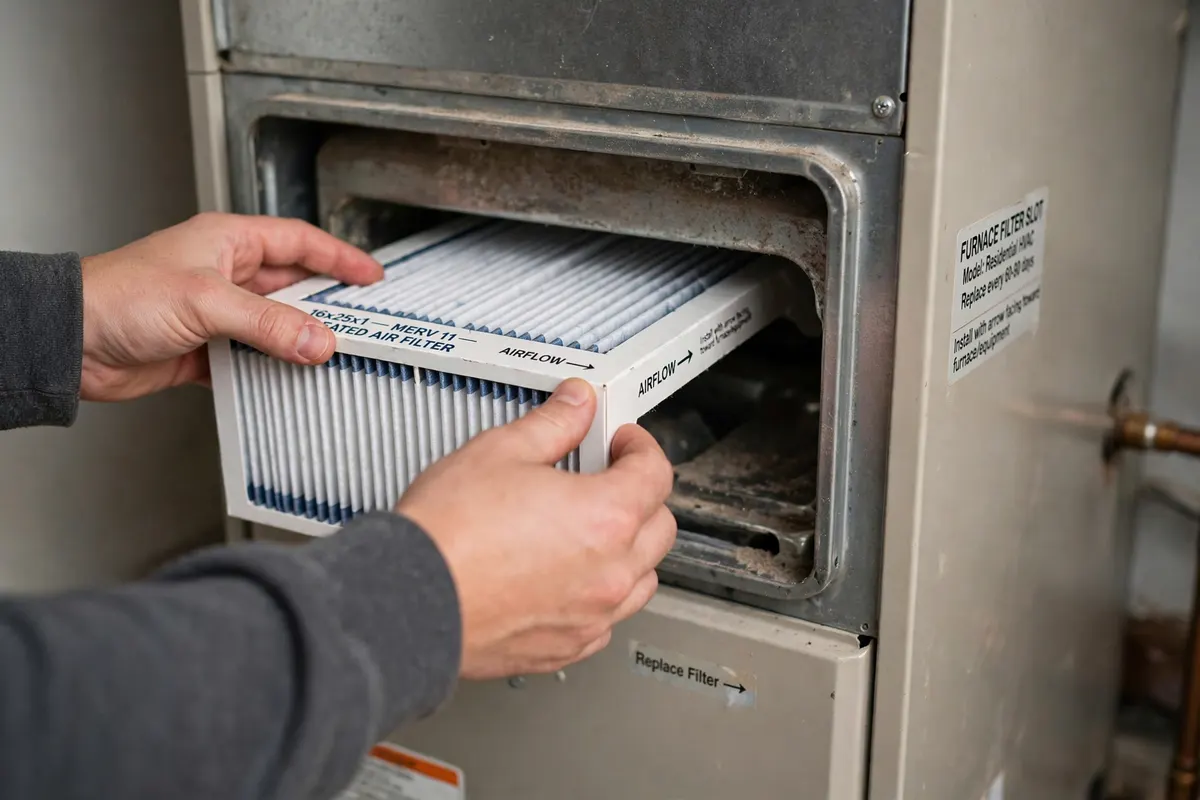
Start with the size, printed on the frame of the existing filter — something like 16x25x1 or 20x25x4; if it has faded, measure the slot. Then choose a rating. Filters are graded by MERV (Minimum Efficiency Reporting Value), from 1 to 16 for residential products. A mid-range filter, roughly MERV 8 to 11, suits most homes, trapping pollen and finer dust without restricting airflow too much. Higher ratings can strain older or smaller systems, so check the manual before going above MERV 11.
The airflow arrow on the frame must point toward the furnace. Replace the filter every one to three months during heating season, checking monthly in homes with pets. A grey, matted filter is overdue, whatever the calendar says.
2. Test the Thermostat and Run the System Early
Do not wait for the first freezing night to discover a problem. On a mild autumn day, switch the thermostat to heat, raise the setting a few degrees, and let the furnace run a full cycle. Warm air should flow within a few minutes, and the system should shut off cleanly at the set temperature. If the thermostat uses batteries, replace them now — a dead battery is one of the most common causes of a "broken" furnace that is not broken at all. The clock change is a natural reminder, as in a full fall back home checklist.
A faint dusty smell on that first run is normal and should clear within an hour. A strong electrical or plastic smell is not: switch off and have it inspected.
3. Check That Vents and Registers Are Open and Unblocked
Walk through every room. Supply registers should be open — closing vents in unused rooms does not save energy on most systems and can raise duct pressure enough to strain the blower. Returns, the larger grilles low on a wall or in the floor, must be clear: a return blocked by a sofa or storage boxes starves the whole system of air. Vacuum dust from register faces, and keep furniture a few inches away.
4. Listen for Unusual Noises
A healthy furnace sounds predictable: a soft whoosh as burners light, a steady blower hum, quiet clicks as it cycles off. During the test run, stand near the unit and listen. Rattling often means a loose panel; squealing frequently points to a belt or bearing; a low rumble after shutdown is worth noting. One sharp bang at ignition — delayed ignition — deserves professional attention. Noting when and how sounds happen helps a technician.
5. Check the Burner Flame on Gas Furnaces
On a gas furnace, check the flame through the burner viewing window, without opening anything. A healthy flame is steady and mostly blue, with small yellow tips.
A flame that is mostly yellow or orange, flickering, or lifting off the burner can indicate incomplete combustion — inefficient, and a potential source of carbon monoxide. Never adjust burners or gas valves; that is strictly professional work. Book a service visit before relying on the furnace for the season. Fireplaces and stoves deserve the same seasonal attention — see a proper fireplace and chimney safety routine.
6. Test Carbon Monoxide Detectors
Heating season is when carbon monoxide risk peaks, because furnaces, boilers and fireplaces run for long hours in closed-up houses. The gas is colourless and odourless, so a working detector is the only reliable warning.
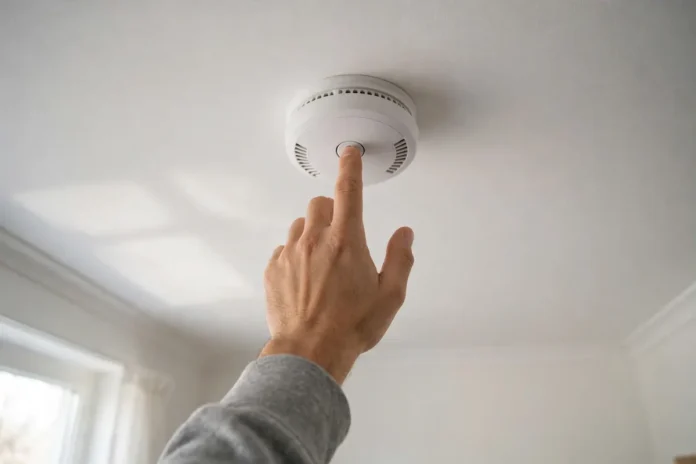
Press the test button on every CO detector and confirm the alarm sounds. Check the manufacture date: sensor life is limited, commonly five to ten years depending on the model, and an expired unit should be replaced even if it still beeps. Detectors belong on every level and outside sleeping areas. Test smoke alarms at the same time — both take five minutes.
7. Clean Around the Furnace and Keep the Area Clear
Treat the space around the furnace as a work zone, not storage. Clear away boxes, paint, solvents and anything flammable, keeping a clear area of around three feet on all sides; combustion appliances need air, and technicians need room. Vacuum dust from the cabinet exterior without opening sealed panels. Check that visible flue connections look intact and seated — anything cracked or rusted through means a service call. On high-efficiency furnaces, check the condensate drain line runs freely.
8. Bleed Radiators on Hydronic Systems
Boiler-and-radiator homes have one extra job. Air trapped at the top of a radiator leaves the top cold while the bottom stays hot. Use a radiator key on the bleed valve at the top corner, cloth underneath: open it just enough to hear air hiss out, and close it as soon as water appears, working from the lowest floor up. Anyone unsure of their system type should leave this to a heating engineer.
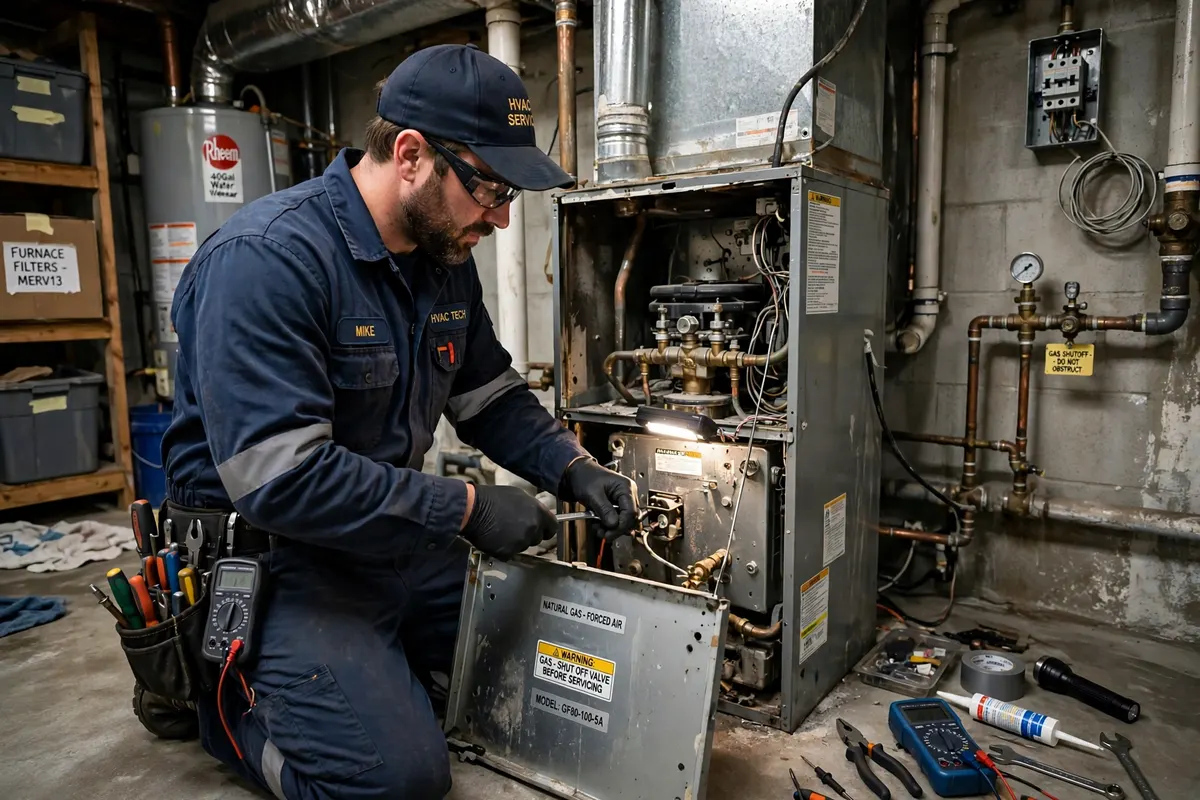
9. Book a Professional Tune-Up — and Know What It Includes
The checks above do not replace an annual professional service, ideally booked in early autumn before schedules fill with emergency calls. A typical tune-up includes:
- Inspecting the heat exchanger for cracks or corrosion
- Testing ignition, flame and safety controls
- Checking gas pressure and connections on gas systems
- Measuring temperature rise and airflow
- Cleaning burners, flame sensors and the blower assembly
- Checking flue, venting and carbon monoxide levels
- Lubricating moving parts where required
Keep the written summary with the filter size noted for next year's checklist.
10. Warning Signs That Need a Repair Call Now
Some symptoms should skip the routine and go straight to a professional:
- Short cycling — the furnace starts and stops every few minutes without warming the house
- Yellow or flickering flame on a gas burner, as described above
- Banging, booming or rumbling at ignition or during operation
- Cold rooms that never reach temperature while others overheat
- A carbon monoxide alarm sounding — leave the house and call emergency services first, the heating company second
- A persistent gas smell — leave, avoid switches and flames, and call the gas utility from outside
A Simple Monthly Winter Routine
In season, maintenance shrinks to a five-minute monthly habit: check the filter, glance at the thermostat program, walk past the furnace and listen for anything new, confirm the area around it is still clear, and repeat the CO detector test once mid-season. Boring is exactly what a furnace should be in January.
Furnace Maintenance Checklist at a Glance
- ☐ Replace the air filter (right size, arrow toward furnace, MERV 8–11 typical)
- ☐ Run a full test cycle on a mild day and replace thermostat batteries
- ☐ Open all supply registers; clear returns and vacuum vent faces
- ☐ Listen for rattles, squeals, rumbles or ignition bangs
- ☐ Check the gas flame is steady and blue through the viewing window
- ☐ Test all carbon monoxide detectors and smoke alarms; check expiry dates
- ☐ Clear storage at least three feet around the furnace; check flue and condensate drain
- ☐ Bleed radiators if the home uses a hydronic system
- ☐ Book the annual professional tune-up for early autumn
- ☐ Know the repair-call warning signs listed above
Frequently Asked Questions
How often should a furnace filter be replaced?
Every one to three months during heating season for a standard one-inch filter; thicker media filters last longer, and homes with pets sit at the frequent end. If it looks grey and clogged, replace it regardless of the date.
What MERV rating is best for a home furnace?
For most homes, MERV 8 to 11 balances dust and pollen capture against airflow. Higher ratings can restrict airflow in systems not designed for them, causing overheating and shutdowns. The furnace manual, or a technician, is the safest guide.
What colour should a gas furnace flame be?
Steady and mostly blue, with small yellow tips. A largely yellow or orange flame that flickers or lifts off the burner can signal incomplete combustion — book a professional check. Never adjust burners or gas components.
When is the best time to book a furnace tune-up?
Early autumn, before the first cold snap, when technicians are less booked and there is time to order parts if the inspection finds something. After the first freeze, expect a queue behind emergency calls.
Is a burning smell normal when the furnace first runs?
A faint dusty smell on the first run of the season is normal and should fade within an hour. A strong, persistent, electrical or plastic odour means switching off and arranging an inspection.
What should happen if the carbon monoxide detector goes off?
Treat every alarm as real. Get everyone out, including pets, and call emergency services from outside. Do not re-enter until cleared, and keep the heating off until a professional fixes the cause.