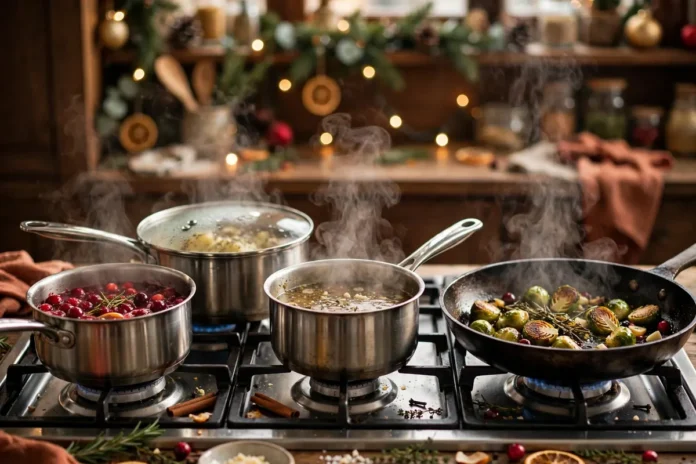
The holiday kitchen is a wonderful place and a demanding one: four burners going, the oven full, guests drifting in and out, and children underfoot hoping for tastes. Cooking is already the leading cause of home fires in ordinary weeks; the holiday season simply concentrates every risk factor — more pans, more people, more distractions — into a few busy hours. Kitchen fire safety this season is less about special equipment than about a handful of habits, applied with extra discipline. The ones below are the difference between a story told at the table and a call to the fire department.
Rule One: Stay in the Kitchen
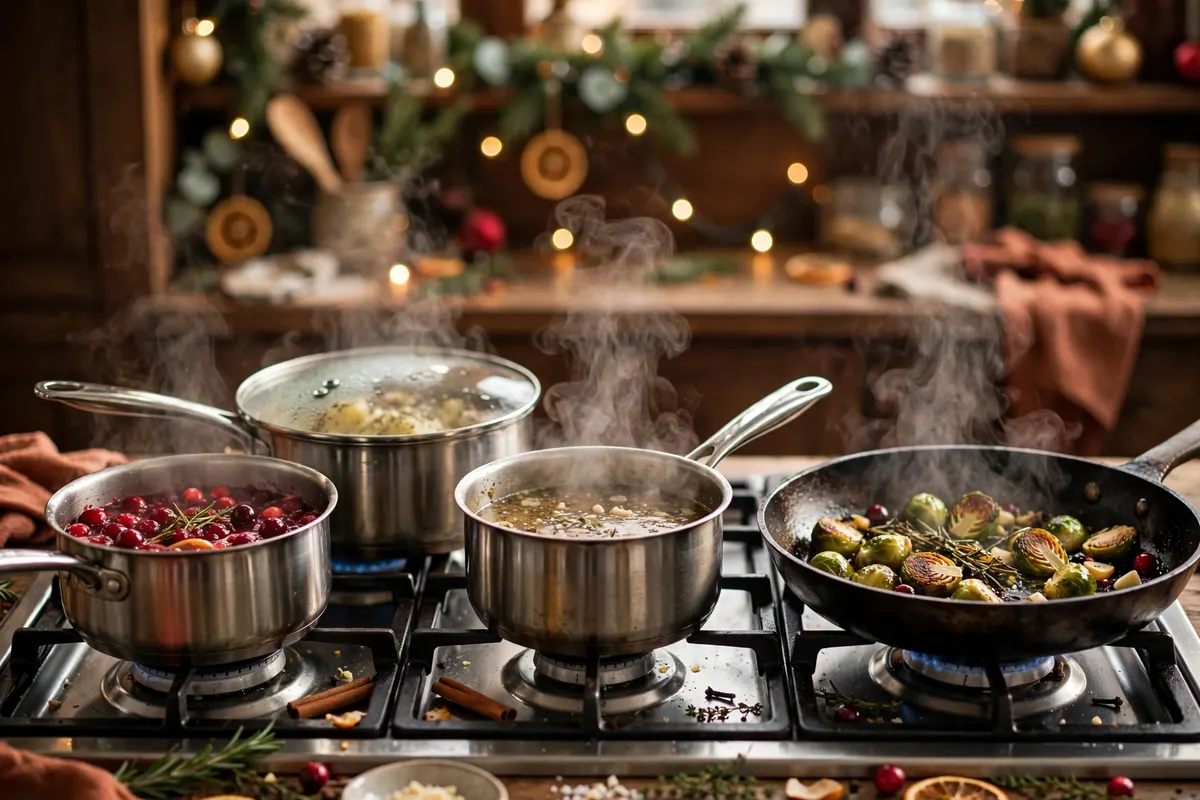
Unattended cooking is the single biggest cause of kitchen fires, and the holidays are a festival of reasons to wander off — the doorbell, a phone call, a conversation in the next room. The rule is plain: when frying, grilling or broiling, stay in the kitchen. Food under a broiler can go from browned to burning in under a minute, and hot oil gives even less warning.
For longer, slower cooking — a turkey roasting, a stock simmering — it is fine to leave the room, but set a timer and check back often. A timer that travels with the cook, on a phone or a watch, works better than the oven’s buzzer, which cannot be heard through a house full of guests. Nominating one cook on duty at a time also helps, so responsibility for the stove is never diffused across three helpful relatives.
The same weekend suits the wider seasonal checks — this fall back home checklist includes testing the alarms that back up everything done in the kitchen.
Grease Fires: The Rules That Matter Most
Grease fires are the kitchen emergency most likely to be made worse by instinct, so the correct responses are worth learning before they are needed:
- Never put water on a grease fire. Water hitting burning oil flashes to steam and throws flaming grease across the room. This is the most dangerous mistake in home cooking, and the most common.
- Slide a lid on. If the flames are small and confined to the pan, slide a metal lid or a flat baking sheet across the pan from the side to cut off the air, then turn off the burner. Sliding matters — dropping a lid from above can push flames outward. Use an oven mitt; the pan and lid will be hot.
- Turn off the heat if it can be reached safely, and leave the lid in place until the pan is completely cool. Lifting it early lets air back in and can restart the fire.
- Baking soda works only on tiny flames — a small handful scattered over a just-starting fire. Anything bigger is beyond it. Flour should never be used; it can ignite.
- Use the extinguisher if the fire is growing beyond the pan, following the technique below.
- If in doubt, get out. Close the door behind you to slow the fire’s spread and call emergency services from outside. No pan, and no meal, is worth an injury.
Keep a lid that fits the frying pan within arm’s reach of the stove during holiday cooking — it is the cheapest fire tool in the kitchen, and the one most likely to be used.
The Fire Extinguisher: ABC Rating and PASS
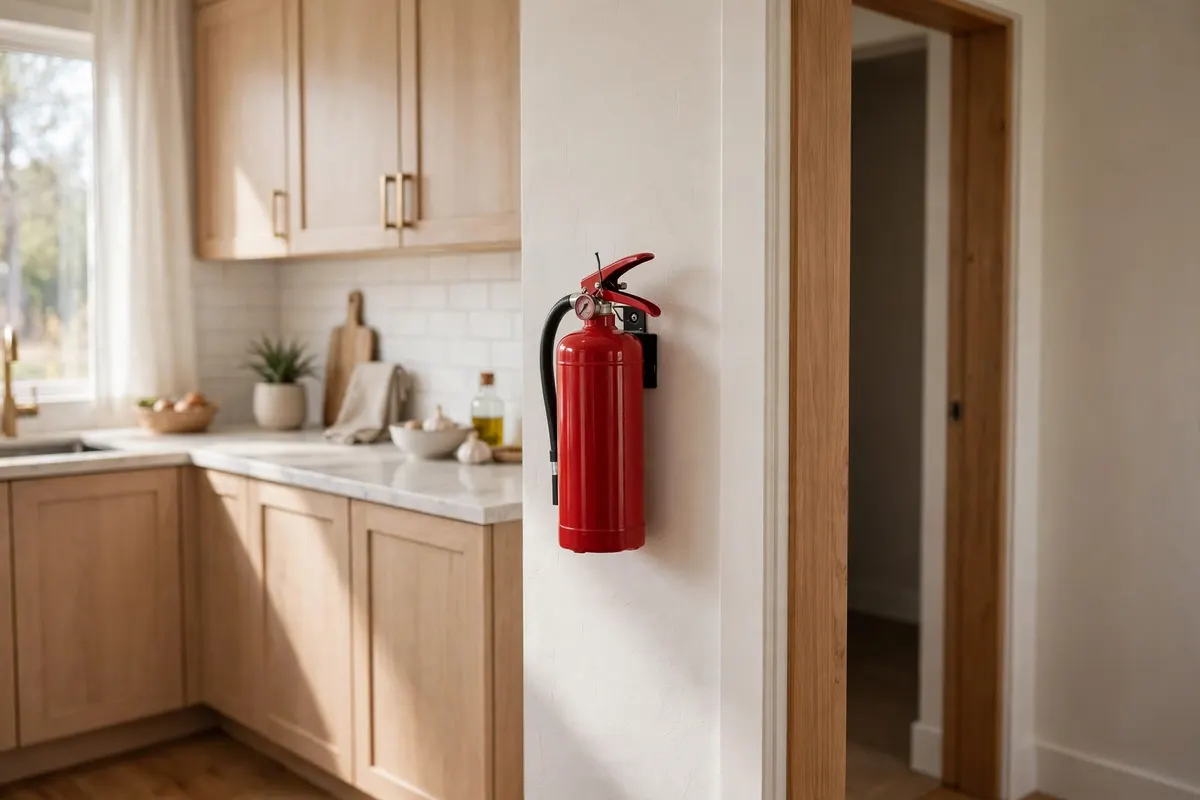
Every kitchen should have a multi-purpose ABC fire extinguisher — the rating means it handles ordinary combustibles, flammable liquids like grease, and electrical fires. Mount it near a doorway or exit, not above or beside the stove, so it can be reached without leaning over the flames it is meant to fight. Check the pressure gauge a couple of times a year and replace or service the unit as its label directs.
The technique is remembered as PASS:
- Pull the pin.
- Aim at the base of the flames, not the tops of them.
- Squeeze the handle.
- Sweep from side to side until the fire is out.
An extinguisher is for small, contained fires, and only with a clear exit behind the user. If the fire does not go out quickly, or the room is filling with smoke, the right move is to leave and close the door.
Clear the Zone Around the Burners
Holiday kitchens accumulate clutter exactly where it is most dangerous. Keep dish towels, oven mitts when not in use, paper packaging, wooden spoons, recipe cards, curtains and loose sleeves away from the burners. Turn pot handles inward, toward the back of the stove, so a passing hip or a reaching child cannot knock a pan of hot food onto the floor — or onto someone.
Set a three-foot kid- and pet-free zone around the stove and enforce it firmly; hot liquids and steam cause serious scalds, and most childhood burns in the kitchen happen because a small person was closer than anyone realised. Roll or fit long sleeves while cooking, and keep appliance cords short, away from counter edges and curious hands.
Before preheating, check the oven and stovetop are clear. Ovens quietly become storage for roasting trays and pizza boxes — all of which smoke or burn when the oven is turned on for the turkey. The stovetop deserves the same glance: no packaging, no cookbooks, nothing resting on a burner.
Clean Grease Before It Becomes Fuel
Grease buildup is the fuel that turns a small flare-up into a spreading fire. The range hood filter collects more of it than anywhere else; most are removable and washable, and a clogged, greasy filter above a holiday stove is a genuine hazard. The stovetop, the oven walls and the area behind the burners should be wiped down before the big cooking days, not after them.
Turkey Fryers: Outdoors, Distant and Never Frozen
Deep-fried turkey is a holiday tradition in many homes, and the fryers involved deserve blunt guidance. Turkey fryers belong outdoors only, on a flat, non-flammable surface, well away from the house, garage, fences and any overhang — never on a wooden deck and never inside a garage, covered or not. Their position has to be right before the burner is lit, because a fryer full of hot oil cannot be moved safely once it is hot.
A bird going into hot oil must be completely thawed and dried. Ice and water in boiling oil erupt violently, spilling oil onto the burner and igniting it. Lower the turkey slowly, keep children and pets far away, and keep an ABC extinguisher beside the fryer — never a water hose.
Candles, Decorations and the End of the Meal
Holiday decorating creeps into the kitchen, and candles should be the first thing moved out of it. A candle beside a paper towel holder or a curtain is an open flame in the busiest room of the house. Battery-powered candles give the same glow for none of the risk. Decorations elsewhere in the house carry their own rules — the advice in this guide to fireplace and chimney safety covers the season’s other open flame.
Finally, after the meal: check that everything is off. Oven, burners, warming drawers, the fryer outside. That is precisely when a burner gets left on low under an emptied pan — at the end of a long cooking day, with leftovers being packed and guests leaving. A slow, deliberate last look around the kitchen before sitting down is the habit that closes the day safely.
Frequently Asked Questions
What should be used to put out a grease fire?
Slide a metal lid or baking sheet over the pan to smother the flames and turn off the heat. Never use water. Baking soda helps only on very small flames, and a multi-purpose ABC extinguisher is the backup for a fire that is growing.
Why is water so dangerous on a grease fire?
Water sinks into hot oil and instantly flashes to steam, expanding violently and throwing burning grease across the room — turning a pan fire into a room fire in a second.
What does the PASS technique mean?
Pull the pin, Aim at the base of the flames, Squeeze the handle, and Sweep from side to side. It applies to any small, contained fire, with an exit at the user’s back.
Where should a kitchen fire extinguisher be kept?
Mounted near a doorway or exit, within easy reach but not above or beside the stove, so it can be grabbed without reaching over flames. A multi-purpose ABC rating is the right type for a kitchen.
Is it safe to fry a turkey on a deck or in a garage?
No. Turkey fryers belong outdoors on a flat, non-flammable surface, well away from any structure. The turkey must be fully thawed and dry before it goes into the oil, and an ABC extinguisher — never water — should be at hand.
What is the most important kitchen fire safety habit?
Never leave cooking unattended, especially frying and broiling. Staying present — or using a timer and checking back often — prevents more kitchen fires than any device.