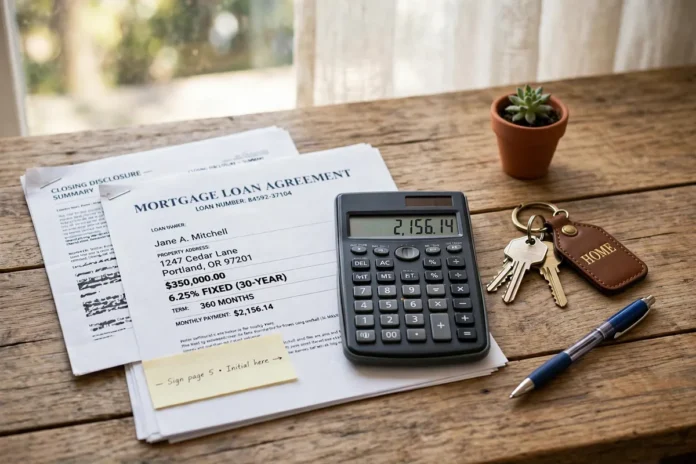
With the average 30-year fixed mortgage rate at 7.32% in the Freddie Mac survey of October 22, 2026, refinancing is back on the table for some homeowners — mainly those who borrowed when rates were higher, or whose credit has improved since they took out their loan. For many others, the math will not work. The difference between a smart refinance and an expensive mistake comes down to one calculation: how long it takes the monthly savings to repay the cost of the new loan. This article explains how to run that number, and how to judge the answer honestly.
Start With the Break-Even Math
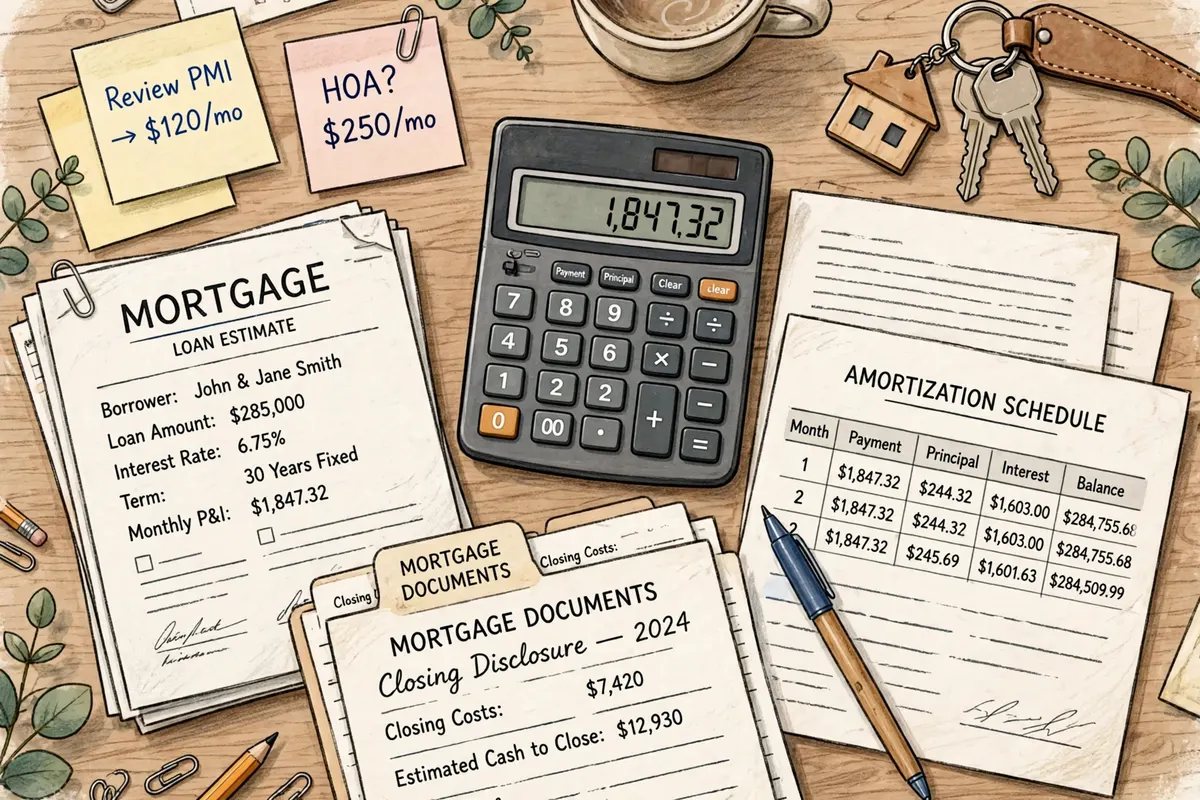
Refinancing is not free. A new loan comes with closing costs — lender fees, appraisal, title work, and other charges that commonly run into thousands of dollars. The break-even point is simply those costs divided by the monthly saving:
Closing costs ÷ monthly saving = months to break even
If the result is 24 months, the refinance only starts saving money in month 25. Anyone who sells the home or refinances again before that point has paid for a benefit that never arrived.
A Worked Example
The following is a hypothetical example with round numbers, included only to show the method. It is not a quote or a prediction.
Suppose a homeowner owes $400,000 and can refinance into a loan that lowers the monthly principal-and-interest payment by $250. Suppose the closing costs total $6,000. The break-even point is $6,000 ÷ $250 = 24 months. If that homeowner expects to stay in the home for five more years, the refinance would save roughly $250 a month for the remaining three years after break-even — about $9,000 in this example. If the same homeowner planned to move in 18 months, the refinance would lose money instead.
Every real decision works the same way, with real numbers from an actual loan estimate. The monthly saving should come from comparing full loan estimates, not from an advertised rate.
The “1% Rule” — and Why It’s Only a Rough Guide
Older advice says refinancing makes sense when the new rate is at least one percentage point below the current rate. That rule dates from an era of different loan sizes and fee structures, and it ignores the two numbers that actually decide the outcome: the size of the loan and the size of the closing costs.
On a large balance, a drop of half a point can produce a monthly saving big enough to break even quickly. On a small balance, even a full point may not cover hefty fees before a planned move. The 1% rule can be a quick screen — a drop far smaller than that deserves skepticism — but the break-even calculation should always make the final call.
When Refinancing Usually Makes Sense
Several situations tend to produce math that works. The first is a meaningful rate drop combined with plans to stay in the home well past the break-even point. Time is what converts a lower rate into actual savings.
The second is improved credit. A borrower who took a loan with a fair credit score and has since built a strong record may qualify for notably better pricing today, even in a higher-rate market. The third is removing private mortgage insurance. Homeowners who bought with a small down payment — a route explained in the guide to how to buy a house with a low down payment — may be able to drop PMI once equity reaches 20%, and refinancing is one way to do it when values have risen.
A fourth situation is shortening the term. Moving from a 30-year loan to a 15-year loan usually carries a lower rate and builds equity far faster, for borrowers whose budget can absorb the higher monthly payment.
When It Usually Doesn’t
The most common failure is a short horizon. Anyone seriously considering whether to sell a house this winter or move within a couple of years will rarely stay long enough to pass the break-even point.
The second failure is restarting the clock late in a loan. A borrower ten years into a 30-year mortgage who refinances into a fresh 30-year term lowers the monthly payment partly by stretching the debt out again — and can pay more total interest over the life of the loans despite the lower rate. Comparing total interest, not just the monthly payment, exposes this.
High closing costs are the third problem. Fees vary a lot between lenders, and a loan with expensive origination charges needs a much longer runway to pay off. Finally, a refinance that only works on paper because it rolls costs into the balance deserves extra caution: financing the fees means paying interest on them for years.

Cash-Out vs Rate-and-Term
A rate-and-term refinance replaces the existing loan with a new one for roughly the same balance, aiming for a lower rate, a different term, or both. A cash-out refinance replaces it with a larger loan and pays the difference to the borrower in cash, usually to fund home improvements or consolidate other debt.
Cash-out loans typically price slightly higher than rate-and-term loans, and they increase the amount owed against the home. They can be a reasonable tool for funding value-adding repairs, but they convert home equity into debt, and the break-even math should be run with the same discipline either way.
Shop Lenders Like It Matters
Rates and fees for the same borrower on the same day can differ meaningfully between lenders, so getting at least three quotes is the highest-value step in the whole process. Each lender provides a standardized Loan Estimate, which makes side-by-side comparison possible.
Compare the APR and the fees, not just the headline rate. APR folds many costs into a single figure, and the fees section shows where one lender is quietly more expensive than another. Ask each lender for a quote on the same day, since rates move daily, and be ready with documents: recent pay stubs, W-2s or tax returns, bank statements, the current mortgage statement, and proof of homeowners insurance.
Questions to Ask Before Signing
- What is the total of all closing costs, itemized, and which are negotiable?
- Is the rate locked, for how long, and what happens if closing runs past the lock?
- Does the new loan have a prepayment penalty?
- How many months until the refinance breaks even, based on these exact figures?
- What is the total interest over the life of the new loan compared with keeping the current one?
- Are any costs being rolled into the balance instead of paid at closing?
A lender who answers these clearly, in writing, is easier to trust than one who sells only a monthly payment.
Key Points at a Glance
- Current backdrop: 30-year fixed averaged 7.32% (Freddie Mac, October 22, 2026)
- Core formula: Closing costs ÷ monthly saving = months to break even
- Rule of thumb: The 1% rule is a rough screen only; loan size and fees decide the real answer
- Refinancing tends to work when: the rate drop is real, credit has improved, PMI can be dropped, and the homeowner stays past break-even
- It tends to fail when: a move is coming soon, the 30-year clock restarts late in a loan, or closing costs are high
- Shopping: At least three Loan Estimates, compared on APR and fees, quoted the same day
Frequently Asked Questions
How much does it cost to refinance a mortgage?
Closing costs vary by lender, loan size, and location, and commonly run into thousands of dollars. The exact figure appears on the Loan Estimate each lender must provide, and comparing that document across lenders is the reliable way to judge cost.
What is a good break-even point for a refinance?
There is no universal number. A break-even of two years or less is attractive for most homeowners who plan to stay put. What matters is the comparison with how long the borrower realistically expects to keep the loan.
Is the 1% rule for refinancing still valid?
Only as a rough first screen. It ignores loan size and closing costs, which are the numbers that actually determine whether a refinance pays. The break-even calculation is the better test.
Does refinancing hurt a credit score?
Applying involves a hard credit inquiry, which can cause a small, temporary dip. Rate shopping within a short window is generally treated as a single inquiry by scoring models. The longer-term effect depends on payment history on the new loan.
Can refinancing remove private mortgage insurance?
Often, yes. If the home’s value has risen or the balance has fallen enough that equity reaches about 20%, a new appraisal as part of a refinance can remove PMI. Some loan types handle this differently, so it is worth confirming with the lender.
Is a cash-out refinance a good idea in 2026?
It depends on the purpose and the math. Cash-out loans usually carry slightly higher rates than rate-and-term loans and increase the debt against the home. They make the most sense for planned, value-adding spending — run the break-even figures first either way.
This article is general information, not financial advice.