An irrigation system is easy to forget in autumn — until the first hard freeze turns the water sitting in its pipes into a repair bill. Winterizing a sprinkler system means getting that water out, or somewhere it cannot do damage, before temperatures drop far enough to freeze it solid. This guide covers the sprinkler system only: the pipes, valves, heads and backflow preventer. It is the narrow companion to the site’s broader winterize your home checklist, which covers the rest of the house.

Why Leftover Water Does the Damage
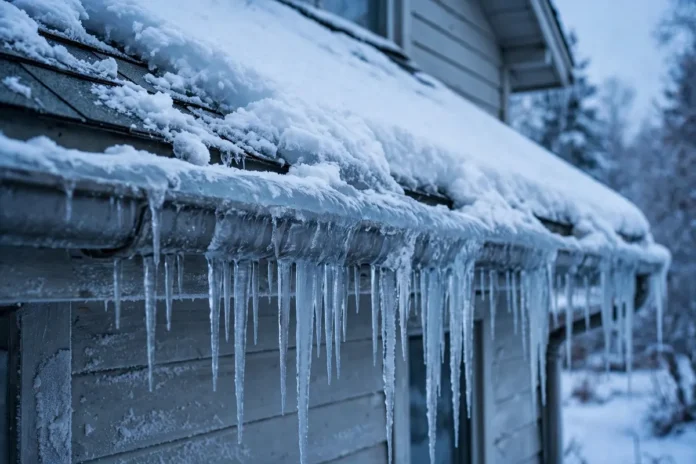
Water expands as it freezes — by roughly a tenth of its volume — and in a sealed pipe or fitting that expansion has nowhere to go. The result is cracked PVC pipe, split fittings, damaged sprinkler heads and, most expensively, a cracked backflow preventer or valve body. The damage often stays invisible until spring, when the cracks announce themselves as leaks.
Timing: Before the First Hard Freeze
Winterizing should happen before the first hard freeze — a night cold enough, for long enough, to freeze water in exposed and shallow-buried lines. The practical trigger is when night-time temperatures start dropping consistently toward freezing and a hard frost is in the forecast — not after it has already happened. The forecast matters more than the calendar: one unexpectedly severe night is enough to crack an unprotected backflow preventer. The above-ground parts — the backflow preventer and any exposed pipework — are the most vulnerable. The same freeze logic applies indoors, which is why the companion prevent frozen pipes guide is worth reading alongside this one.
The Three Methods
There are three established ways to clear water from an irrigation system, and the right one depends on how the system was installed.
Manual drain. Systems installed with manual drain valves at the low points of each line are cleared by hand. Shut off the water supply to the system, then open each manual drain valve and let gravity empty the line. Open the test cocks on the backflow preventer as well, and leave the valves open through winter so any residual water has room to expand.
Automatic drain. Some systems have automatic drain valves that open on their own when pressure drops. Shut off the supply, run a zone briefly to release pressure, and the drains empty the lines. Even with automatic drains, the backflow preventer and above-ground pipework still need draining and insulating separately — the drains only clear the buried lines.
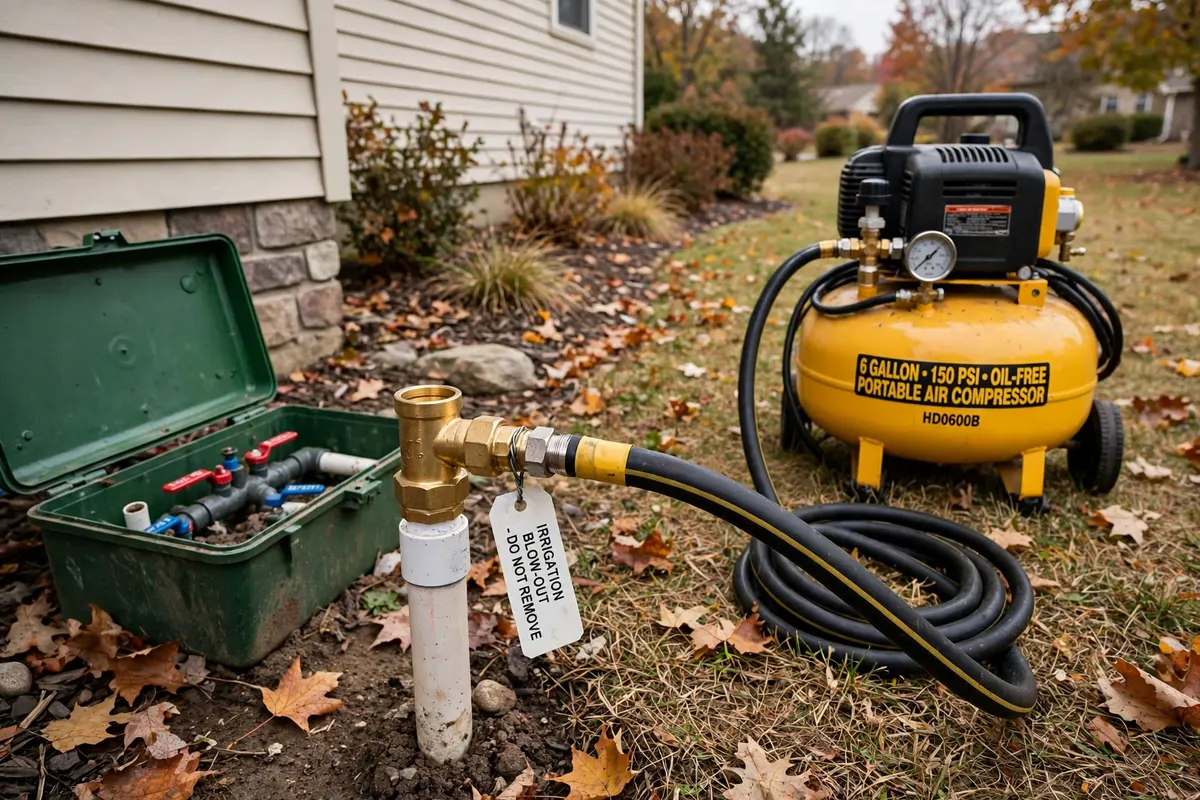
Blow-out with compressed air. The most thorough method, and the standard one for systems without drain valves or in severe climates. An air compressor is connected at the system’s blow-out port, and each zone is blown clear in turn until only mist comes out of the heads. Because it involves pressurised air, it has its own safety rules, covered next.
Safety Rules for the Blow-Out Method
Compressed air stores a great deal of energy, and an irrigation system is not a pressure vessel. The rules that matter:
- Keep the pressure modest. Common guidance is around 50 PSI for rigid PVC pipe, and lower — around 30 PSI — for flexible polyethylene pipe. More pressure does not clear a line better; it risks blowing fittings apart.
- Never blow air through the backflow preventer. Connect the compressor downstream of it, at the blow-out port, so air travels through the zones only.
- Wear eye protection, and never stand over a sprinkler head, valve or fitting while a line is pressurised — a damaged head can be ejected by the air.
- Work zone by zone rather than opening the whole system at once, which keeps pressure and volume under control, and do not run any zone on air for long stretches; short passes repeated are safer than one long blast.
Step-by-Step: Blowing Out the System
- Shut off the water at the system’s dedicated shutoff valve, so no new water can enter the lines.
- Drain and protect the backflow preventer first (see below), and make sure the compressor will connect downstream of it.
- Attach the compressor to the blow-out port using the correct fitting, with the zone valves closed.
- Set the controller to the first zone (or open the first zone’s valve manually), then slowly bring the air in until the heads pop up and spray water.
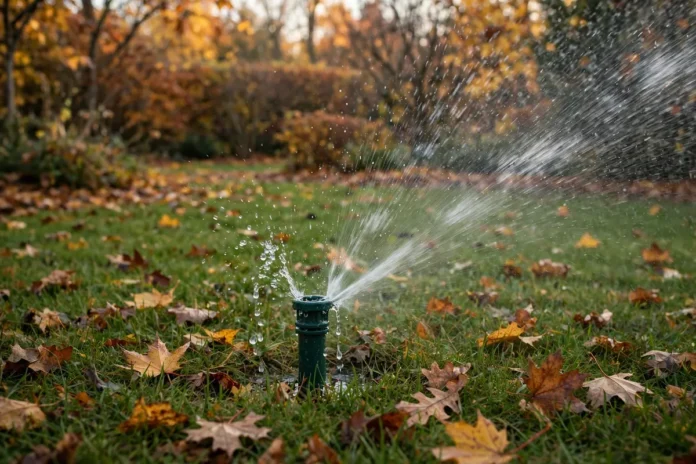
- Run each zone until only mist comes out — typically a couple of short passes — then move to the next zone. Water first, then mist, is the sign a line is clear.
- Repeat the cycle through all zones a second time; lines rarely empty completely on one pass.
- Finish by leaving valves half-open where the system’s design calls for it, so any trapped remainder has expansion room, and disconnect the compressor.
Protect the Backflow Preventer and Exposed Parts
Whichever drain method is used, the backflow preventer needs separate attention. Open its test cocks and drain valves with the supply shut off, and leave small valves at a half-open angle so water cannot sit sealed inside the body. Then insulate: wrap the preventer and any exposed above-ground pipework with insulation tape, foam insulation or a purpose-made insulated cover. Above-ground parts freeze first and crack most often, so this wrapping is not an optional extra.
Controller Settings for Winter
Once the lines are clear, set the controller so the system stays off until spring. Most controllers have a rain mode or an “off” setting that suspends watering while keeping the clock and programmes stored. Some controllers should keep their power supply connected through winter to preserve settings and keep the unit’s internal components dry; follow the manufacturer’s guidance for the specific model rather than unplugging by default.
What Not to Do
Two mistakes recur. First, do not put antifreeze in irrigation lines. Unlike the antifreeze used in some plumbing traps, it is not recommended for sprinkler systems: it can contaminate the soil and groundwater the system waters, harm plants, and does not reliably reach or protect every low point. Draining and air are the correct tools. Second, do not blow air with the water supply still open or the shutoff in the wrong position — the system must be isolated from the supply first, or air and water pressure fight each other and nothing drains properly. A third, quieter error is skipping zones: every zone, including any drip lines and hose-fed branches, holds water somewhere.
When to Hire a Professional Instead
Blow-outs are a routine DIY job for a small, simple system with an available compressor — but there are sensible limits. Hire a professional where the system is large or has many zones, where there is no suitable compressor (a small workshop unit may not deliver the air volume bigger lines need), or where the backflow arrangement is unfamiliar. A professional visit costs far less than a cracked preventer and a spring excavation.
The Spring Restart, Briefly
Winterizing done well makes spring simple. When the freeze risk has passed, close the drain valves, refill the system slowly with the supply opened gradually, and run each zone while walking it, checking for cracked heads, split fittings and leaks around the backflow preventer. Anything damaged over winter shows itself on that first slow run, at low stakes, rather than on the first full watering.
Frequently Asked Questions
When should a sprinkler system be winterized?
Before the first hard freeze — practically, when nights begin dropping consistently toward freezing and a hard frost is forecast. The backflow preventer and above-ground pipework are the most exposed parts and can crack in a single severe night.
What air pressure is safe for blowing out sprinkler lines?
Common guidance is around 50 PSI for rigid PVC pipe and lower, around 30 PSI, for flexible polyethylene. Higher pressure does not clear lines better and risks damaging fittings; volume of air matters more than pressure.
Can antifreeze be used in sprinkler lines instead?
No. Antifreeze is not recommended for irrigation systems: it can contaminate soil and groundwater, harm plants, and does not reliably protect every low point. Draining or blowing out the water is the correct method.
Does air go through the backflow preventer during a blow-out?
No — never. The compressor connects at the blow-out port downstream of the backflow preventer, so air travels through the zones only. The preventer itself is drained separately and insulated.
What should the controller be set to over winter?
Use the controller’s rain mode or off setting so no cycle can run, and keep power connected where the manufacturer recommends it to preserve settings. Check the model’s own guidance rather than unplugging by default.
Is winterizing a sprinkler system a DIY job or one for a professional?
Small, simple systems with a suitable compressor are a common DIY job. Large multi-zone systems, no access to a compressor with enough air volume, or uncertainty about the backflow preventer are good reasons to hire a professional.