In a big room, decorations add to the space; in a small room, they compete with it — every object placed is floor, shelf or table space taken from daily life. The good news is that small spaces do not need more decor — they need decor in the right places: up high, on surfaces already in use, and swapped in rather than added on top. Worked through habit by habit, an apartment can feel thoroughly festive in December and return to normal in an hour in January.
Pick a Tree That Fits the Room
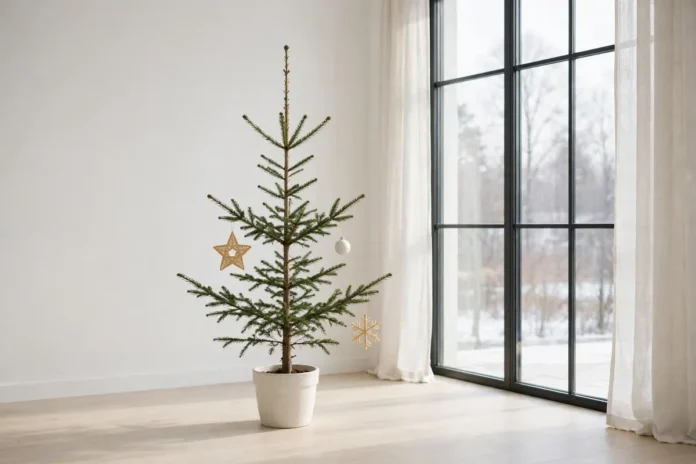
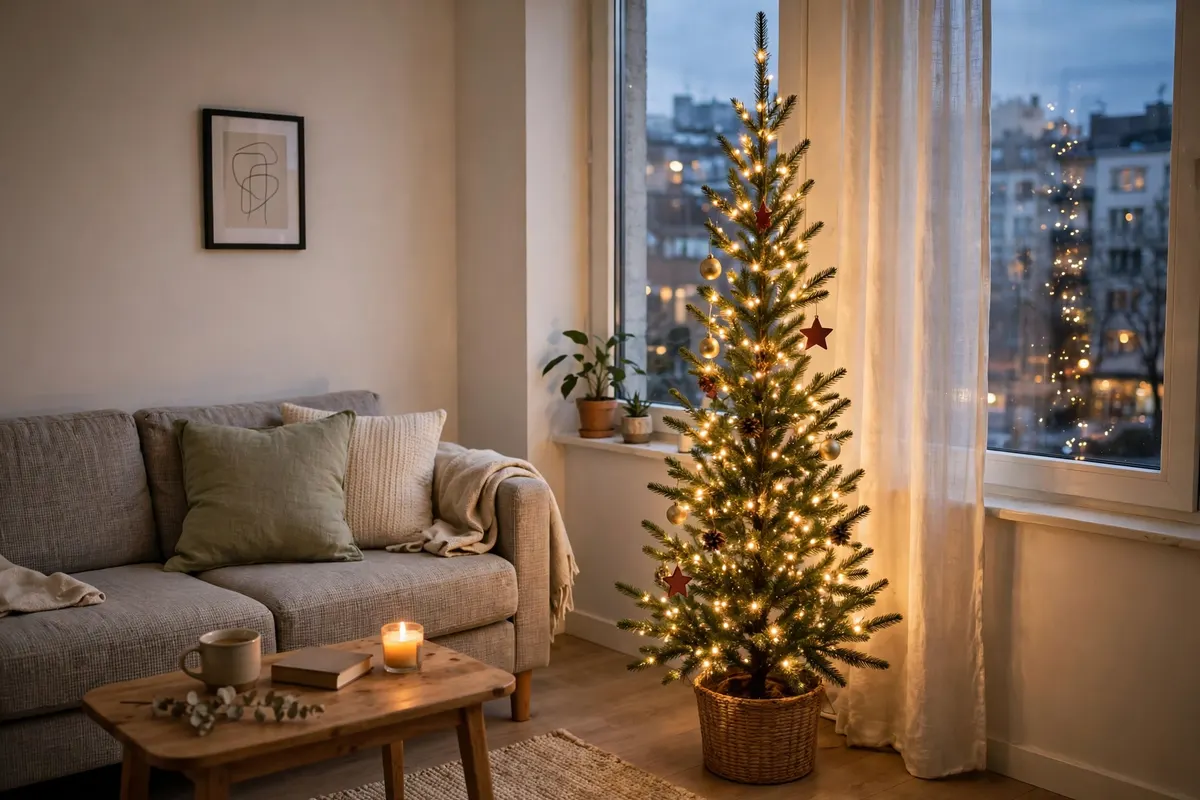
The traditional full-width tree is the first thing to reconsider. A slim or pencil tree keeps the height and the ritual but takes a fraction of the floor space, and in a corner it reads as a deliberate design choice rather than a compromise. A tabletop tree on a sideboard or wide windowsill scales the tradition down and lifts the decorations to eye level.
Where even a small tree is too much, the alternatives are better than their reputation. A wall tree — garland or string lights arranged in a zigzag triangle on the wall, with lightweight ornaments hung from the lines — takes no floor space at all. A bare branch in a tall vase, hung with a few ornaments, gives the same focal point in sculptural form. A small ladder leaned against the wall, wrapped in lights with ornaments on the rungs, works as both tree and display shelf.
Think Vertical, Not Horizontal
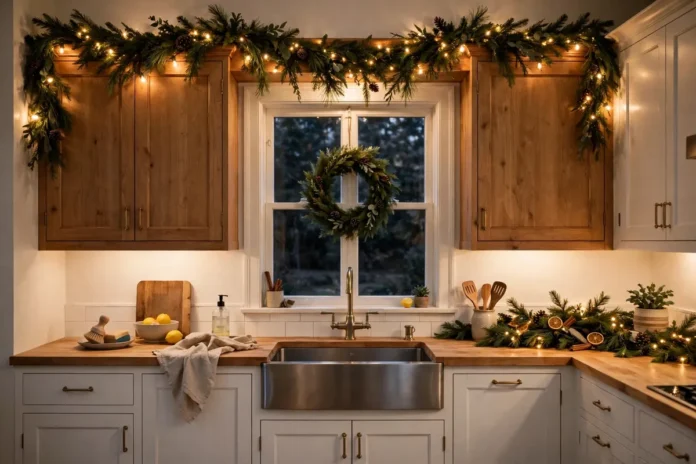
Small rooms run out of horizontal surfaces quickly, so the decorating should climb. Door frames and window frames take garland well, and a wreath on the inside of the front door is seen every time anyone comes home. Shelves carry a short garland along the front edge; the tops of kitchen cabinets, so often dead space, hold greenery and lights where they glow without being touched. Curtain rods can carry a swag of garland or ornaments hung on ribbon at different lengths, and light fittings can take a very light ornament or two — with care, keeping anything flammable away from bulbs and heat.
The rule underneath: decorate the architecture the room already has, rather than adding freestanding objects that need space of their own.
Swap, Don’t Add
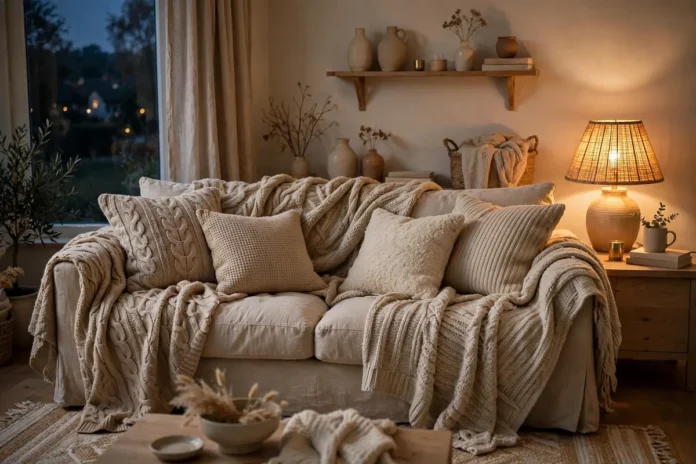
The single most effective small-space strategy is substitution. Instead of adding holiday objects to a room that is already full, swap everyday items for their holiday versions: cushion covers in a seasonal colour, a throw with a winter texture on the sofa, holiday tea towels in the kitchen, a folded throw at the foot of the bed. The room’s object count stays exactly the same, so it never tips into clutter — but everything the eye lands on has changed. Swaps store well, too — flat textiles fold into a drawer — and in January the room resets in minutes.
One Palette Keeps It Calm
In a small room the whole space is a single view, so one palette has to carry it: one colour family plus one metal, repeated across the tree, textiles and table. The discipline costs nothing and is what makes a small decorated room feel composed rather than busy. It also makes buying simple — anything outside the palette is automatically a no, whatever its charms in the shop.
Let Light Do the Decorating
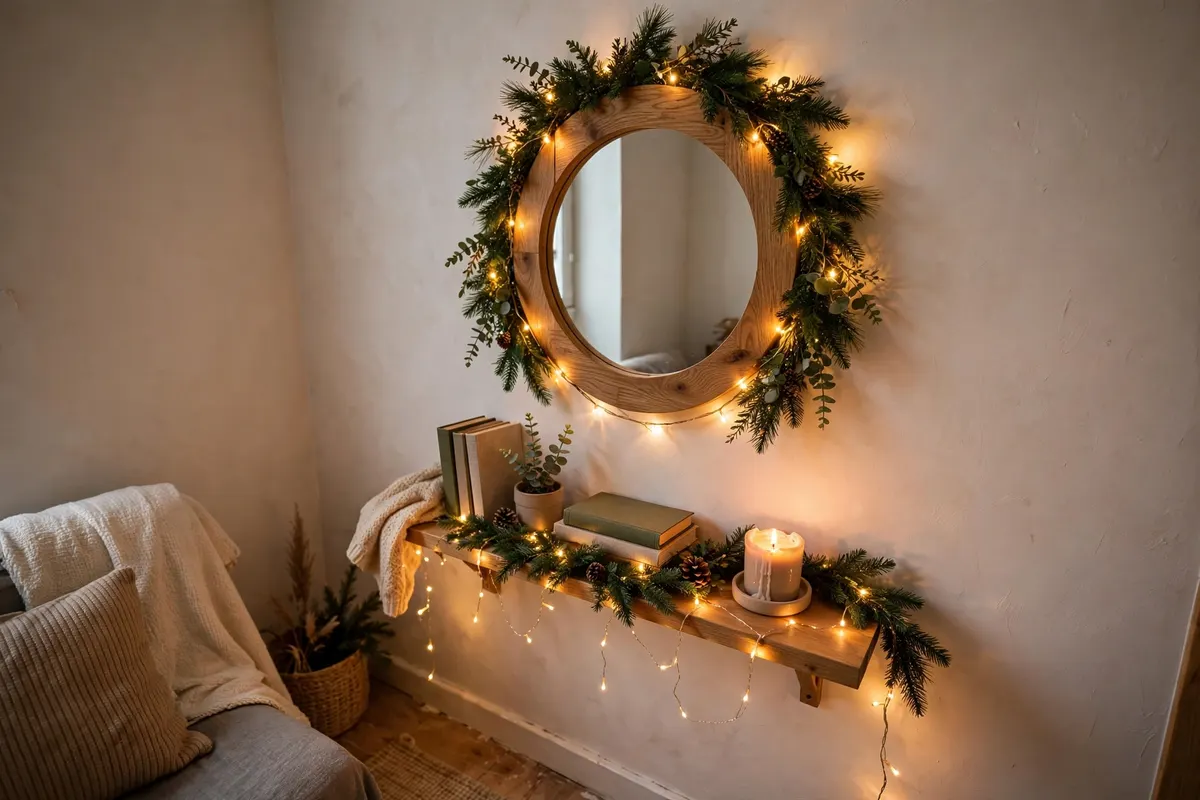
Light is decor that takes up no space at all, which makes it the small room’s best tool. Battery-powered LED string lights are the practical choice: no socket needed, no trailing cable, and they can go where mains lights cannot. A strand coiled in a glass jar or vase becomes a lantern; a strand around a mirror doubles itself in reflection; lights along a shelf edge or around a window frame outline the room in the evening. Placement still matters: keep battery packs and strands where they can be switched off easily, and never drape lights over heaters or radiators. Because lights dominate a small room’s evening look, one or two strands, well placed, usually outperform five scattered ones.
Scent Without More Stuff
Festive scent delivers a large part of the season’s atmosphere while adding no objects at all. A simmer pot — water with orange peel, cinnamon, cloves and a sprig of pine, kept at the gentlest heat — perfumes a whole flat for an afternoon, though it should never be left heating unattended. A real wreath or garland on the door brings the pine scent in with it; a scented candle, never left burning alone, does the same in the evening.
Surface Discipline: The Half-Clear Rule
Small rooms feel crowded through their surfaces more than their floors. A workable rule is to keep at least half of every surface clear: half the coffee table, half the shelf, half the kitchen counter. Instead of many small items spread thin, group what there is into one styled arrangement — a tray carrying a candle, a small bowl of ornaments and one piece of greenery reads as a centrepiece, while the same items scattered separately read as clutter.
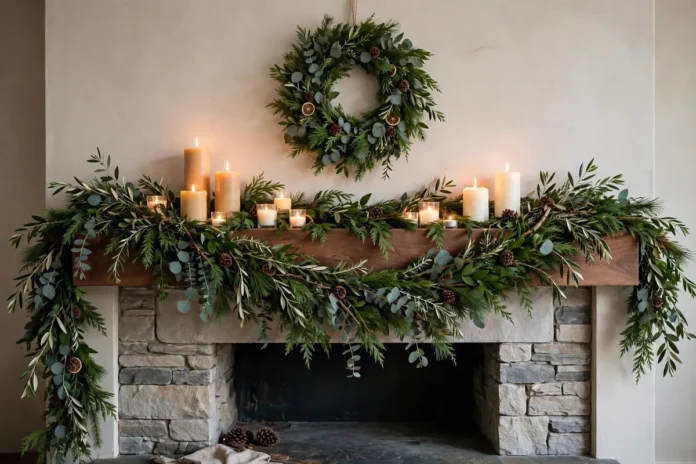
The same layering logic used at full scale in the holiday mantel decor ideas applies here at miniature scale — greenery, one focal point, repeated accents — and that guide’s no-mantel section makes the same point for shelves and console tables. In a small home, one styled tray and one dressed shelf usually carry the whole room.
Small Touches in the Entryway and Bathroom
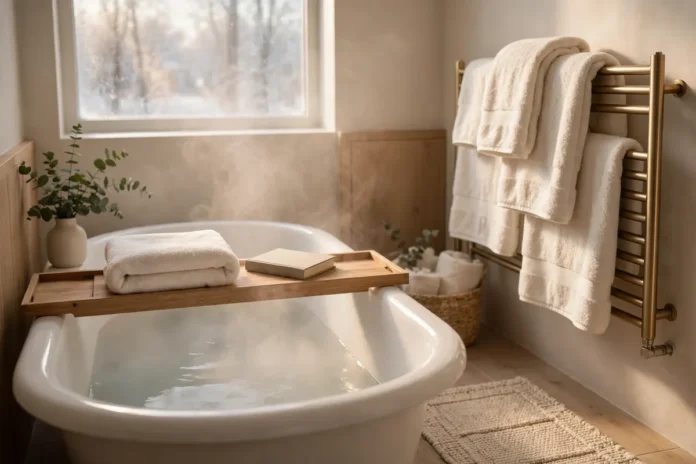
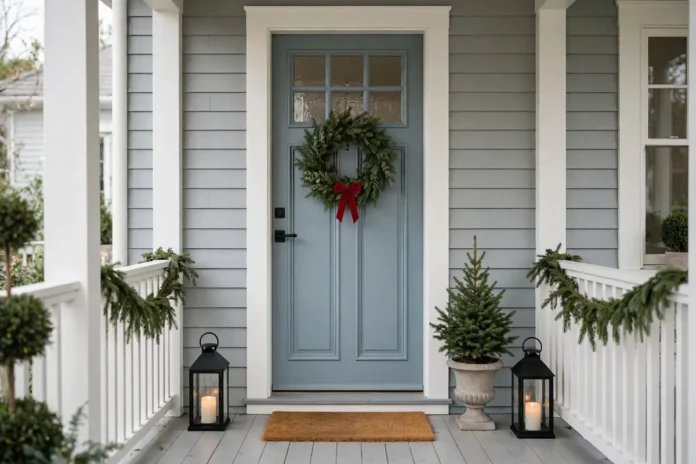
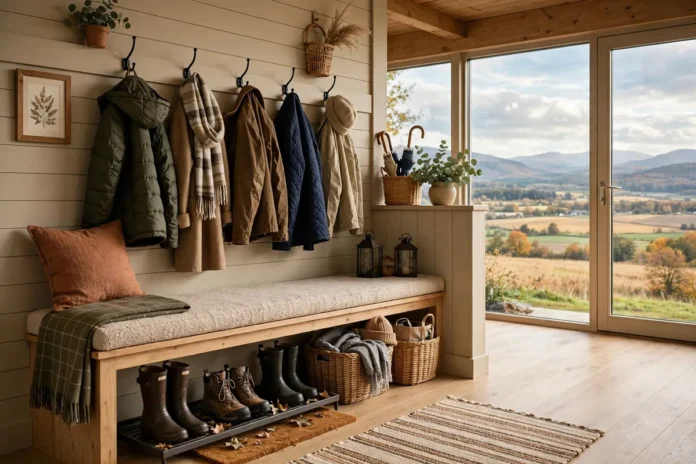
Two spots punch above their size. The entryway is where the season is first met: a wreath on the door, a key bowl dressed with a sprig of greenery, or a holiday doormat sets the tone without touching the living space. The bathroom takes thirty seconds: a hand towel in the palette’s colour, a small jar of pinecones or a sprig of eucalyptus by the sink. Guests notice these rooms precisely because they are unexpected places to find the season.
Storage Reality: The One-Box Rule
Small homes rarely have spare storage, so the honest limit is this: the whole holiday collection should fit in one storage box. That rule, applied at buying time, prevents the slow growth that makes decorating feel like a logistics exercise. Flat and collapsible pieces earn their place: fabric trees, flat-pack ornaments, ribbons and textiles that fold. Storage can hide in plain sight: a lidded box that doubles as a side table, or empty suitcases, which hold decorations for eleven months without extra space.
What to Skip in a Small Space
Some staples of holiday decorating work against small rooms. Oversized inflatables belong outdoors, not in a flat. Large figurine collections eat surfaces that daily life needs. Displays that block walkways, door swings or heating vents are worse than useless — airflow matters in small homes, and fabric or decorations should never cover radiators or heaters, both for heating efficiency and fire safety. Anything that has to be moved before a door opens, a chair pulls out or a meal is cooked will be resented by mid-December. The test for every piece is simple: does it still work on an ordinary Tuesday, or only in a photograph?
For the seating area itself, the layering approach in these cozy living room layering ideas — throws, cushions, warm light, furniture pulled into a group — scales down naturally, since most of it is swaps and rearrangement, not additions.
The After-Holiday Reset
The final advantage of the swap-and-one-box approach shows in January: the tree alternative comes down, the covers come off, the tray is emptied back into the box, and the room returns to itself in under an hour, with nothing stored anywhere it does not fit. A small home decorated within its limits ends the season the way it started it — which is, in the end, what makes decorating it feel worth doing again next year.
Frequently Asked Questions
What is the best Christmas tree for a small apartment?
A slim or pencil tree keeps the height and ritual in a fraction of the floor space. A tabletop tree on a sideboard works too, and a wall tree of lights or garland takes no floor space at all.
How can a small room look festive without clutter?
Swap rather than add: change cushion covers, throws and towels to holiday versions so the object count never rises. Keep one colour palette, group small items into a single styled tray, and keep at least half of every surface clear.
Where should decorations go in a small space?
Up high and on the architecture: door and window frames, shelf edges, the tops of cabinets, curtain rods and mirrors. Vertical decorating uses space that daily life does not need, instead of competing for floors and tables.
Are string lights a good idea in small rooms?
Yes — light is decoration that occupies no physical space. Battery-powered LED strands are the most flexible, since they need no socket. Keep them off heaters and radiators, and switch them off when out or asleep.
How much holiday decor should a small home own?
Whatever fits in one storage box. Flat, collapsible and textile pieces store smallest, and empty suitcases or a lidded box can hold the collection without extra space.
What should be avoided when decorating a small space?
Oversized inflatables indoors, large figurine displays, and anything blocking walkways, door swings or heating vents. Fabric and decorations should never cover radiators or heaters, and every piece should still work on an ordinary weekday, not just in photos.