A tree that looks professionally decorated is rarely the result of expensive ornaments. More often, it is the result of order. Professional decorators work through the same sequence every time: shape first, lights second, ribbon third, ornaments by size, fillers in the gaps, and the topper last. Each layer supports the next, which is why a modest set of decorations, applied in the right order, beats a large collection added all at once.
Start With the Shape: Fluff First
Whether the tree is real or artificial, the first job is shape. Artificial branches arrive compressed from storage and need fanning out one by one, from the bottom tier to the top, tips spread in different directions so the tree looks full rather than flat. Stepping back every few minutes prevents a one-sided tree.
A real tree needs a lighter touch: a shake outside to drop loose needles, a fresh cut across the trunk base, and time standing in water so the branches settle. Gaps spotted now can be worked around later with fillers, but branches left crushed against the trunk will show through everything added afterwards. Ten unhurried minutes here saves an hour of rearranging later.
Lights Before Ornaments, Always
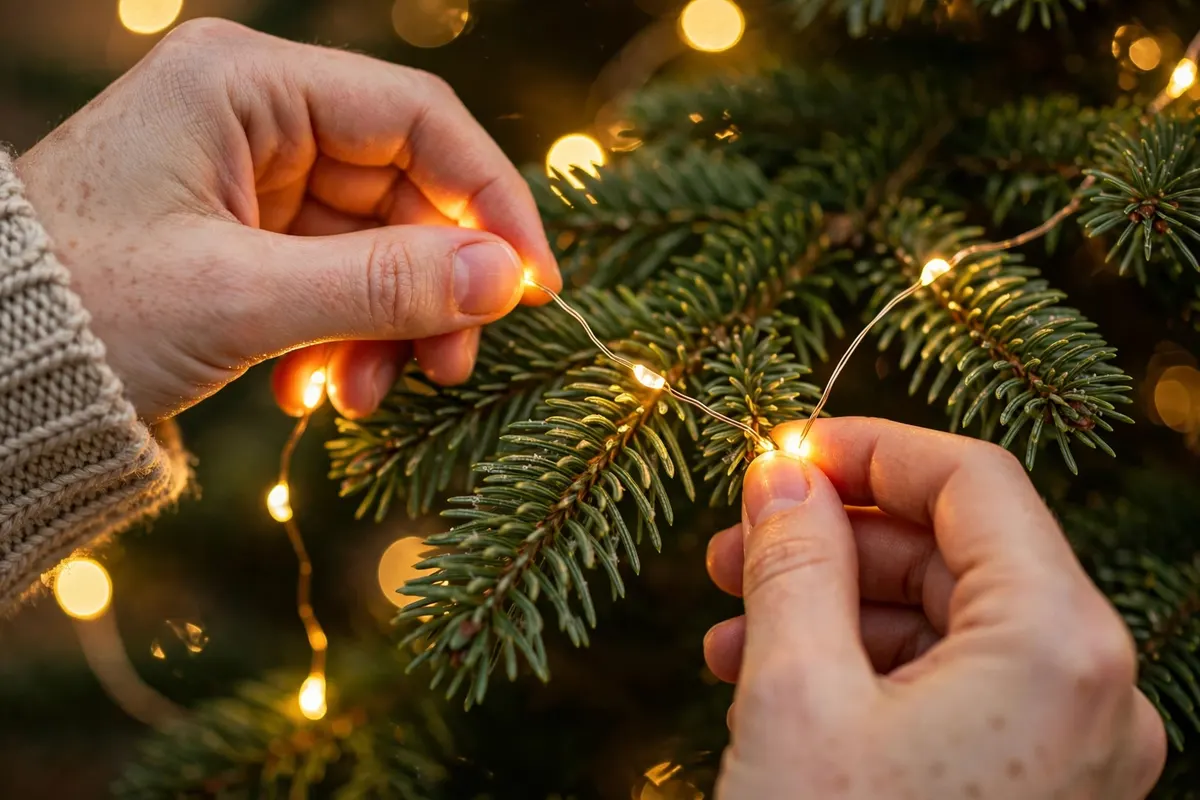
Lights go on before anything else decorative, because they need to sit inside the tree, not draped over the ornaments. The method that gives depth is to work from the trunk outward: start at the base of a branch, weave the strand along it to the tip and back again, then move to the next branch. The tree ends up lit from within, with points of light at different depths, instead of a bright outline wrapped around the surface.
How many lights is enough is partly taste, but a common guideline is roughly 100 lights for every foot and a half of tree height — so a six-foot tree might take around 400 for a full, even glow. It is a guideline rather than a rule: a sparser look uses fewer, and LED strands make higher counts cheap to run. Wrapping the trunk first adds a centre glow that deepens the whole tree. Test every strand before it goes on.
Ribbon or Garland Next
Ribbon goes on after the lights and before the ornaments, while it can still be tucked into the branches rather than laid over finished work. The technique that reads as designed rather than wrapped is to work in loops: push a length of ribbon into the tree, let it billow out, then tuck it in again a short distance later, moving down in a loose vertical or diagonal flow. Wired ribbon holds these shapes best.
Garland follows the same principle. Bead, berry or tinsel garlands sit better dipped between branches in gentle swags than wound tightly in even rings, which flattens the shape the fluffing created. Two narrower ribbons in the palette’s colours usually look richer than one wide one.
Ornaments by Size: Large, Medium, Small
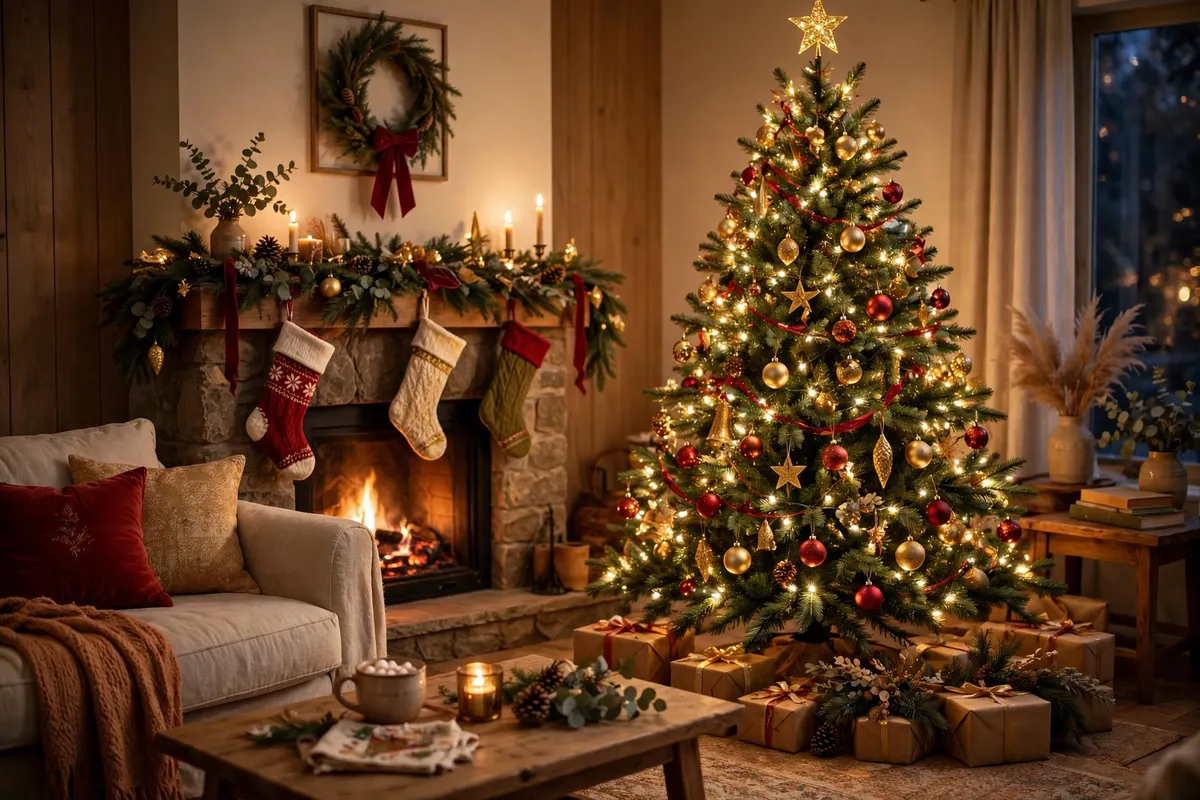
Ornaments are where the order matters most. The sequence is largest first: big ornaments go deep into the tree, close to the trunk, where their size creates depth and fills the dark interior spaces lights alone cannot reach. Medium ornaments come next, midway on the branches. Small and delicate pieces go last, toward the branch tips, where they catch the light and the eye.
Placement works best in triangles: pick a colour or shape, place three of them in a loose triangle on one section of the tree, then repeat the same triangle elsewhere. The repetition makes a mixed collection look intentional and guarantees the scheme reads from across the room. Special or fragile ornaments go on at the end, at eye level on sturdy branches — and above the reach of small children and pets where relevant.
Keep the Palette Small
A limited palette is what separates a composed tree from a crowded one. Two or three colours plus one metal is plenty: the metal is the unifying thread, repeated in the topper, a few ornaments and perhaps the ribbon. Four combinations that reliably work:
- Classic red and gold. Deep red ornaments, gold ribbon and warm white lights. Traditional, forgiving, and the easiest scheme to extend a piece at a time.
- Winter white and wood. White, cream and clear glass with natural wood, pinecone and linen textures. Calm and bright, and still right well into January.
- Jewel tones. Emerald, sapphire and burgundy with antique gold. Rich in the evening, suited to darker rooms.
- Blush and metallic. Soft pink or champagne tones with rose gold or silver. Light and modern, especially against warm white lights.
Decorations outside the palette can sit the year out in the box — rotating the collection also makes next year’s tree feel different for free.
Fillers Hide the Gaps
Every tree has thinner patches, especially near the top and wherever branches are sparse. Filler pieces solve exactly this: pinecones, berry sprigs and decorative picks — short stems topped with leaves, berries or glitter branches — pushed into the gaps at angles. A dozen picks can do more for a thin tree than a dozen more ornaments, because they change the silhouette rather than just the surface. Metallic picks also bounce light around the tree’s interior, making the lighting look more generous than it is.
The Finishing Touches: Topper and Skirt
The topper goes on last among the decorations, once nothing above shoulder height needs adjusting: a star, an angel, a bow, or a cluster of picks arranged like a spray. It should be in scale with the tree — too small disappears, too large makes the tree look top-heavy — and secured rather than balanced, so it avoids the traditional late-December lean.
At the base, a tree skirt or collar hides the stand, the trunk and the tangle of wires. A fabric skirt softens the arrangement and gives presents a finished surface; a rigid collar in metal, wicker or wood gives a cleaner, modern line and is harder for pets to rearrange. The same layering logic applies across the room: the companion holiday mantel decor ideas use the identical structure — greenery base, one focal point, repeated accents — on the fireplace.
Real Trees, Heat and a Few Safety Basics
A real tree is a living thing drying out in a warm room, and two habits keep it safer and better-looking. Keep the stand topped up with water — a fresh tree can drink a surprising amount in the first days — and position the tree away from radiators, heaters and open fires, since heat dries it out faster and is an ignition risk for dry branches. A tree that has gone brittle and sheds needles at a touch has had its season.
For lights and power, the basics are short: LED strands run cool; older incandescent sets get warm and belong nowhere near dry foliage. Never overload a socket or run leads coiled or under rugs, and switch the tree lights off when the household is asleep or out. The same rules apply outdoors — see the guide to outdoor holiday light safety.
What to Buy First on a Budget
If spending is staged, the order of impact is: lights first, because they define the tree at night, which is when it is mostly seen; a decent ribbon second, since it covers a lot of visual ground for little money; fillers third, to rescue thin areas; and ornaments last, built up a few good pieces a year within the chosen palette. The topper and skirt can be improvised for a season — a large bow, a basket, a folded throw at the base — and upgraded later.
Putting It All Away
Storage decides whether next December starts smoothly. Ornaments keep best in divided boxes or wrapped in tissue, with fragile pieces separated; lights wound around a piece of cardboard or a reel untangle next year instead of knotting. Labelling the box with the palette and tree size proves its worth annually. Artificial trees store best in a bag, kept dry.
Frequently Asked Questions
In what order should a Christmas tree be decorated?
Shape and fluff first, then lights, then ribbon or garland, then ornaments from largest to smallest, then fillers in the gaps, and the topper and skirt last.
How many lights does a Christmas tree need?
A common guideline is roughly 100 lights for every foot and a half of tree, so around 400 for a six-foot tree. A subtler look uses fewer; LED strands make generous counts cheap to run.
Where do the biggest ornaments go?
Deep inside the tree, close to the trunk. Large ornaments at the interior create depth and fill dark spaces; medium ones sit midway and small ones go toward the tips.
How many colours should a Christmas tree have?
Two or three colours plus one metal is a reliable limit. A small palette, repeated in triangles around the tree, looks deliberate and calm; the rest can stay in the box for a year.
What can fill gaps in a sparse tree?
Filler picks, pinecones and berry sprigs pushed into the thin areas at angles. Fillers change the tree’s silhouette and add texture, so they often fix a sparse patch better than extra ornaments would.
Are LED lights safer for a real tree?
Yes — LED strands run cool, while older incandescent lights warm up against drying foliage. Keep a real tree watered, away from heat, and switch lights off when asleep or out.