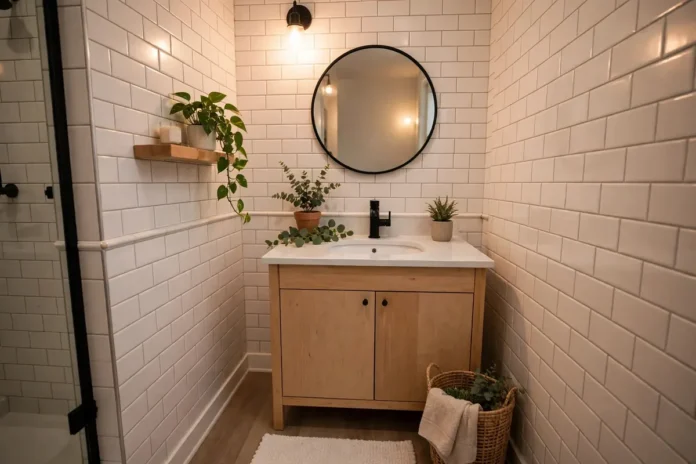
A full bathroom renovation is one of the most expensive rooms to redo — plumbing, tiling, waterproofing, and the labour to match. But most tired bathrooms do not need a full renovation. They need new surfaces, new fixtures and better light, and those three things cost a fraction of a gut job while delivering most of the visual change. This guide works through the highest-impact budget moves in the order that makes sense, with honest notes on what to DIY and what to leave to a professional.
Start with paint and fixtures — the cheapest transformation
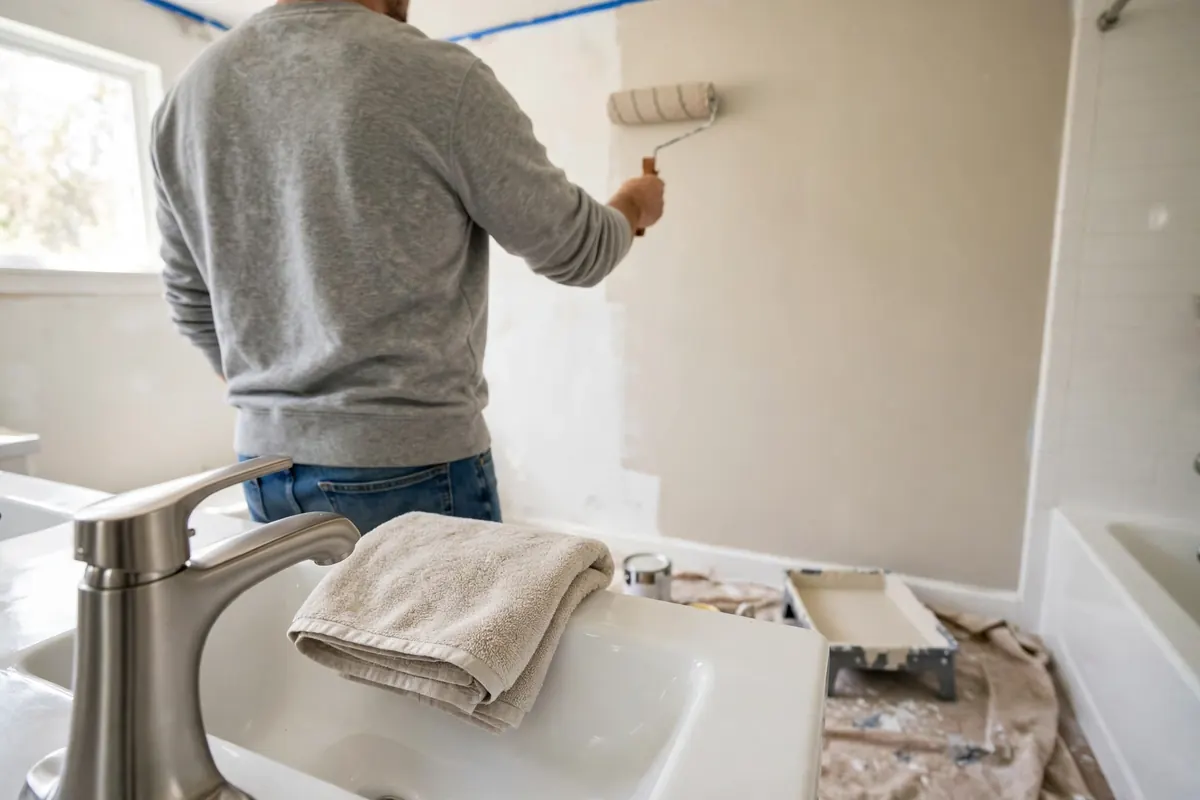
Paint is the single best-value bathroom job: a moisture-resistant paint in a light neutral instantly brightens a small room, and a weekend of careful prep (clean, sand lightly, prime) beats an expensive tile job that nobody notices. Next, swap the fixtures that your hands and eyes touch every day: a new faucet, new cabinet handles, a modern shower head, and a new toilet seat. These are mostly DIY-friendly (water off, old fitting off, new fitting on — with thread tape and patience), and together they make the room feel new even though the layout has not moved an inch. If the vanity itself is sound, painting it and changing its handles is far cheaper than replacing it; if it is damaged, a ready-made vanity unit is the one larger purchase worth making.
Surfaces: tile, grout and the mirror trick
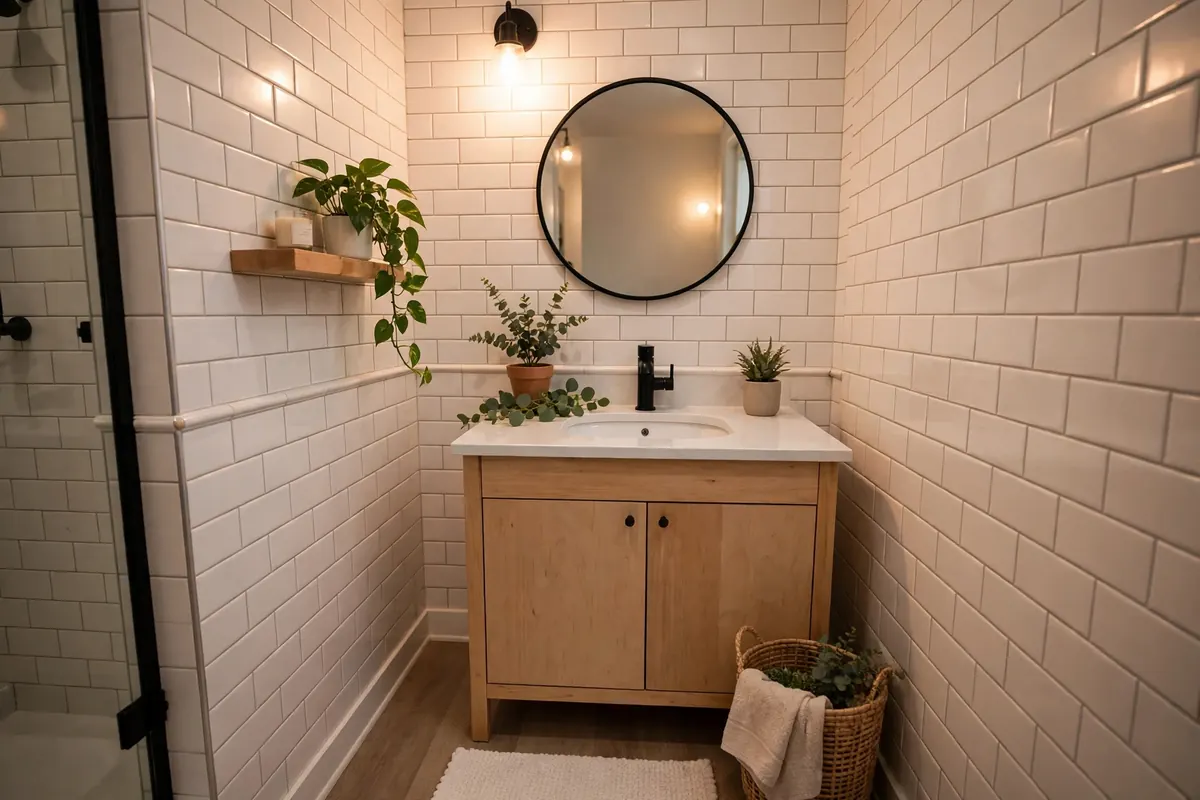
You do not need to retile to fix a tired bathroom. Re-grouting or using a grout pen on stained grout lines transforms a tiled wall for the price of lunch, and a grout sealer keeps it that way. If tiles are damaged, replacing a few and re-grouting the rest beats a full re-tile. Then the mirror: a larger mirror, or a second mirror opposite the window, doubles the perceived size and light of a small bathroom — the oldest designer trick in the book, and one of the cheapest. Add a new light fixture while you are at it: bright, even, warm-white lighting flatters both the room and the person in the mirror, and a dimmer makes the same room work for a relaxing bath. For the same weekend-project logic applied to the kitchen, the site’s budget kitchen updates guide covers the parallel moves.
Storage, textiles and the finishing layer
Bathrooms fail on storage more than on style: toiletries scattered, towels with nowhere to go, cleaning products under the sink in a pile. Fix it with cheap, closed storage — baskets, a small cabinet, over-door hooks — so surfaces stay clear; a clear surface is what makes a bathroom photograph (and feel) clean. Then textiles: new towels in one colour, a proper bath mat, a shower curtain that actually matches. These are small purchases with outsized effect, because bathrooms are small rooms where every object is visible. Finally, add one living thing — a humidity-loving plant like a pothos — and one scent element; a bathroom that smells fresh and has a plant in it reads as cared for, which is the whole point of the remodel.
What to leave to a professional
Honesty matters here: moving plumbing, changing a shower’s waterproofing, or any electrical work near water is not a budget DIY — a leak behind a wall costs many times what the professional would have charged. If your budget only stretches to one professional job, spend it on anything involving water or electrics, and DIY everything cosmetic around it. And if the bathroom has damp, mould or a soft floor, fix the cause before decorating over it; paint over mould is a cover-up that returns, expensively. The same “fix the cause first” logic applies across the house — see how to paint a room like a pro for prep-first painting.
FAQ
How much does a budget bathroom remodel cost?
It varies widely, but paint, fixtures, grout work, a mirror and textiles — the moves in this guide — typically cost a small fraction of a full renovation, which can run many times more once plumbing and tiling are involved.
What is the highest-impact budget bathroom upgrade?
Paint plus new fixtures (faucet, handles, shower head). Together they change the room’s feel more than any single larger purchase.
Can I retile a bathroom myself on a budget?
Small repairs and re-grouting are very DIY-friendly. A full re-tile, especially in a shower, needs waterproofing skill — consider a professional for wet areas.
Should I replace the vanity or paint it?
If the carcass is sound, paint it and change the handles — far cheaper. Replace it only if it is damaged or the layout genuinely does not work.