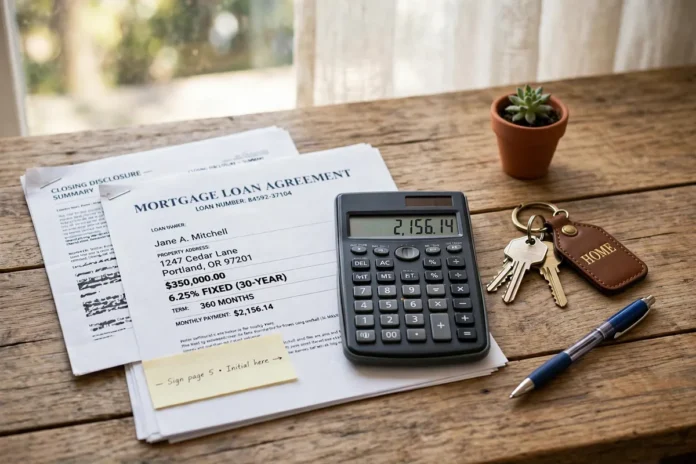
For many would-be buyers, the down payment is the biggest barrier to homeownership. Saving a large lump sum while paying rent can take years, and it is easy to assume that buying is out of reach until you have saved a small fortune. In reality, many buyers purchase homes with modest down payments, using loan programs and strategies designed for exactly that situation. Buying with a low down payment is not a shortcut, and it comes with real trade-offs, but for the right buyer it is a legitimate path to owning a home.
This guide explains, in general terms, how low down payments work, what kinds of loans typically allow them, what they cost you over time, and how to prepare. This is general education, not financial advice: loan programs, rules, and costs change, and a qualified mortgage professional can explain what applies to your situation.

1. Why Low Down Payments Exist
A down payment is the portion of a home’s price you pay upfront, with the rest covered by a mortgage. Traditionally, buyers aimed for a large down payment, but lenders and housing programs have long recognised that a large upfront sum is unrealistic for many creditworthy buyers, especially first-time buyers and younger households. Low down payment options exist to make homeownership accessible without requiring years of saving first, while still giving the lender some security through the borrower’s own money in the deal.
The key point is that a low down payment does not mean no standards. Lenders still check your income, employment, debts, and credit history. A smaller down payment changes the structure of the loan, not the need to show you can afford the monthly payments. Understanding that distinction helps you approach the process realistically: you are not avoiding the lender’s checks, you are meeting them with less cash upfront.
2. Loan Types in General Terms
Several broad categories of mortgage commonly allow lower down payments, though exact requirements vary by lender, location, and program rules at the time you apply. Conventional loans, the standard mortgages offered by banks and lenders, often allow down payments well below the traditional large-deposit level for qualified buyers, with the specific minimum depending on the lender and the borrower’s profile.
Government-backed loans are another well-known route. These programs, backed by federal agencies, are designed to help particular groups of buyers, such as first-time buyers, buyers in rural areas, or eligible military service members and veterans, and they typically feature lower down payment requirements than standard loans. Some programs also offer help with down payments or closing costs, sometimes as grants and sometimes as loans that must be repaid. Because program names, eligibility rules, and limits change, treat any specific program you hear about as a starting point for research, and confirm the current details with a lender or housing counsellor before making plans around it.
3. The Trade-Offs You Should Understand
A lower down payment means borrowing more, and borrowing more has consequences. Your monthly mortgage payment will generally be higher than it would be with a larger down payment, because the loan amount is larger. You will also pay more interest over the life of the loan, since interest is charged on a bigger balance for longer.
Another common trade-off is mortgage insurance. When a buyer puts down less than a certain share of the price, lenders often require insurance that protects the lender if the borrower defaults. This insurance is usually added to the monthly payment, and the rules for when it can be removed vary by loan type. It is a real monthly cost, so factor it into your budget from the start rather than discovering it later.
There is also an equity consideration. With a small down payment, you own only a small share of the home at first. If home values fall, you could owe more than the home is worth for a time, which makes selling or refinancing harder. None of this means a low down payment is a bad choice, but it does mean the decision should be made with eyes open, comparing the total monthly cost, not just the upfront saving.

4. Saving Strategies That Actually Work
Even a low down payment requires saving, and a plan makes it achievable. Start by finding out roughly how much you would need: a target price range, an approximate down payment share, and an estimate of closing costs, which are separate from the down payment and often surprise buyers. Our guide to the hidden costs of buying a house lists the expenses buyers most often miss, and it is worth reading before you set a savings target.
Then automate the saving. A regular automatic transfer to a separate savings account, timed to payday, works better than relying on willpower at the end of the month. Small, consistent amounts add up, especially when combined with windfalls such as tax refunds, bonuses, or money from selling items you no longer need. Some buyers also use dedicated savings accounts or employer schemes where available. Keep the house fund separate from your emergency fund: you will still need emergency savings after you buy, because homeownership brings its own unexpected costs, from a broken boiler to a leaking roof.
It also helps to check whether down payment assistance exists in your area. Some local and state programs, nonprofits, and employers offer grants or low-cost loans for eligible buyers. These programs have their own rules and waiting lists, so research them early rather than assuming they will be available at the last minute.
5. Credit and Budgeting Basics
Your credit profile plays a large role in what low down payment options are open to you and what interest rate you may be offered. In general, a stronger credit history and a lower level of existing debt relative to income make approval easier and borrowing cheaper. If your credit needs work, the most effective steps are usually unglamorous: pay bills on time, keep credit card balances low relative to their limits, and avoid opening several new credit accounts in the months before applying.
Budgeting matters just as much. Lenders look at your overall monthly obligations, not just the mortgage payment, so paying down existing debts before applying can improve your position. Build a realistic monthly budget that includes the mortgage payment, taxes, insurance, utilities, maintenance, and the mortgage insurance mentioned above, and test it: can you live comfortably on that budget for several months before you buy? If the answer is no, a cheaper home or a longer saving period may be the wiser choice. If you are new to the whole process, our first-time home buyer guide walks through the steps from saving to moving in, and our guide to how much a house is worth explains how prices are assessed from the seller’s side too.
Frequently Asked Questions
Can you really buy a house with a low down payment?
Yes, many buyers do. Conventional and government-backed loan programs commonly allow down payments well below the traditional large-deposit level for qualified buyers. The exact minimum depends on the lender, the loan type, and your financial profile at the time you apply.
Does a low down payment mean higher monthly payments?
Generally, yes. A smaller down payment means a larger loan, which usually means higher monthly payments and more total interest over the life of the loan. Mortgage insurance may also be required, adding to the monthly cost.
What is mortgage insurance in simple terms?
It is insurance that protects the lender, not the borrower, if the borrower defaults. It is often required when the down payment is below a certain share of the price, and it is usually paid as part of the monthly mortgage payment. The rules for removing it vary by loan type.
Should I wait until I have saved a large down payment?
It depends on your situation. A larger down payment lowers monthly costs and total interest, but waiting years while paying rent has its own cost, and home prices can rise in the meantime. Compare the total monthly cost of buying sooner with a low down payment against the cost of waiting, and discuss your options with a qualified mortgage professional.
Conclusion
Buying a house with a low down payment is a realistic option for many buyers, not a fantasy. Understand the loan types in general terms, weigh the trade-offs honestly, save with a plan, and get your credit and budget in order before you apply. And remember: this guide is general education, not financial advice. Talk to a qualified mortgage professional about your own circumstances before you commit, so the home you buy is one you can comfortably afford for years to come.