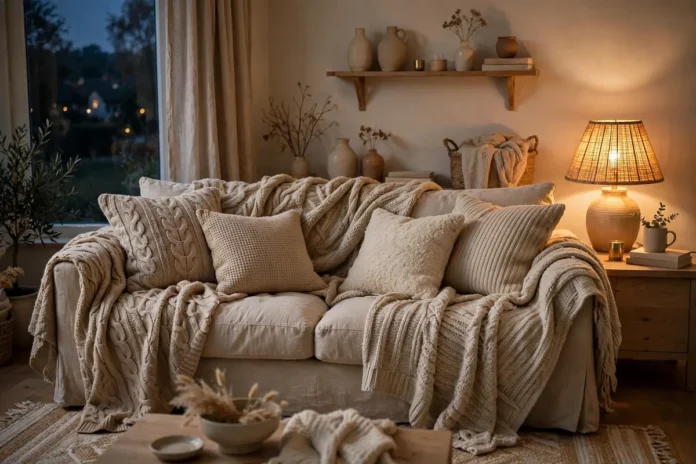
Every home has a dead corner — the space beside a window, the end of a hallway, the awkward bit of a bedroom that fits nothing useful. A reading nook is what that corner is for. It does not need a renovation, a spare room or a big budget: it needs a chair that invites sitting, light that flatters a page, somewhere for books to live, and enough texture to make the spot feel separate from the rest of the room. Here is how to build one that actually gets used, rather than photographed once and ignored.
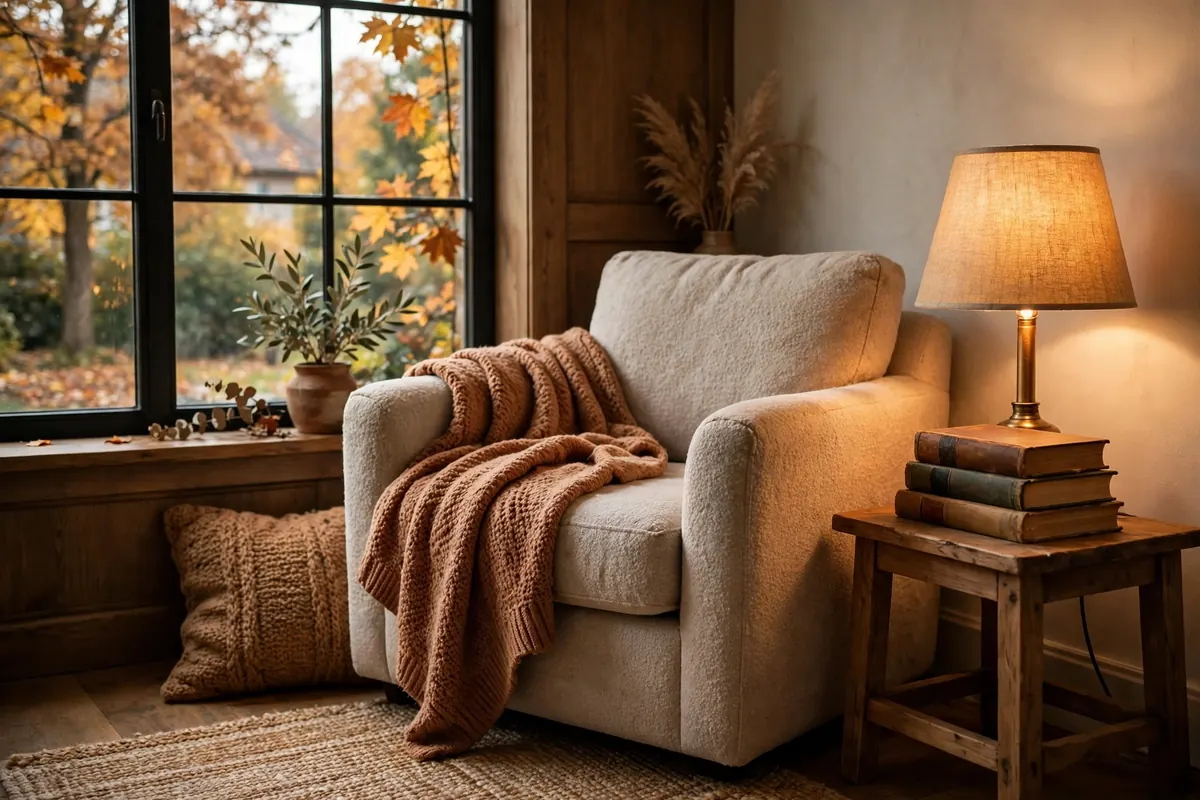
A reading nook needs only three things to work: a chair you sink into, light you can read by, and a book within reach.
The chair comes first
Everything else serves the chair. Choose one you can sit in for an hour without shifting: deep enough to tuck a leg under, with arms at a height that holds a book comfortably, and a back that supports rather than perches. An armchair beats a dining chair every time, and a second-hand armchair with a new throw beats a showroom piece nobody sits in. Add a footstool or ottoman — feet up is the difference between reading for ten minutes and reading for an hour — and a small side table for a drink and the book you will read next. If space is tight, a window seat does the same job with built-in storage underneath; a thick cushion, a few pillows and a throw turn an architectural leftover into the best seat in the house.
Light in layers, shelves within reach

Shelving turns a chair into a nook: books close at hand make the corner feel intentional, not accidental.
Reading light should come from beside or behind you, not from overhead: a floor lamp or table lamp with a warm bulb, positioned over your shoulder, lights the page without glare. Add a second, softer source — a candle (real or LED) or a small ambient lamp — for the atmosphere that makes the nook feel like an escape rather than a workstation. Then shelving: books within arm’s reach are what make the nook a habit, so a small bookcase, a wall shelf or even a stacked pile beside the chair beats a library in another room. Style the shelves loosely — books upright and horizontal, a plant, a framed photo — and leave a little empty space, because a shelf crammed full looks like storage, not invitation. The same layering principle that makes a whole room cozy applies here in miniature, and the site’s cozy fall decor ideas guide shows how texture does the heavy lifting. While the cozy winter bedroom guide covers the same warmth for the bedroom.
FAQ
What is the most important part of a reading nook?
The chair. A chair you can sit in comfortably for an hour matters more than any decoration — everything else serves it.
How do I make a reading nook in a small space?
Use a window seat, a corner armchair, or even a single chair with a wall shelf and a floor lamp. A nook is defined by intention, not square footage.
What lighting is best for reading?
A warm lamp positioned over your shoulder, beside or behind you — not a harsh overhead light, which causes glare on the page.
Do I need built-in shelves?
No. A small bookcase, wall shelves or a stack of books beside the chair all work — the point is books within arm’s reach.