Holiday hosting puts a dining room under pressures it never faces the rest of the year: more guests than chairs, serving dishes that need somewhere to land, candles, conversation that lasts for hours, and traffic between kitchen and table all evening. A room that works beautifully for four can feel cramped and chaotic for ten. The good news is that hosting readiness is mostly about layout, light and logistics rather than decoration — most of it can be sorted in a weekend.
Start With Layout and Flow
Before moving a single chair, think about movement: guests need to slide into their seats without squeezing past furniture, and whoever serves needs a clear path from the kitchen door to the table. As a working guide, leave roughly 90 cm (about 3 feet) between the table edge and the wall or nearest furniture, so chairs can push back and people can pass behind seated guests. If space is tight, push the table off-centre so the serving side gets the wider gap and the other side sits closer to the wall.
Clear the route. Side tables, plant stands and floor lamps beside the serving path are trip hazards on a crowded evening, especially for someone carrying a hot dish. Anything not needed for the meal should move out of the room entirely — a room reads calmer, and moves easier, with fewer objects in it.
Sizing the Table and Seating More People
A comfortable place setting needs about 60 cm (24 inches) of table width per person, with elbow room judged honestly rather than optimistically. When the guest list outgrows the everyday table, several honest solutions exist. An extendable table earns its keep at the holidays — leaves stored inside it add two to four seats without a bigger footprint all year. Folding tables butted against the main table and covered by one long cloth read as a single setting and disappear afterwards.
Chairs do not need to match. Mixing dining chairs with a bench along one side seats more people in less space: a bench slides under the table afterwards and fits three where two chairs would go. Borrowed chairs from other rooms — desk chairs, an upholstered bedroom chair — look intentional if one small thing ties them together, such as the same cushion colour or napkin fold at every setting. What matters is that every seat is sturdy, at roughly table height, and tested before the day rather than discovered wobbly by a guest.
Lighting for Dinner, Not for Daylight
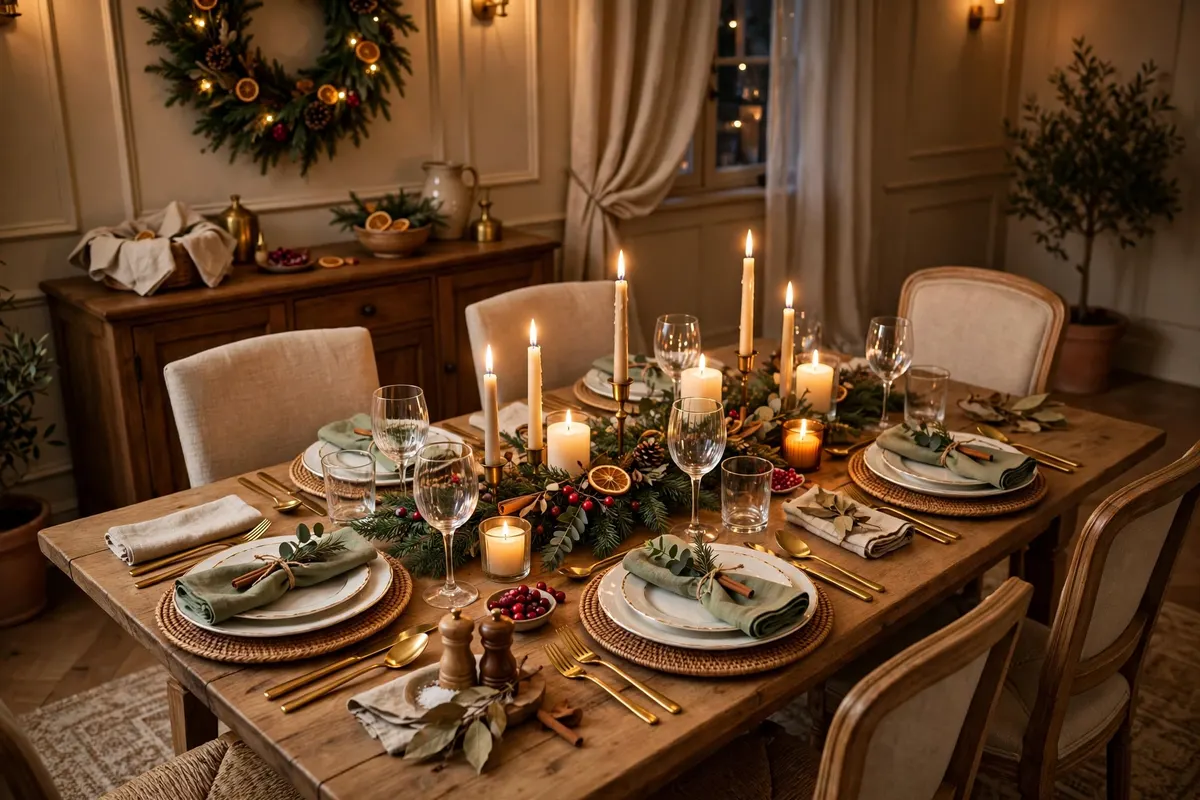
A dining room at night lives or dies by its light. A single bright ceiling fixture flattens faces and makes a long meal feel like a meeting; the goal is warm, low and layered. If the overhead light has no dimmer, fitting one is the highest-impact change — or swap to warm bulbs around 2700K and let lamps do the rest. Lower a pendant or chandelier so it hangs roughly 75–90 cm above the tabletop, close enough to create a pool of light over the table without blocking sightlines.
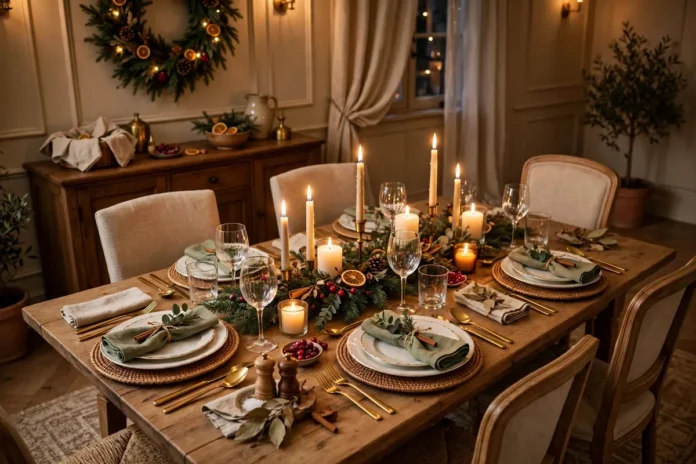
Candles do the work no bulb can, but keep them low — tea lights and short pillars along the table rather than tall arrangements blocking eyelines. Guests should be able to see each other’s faces across the table. A centrepiece should sit below eye level when seated, or be tall and narrow enough to see under and around. The table-styling side of the season is covered in these thanksgiving table decor ideas, and the room’s design side in the earlier modern dining room design ideas guide.
A Simple Serving Station
The table should hold the meal, not the whole kitchen. A sideboard, console table, bar cart or sturdy bookshelf against the wall becomes a serving station: water jugs, extra glasses, spare cutlery and the next course live there instead of crowding the settings. Drinks work best slightly apart from the food — a small drinks corner keeps guests refilling a glass out of the server’s path.
Set the station up before guests arrive, everything washed and within reach. During the meal it also becomes the landing spot for empty dishes, keeping the table clear and the room calmer. In a room without a sideboard, a folding tray table or a cleared desk just outside the door does the same job.
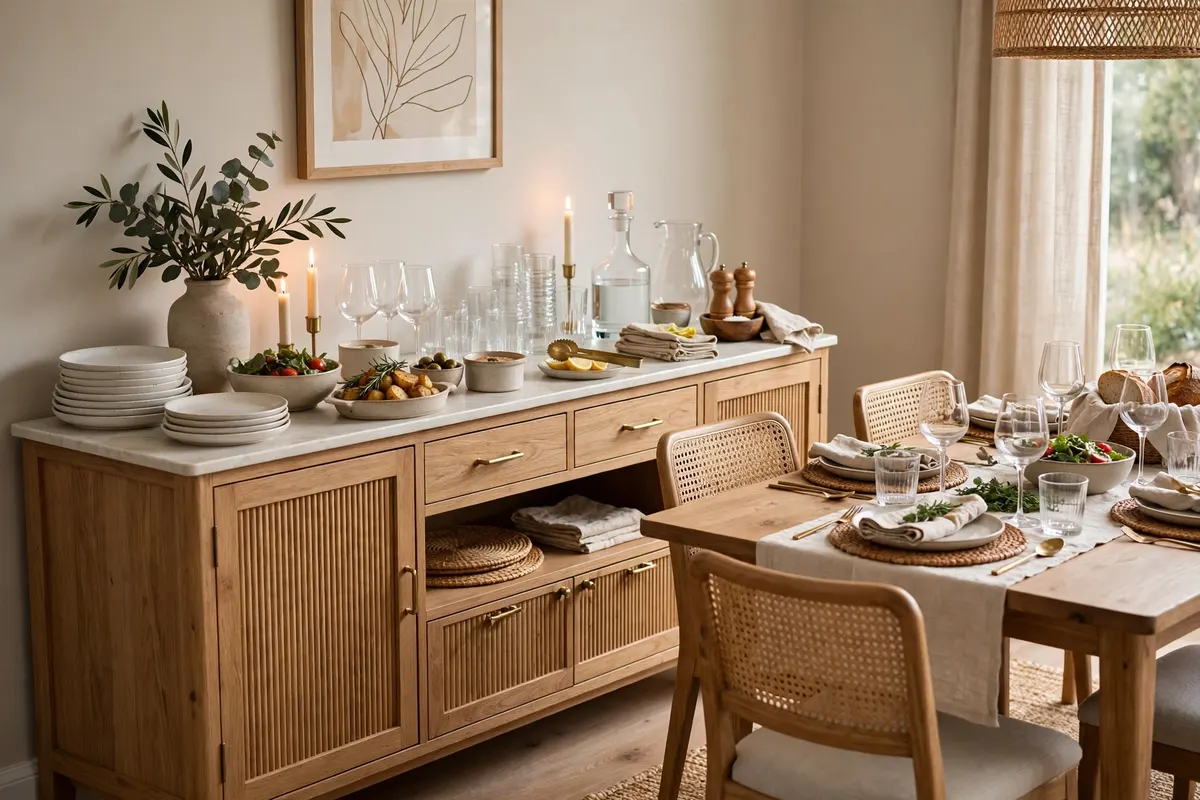
Table Setting Layers, in Plain Language
A layered setting looks elaborate but is only a short stack. Start with the base: a tablecloth or runner protects the surface and defines the table. On it goes the charger or a large dinner plate, then the main plate, with the side plate to the left. Cutlery works from the outside in — forks left, knives and spoons right — and glasses sit above the knives: water first, then wine. A folded napkin on the plate or under the fork finishes the stack, and even a handwritten place card quietly solves the seating question before it starts.
None of the layers need to match perfectly. Consistent colour does the unifying work: one metal finish for cutlery, one colour family for napkins and candles, and plain white or cream dishes accept any of it. Guests notice the consistency and the care, not whether the set came from one box.
Small-Room Dining Solutions
A small dining room hosts well when every piece earns its place. A round table seats conversation better than a rectangle of the same footprint and has no corners to bump. A bench or banquette against the wall removes chair push-back space on one side. Extendable and drop-leaf tables shrink back for everyday life. Serving from a station outside the room frees the table for people only. Simplest trick of all: serve fewer dishes at once. Plated courses, or a buffet in the kitchen, keep a small table feeling generous rather than buried.
Storage for the Extra Pieces Afterwards
Holiday hosting leaves a trail: borrowed chairs, table leaves, once-a-year platters, the good glasses. Plan where they live before the season starts, not in January. Table leaves belong in a padded bag under a bed or against a closet wall, never in a damp basement. Extra chairs stack or fold into a hall closet. Platters and serving bowls store best in low kitchen cabinets or a sideboard, wrapped for easy lifting. A labelled box for the holiday linens and candles keeps the whole kit together.
Where to Spend First on a Small Budget
Spend in the order guests will feel it. First, enough comfortable seats — borrowed is fine, wobbly is not. Second, light: a dimmer or warm bulbs change a room more than any decoration. Third, one serving surface, which can be a secondhand sideboard or a folding table under a cloth. Fourth, enough plain dishes and glasses that the evening is not paced by washing up. Matching sets, new centrepieces and seasonal decor come last — they photograph well but change the experience least.
Frequently Asked Questions
How much space should there be around a dining table?
Allow roughly 90 cm (about 3 feet) between the table edge and the wall or nearest furniture so chairs can be pushed back and people can pass behind seated guests. On the serving side, a little more room makes carrying dishes easier.
How many people can a dining table seat?
Allow about 60 cm (24 inches) of table width per person for a comfortable setting. A 180 cm table seats three per side comfortably; benches can fit an extra guest in the same length. Extendable tables add seats without taking up room all year.
What is the best lighting for a dinner party?
Warm, dim and layered. A dimmed overhead light or pendant around 2700K, plus low candles on the table, flatters faces and keeps the mood relaxed. Avoid one bright ceiling light, and keep anything tall out of guests’ sightlines.
How high should a centrepiece be?
Low enough that seated guests can see each other over it, or slim enough to see around. If a centrepiece blocks the view across the table, it is too big.
How can a small dining room host a big group?
Use a round or extendable table, benches instead of chairs on one side, and a serving station outside the room so the table holds only people and settings. Serving fewer dishes at once, or plating in the kitchen, also keeps the table clear.
What should be bought first for holiday hosting on a budget?
Comfortable seating first, then lighting — a dimmer or warm bulbs — then a serving surface, then enough plain dishes and glasses. Decorative matching sets come last, because guests feel comfort and light far more than tableware.