A roof rarely fails without warning. Long before snow settles on it, small problems — a lifted shingle, cracked flashing, a gutter full of leaves — are usually visible to anyone who knows where to look. Winter turns those small problems into leaks, ice dams and emergency repairs, because snow, freeze-thaw cycles and meltwater exploit every weak point at once. A methodical roof winter check in late autumn, done mostly from the ground, catches most of them while they are still cheap and simple to fix: the roof surface first, then the edges and details, then the view from inside the attic, and finally the judgment calls about what to fix and what to delegate.

Start From the Ground: The Binocular Pass
The single most useful tool for a roof check is a pair of binoculars. From the ground, binoculars bring shingles, ridges and flashing close enough to judge their condition without anyone setting foot on the roof. Scan each slope in overlapping bands from eaves to ridge, noting anything that looks different from its neighbours.
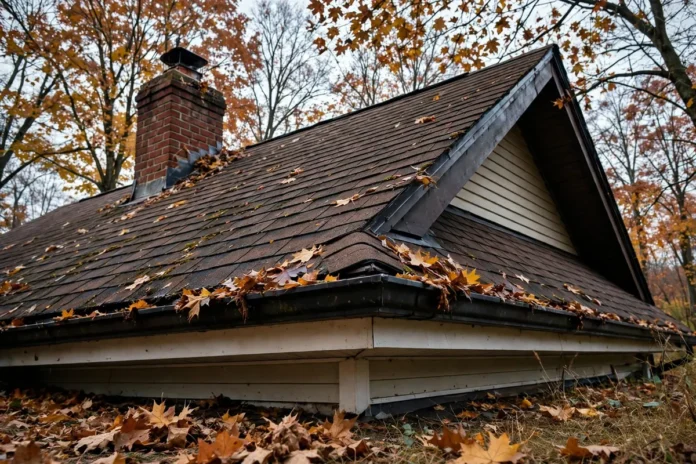
The things to look for on asphalt shingles are straightforward. Missing shingles are the obvious one, but curling edges, cracked or blistered surfaces, and shingles that have lifted or lost their granular coating matter just as much, because each is a place where wind-driven snow and meltwater can get underneath. Check the ridge line for cracked or misaligned shingles, and look along the eaves, where wear shows first. Photograph anything questionable; a dated photo makes a later conversation with a roofer far easier, and shows whether a defect is new or stable.
Flashing: The Detail That Causes Most Leaks
Roofs rarely leak through the middle of a shingle field — they leak at the joints, and flashing, the metal strips that seal those joints, is where a winter check earns its keep. Through the binoculars, examine the flashing around the chimney first: it should sit flat and tight, with no lifted corners, gaps or cracked sealant. Rust streaks or staining below the flashing line mean water is already getting behind it.
Then check the valleys, where two slopes meet. Valleys carry a concentrated flow of water and snowmelt, so they need to be clear of debris and their lining intact. Look at the seals around vent pipes, skylights and roof windows: the rubber boots around vent pipes crack with age and sun, and a split boot is a classic slow leak that only announces itself once snowmelt is running. Where the roof meets a wall — along dormers or where a lower roof butts into a house wall — the step flashing should be visible, even and unbroken. Any flashing that is visibly bent, separated or patched with smeared sealant deserves a professional look before winter, because flashing repairs done in freezing weather rarely bond properly.
Gutters and Downspouts: Clear the Exit Route
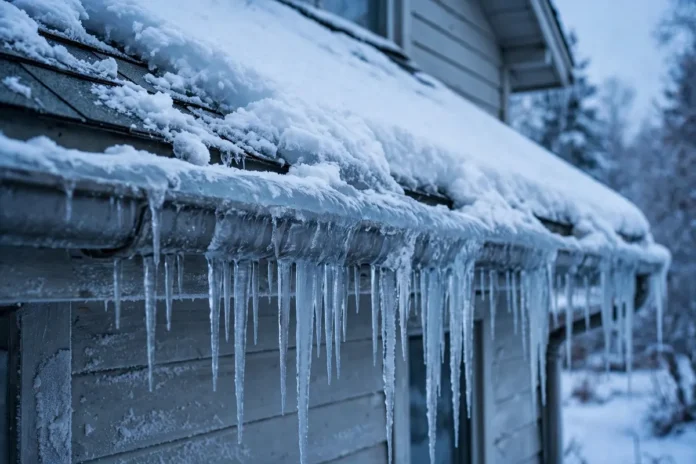
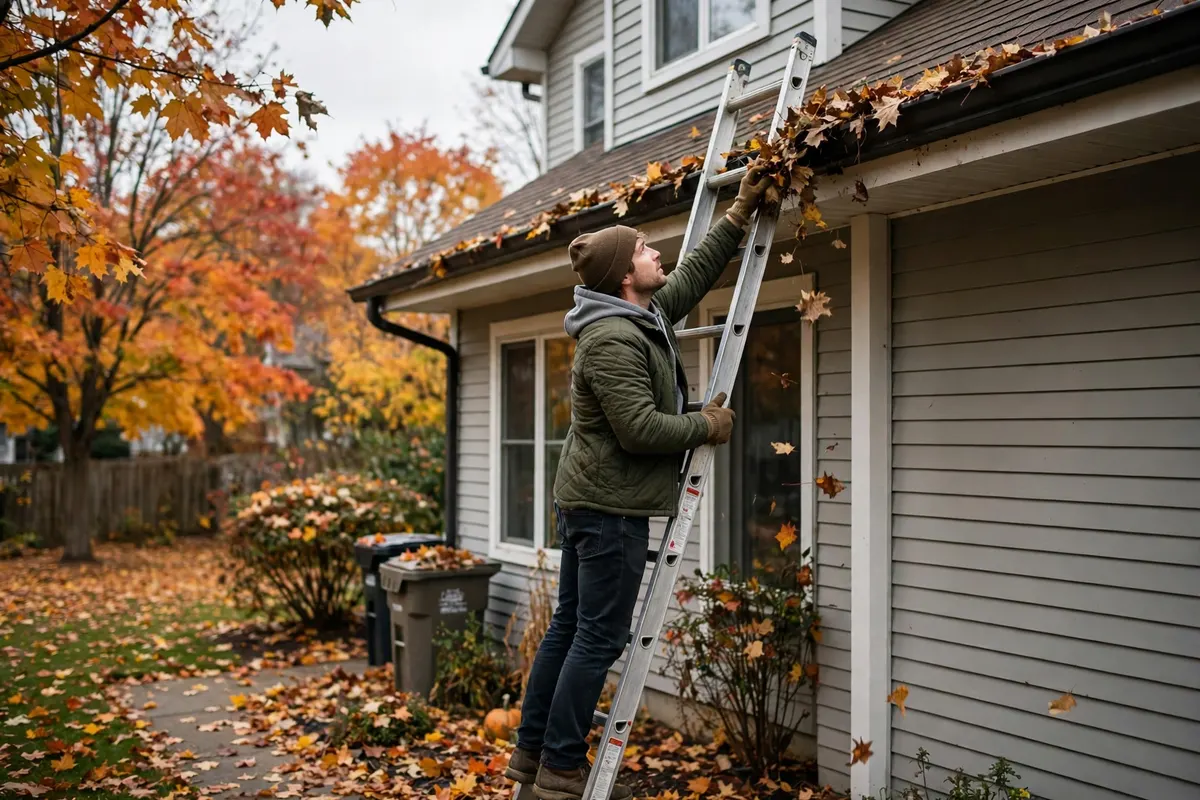
A roof can be sound and still cause winter damage if its water has nowhere to go. Gutters clogged with autumn leaves hold water that freezes, expands and can force its way under the eaves — one of the main ingredients of an ice dam. Before the cold sets in, gutters should be cleared along their full length, and downspouts checked to confirm water flows freely through them. Gutter seams should not drip, brackets should hold the gutter at a slight fall toward the downspout, and downspouts should discharge water well away from the foundation.
The Attic Side of the Check
Half of a roof check happens indoors. The attic shows the underside of the roof’s story, and problems invisible from outside often appear here first. On a bright day, look for pinpoints of daylight coming through the roof deck — anywhere light enters, water can follow. Dark stains, streaks or soft patches on the decking and rafters point to past or active leaks, and mould or a musty smell means moisture has been sitting there a while. Check the insulation too: it should be dry and evenly spread — wet or compressed insulation loses its value and signals a leak or condensation problem above it. The full routine for assessing and topping up insulation is covered in the attic insulation guide, which pairs naturally with this check.
Ventilation matters as much as insulation. Warm, moist air from the house rises into the attic; if it cannot escape through the vents, it condenses on the cold underside of the roof. The same warm air warms the roof deck unevenly, melting snow on the upper roof while the eaves stay frozen — the meltwater refreezes at the edge, builds an ice dam, and backs up under the shingles. That is how most ice dams form, and why blocked soffit vents, bathroom fans venting into the attic instead of outside, and patchy insulation are winter problems rather than minor quirks. Confirm that soffit and ridge vents are unobstructed and that every extractor fan duct leads outdoors.
Moss, Debris and Overhanging Branches
Moss holds moisture against the shingle surface and lifts edges as it grows, so patches of moss — most common on shaded, north-facing slopes — should be treated gently rather than ignored or scraped, since aggressive scraping damages shingles. Debris collecting in valleys and behind chimneys traps water exactly where flashing works hardest, and should be cleared.
Finally, look up beyond the roofline. Branches overhanging the roof drop leaves into gutters, scrape shingles in wind, and — loaded with snow or ice — can break and fall with real force. Limbs that touch or nearly touch the roof should be cut back by a tree professional before winter.
Do It Yourself or Call a Roofer?
Plenty of the winter check is safe, sensible DIY: the ground-level binocular inspection, clearing gutters from a properly footed ladder, the attic inspection, and noting and photographing problems. Other findings should go straight to a roofer: replacing missing or damaged shingles, repairing or renewing flashing, fixing a split vent boot, and any work that requires walking the roof itself. The dividing line is simple — if the job involves standing on the roof, sealing a joint, or disturbing the shingle field, it belongs to a professional. And in storm-forecast week, the mindset in the winter storm home prep checklist applies to the whole house, roof included.
Safety Rules That Are Not Negotiable
Never climb onto a wet, frosty or icy roof. Shingles that are damp are slippery; frost makes them treacherous, and no inspection is worth a fall. Where a ladder is used for gutter work, it should stand on firm, level ground, extend above the gutter line, be footed by a second person where possible, and never be leant against the gutter itself.
Roof Winter Check at a Glance
- ☐ Binocular scan of every slope for missing, curling or cracked shingles
- ☐ Inspect flashing at the chimney, valleys, vents and wall junctions; note rust or lifted edges
- ☐ Clear gutters and downspouts; confirm water flows freely and discharges away from the house
- ☐ Check the attic for stains, daylight, damp insulation and mould
- ☐ Confirm attic vents are clear and extractor fans duct outside
- ☐ Note moss and debris in valleys; arrange treatment and clearing
- ☐ Have overhanging branches cut back by a professional
- ☐ Book a roofer early for flashing, shingle or vent-boot repairs
Frequently Asked Questions
When is the best time to do a roof winter check?
Late autumn, after most leaves have fallen but before the first lasting snow and hard frosts — that timing clears the gutters of the season’s leaf fall and leaves a window to book repairs while roofers still have availability.
How can a roof be inspected without climbing on it?
From the ground with binoculars, slope by slope, looking for missing, curling or cracked shingles and lifted or rusty flashing — plus from inside the attic, where stains, daylight and damp insulation reveal leaks the outside view can miss.
What is an ice dam, in simple terms?
Warm air leaking into the attic melts snow on the upper roof; the water runs down to the still-frozen eaves and refreezes into a ridge of ice, and meltwater ponds behind it and can work under the shingles. Good insulation and ventilation are the main prevention.
Which roof problems can a homeowner fix, and which need a roofer?
Gutter clearing, ground and attic inspection, and debris removal are reasonable DIY. Shingle replacement, flashing repair and anything requiring walking on the roof should go to a professional roofer.
Is moss on a roof a serious problem?
Left alone, yes. Moss holds moisture against the shingles and lifts their edges as it grows, shortening the roof’s life. Treat it gently rather than scraping it off aggressively, which damages the shingle surface.
Why does attic ventilation matter in winter?
Without it, warm moist air from the house condenses on the cold roof deck, wetting insulation — and the escaping warmth melts roof snow unevenly, which is the main cause of ice dams.