A drafty window is one of the most common winter complaints, and one of the most fixable. Cold air creeping in around a window frame makes rooms uncomfortable, forces your heating to work harder, and can leave condensation and damp patches behind. The good news is that most window drafts can be fixed in an afternoon with inexpensive materials and basic tools — no new windows required.
This guide explains how to find exactly where the draft is coming from, how to choose and fit the right fix for each type of gap, and when a window is beyond a do-it-yourself repair. Work through the steps in order, and start before the coldest weather arrives so you can test your work properly.
How to Find Where the Draft Comes From
Before buying anything, find the actual source of the draft. On a windy day, hold a lit incense stick or a thin tissue near the edges of the window, moving slowly around the frame. Where the smoke or tissue moves sharply, air is getting through. Check four places: where the moving sash meets the frame, where the two sashes meet in the middle, around the outer frame where it meets the wall, and around any trickle vents or locks.
Also check whether the draft is a gap problem or a window problem. If the window rattles, will not close fully, or the latch does not pull it tight, the issue may be worn hinges, a warped sash, or a broken lock — all of which need attention before sealing. If the glass itself feels cold but there is no air movement, that is heat loss through the pane rather than a draft, and window film or heavier curtains will help more than weatherstripping.
Make a simple list of every window and where each one leaks. You will probably find that two or three windows cause most of the problem, and fixing those first gives the biggest improvement for the least effort.
Weatherstripping: Types and How to Fit Them
Weatherstripping seals the moving parts of a window — the gaps that open and close as the window operates. Choosing the right type matters more than buying the most expensive one.
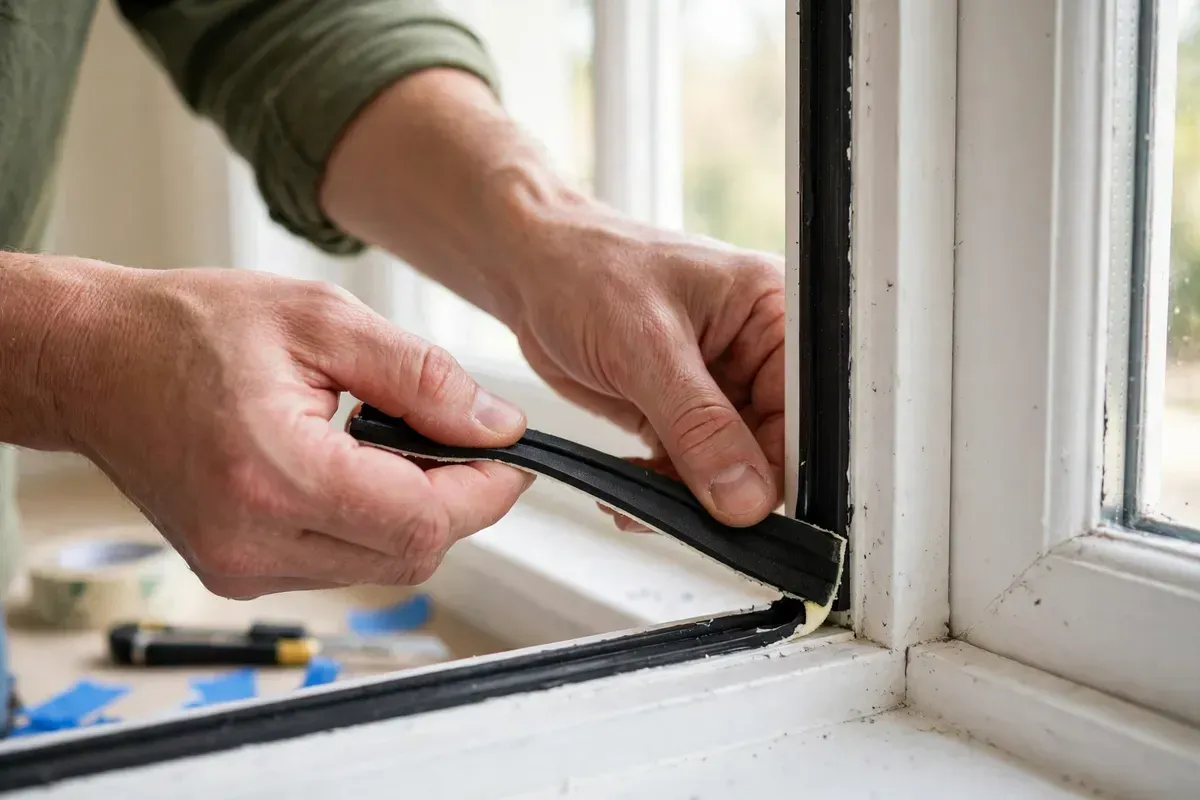
- Adhesive foam tape: The easiest option for most casement and sliding windows. Clean the surface, cut to length, peel, and press firmly into place. It compresses when the window closes and springs back when it opens. Expect to replace it every year or two.
- V-strip (tension seal): A durable folded plastic or metal strip that springs open to fill the gap. It works well along the sides of sliding sashes and lasts longer than foam. Fit it with small nails or adhesive, following the manufacturer’s instructions.
- Tubular rubber or silicone gaskets: Best for larger or uneven gaps. These come in adhesive or nail-on versions and compress to form a tight seal. Measure the gap first — a gasket that is too thick will stop the window closing, and one that is too thin will not seal.
- Felt strips: Cheap and easy to fit with staples or adhesive, but they wear quickly and absorb moisture, so they are best as a short-term fix.
Whatever type you choose, clean the surface thoroughly before fitting, measure twice, and test the window after fitting. It should close and latch with slightly more resistance than before, but not so much that you have to force it. If the window will not latch, the weatherstripping is too thick for that gap.
Caulking Gaps Around the Frame
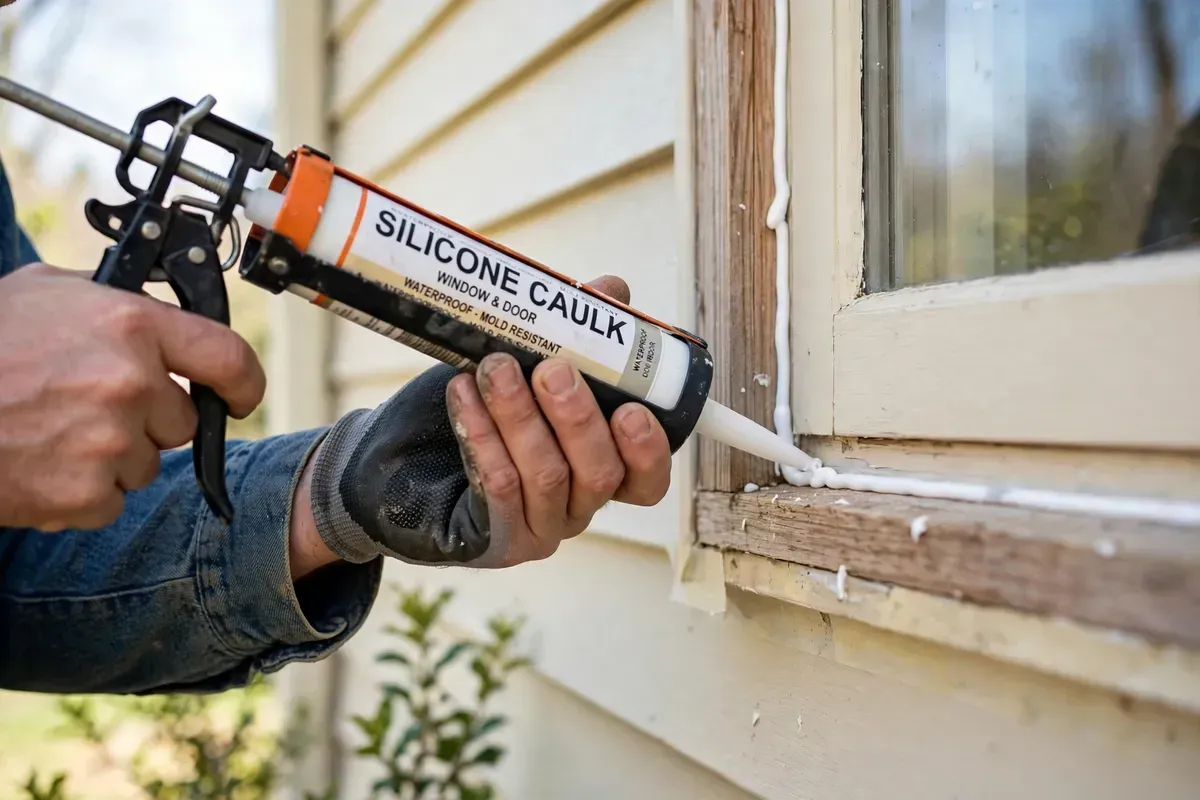
Caulk is for gaps that do not move — where the fixed window frame meets the wall, or where trim has pulled away from the plaster. This is a different job from weatherstripping, and using caulk on a moving sash will glue the window shut, so keep the two jobs separate.
Start by removing old, cracked caulk with a utility knife or a scraper, and clean the joint so the new caulk can grip. Cut the tip of the caulk tube at a slight angle, with an opening slightly smaller than the gap. Apply in one steady motion, keeping constant pressure on the trigger, then smooth the bead with a wet finger in a single pass. Good caulking looks neat and even; a ragged bead usually means the tip was cut too large or the gun moved too fast.
Use an exterior-grade caulk for the outside of the frame and a paintable interior caulk inside if you plan to paint over it. Let it cure for the time stated on the tube before painting or exposing it to rain. One tube is usually enough for several windows, so this is one of the cheapest fixes in the whole house.
Window Film and Draft Stoppers
For windows that are single-glazed or that you rarely open in winter, insulating window film adds a useful extra layer. The film is applied to the inside of the frame with double-sided tape and shrunk tight with a hairdryer, creating a still layer of air between the film and the glass. It is nearly invisible once fitted and can noticeably reduce both drafts and heat loss. It is not a substitute for sealing real gaps, but it works well alongside weatherstripping.
Draft stoppers, also called draft excluders, are the simplest fix of all. A fabric tube or brush strip placed along the bottom of a window blocks the gap beneath a sash or sill. They are ideal for older windows with uneven bottoms, for rented homes where you cannot make permanent changes, and as a quick stopgap while you plan a proper repair. Heavy curtains or thermal blinds also help: closed at night, they add insulation and cut the chill from the glass, though they do nothing about air leaking around the frame.
When a Window Needs Professional Repair or Replacement
Some windows are beyond sealing. Call a professional if the frame is rotten, the sash is badly warped, the glass is cracked or the sealed unit has failed (look for permanent misting or condensation between the panes), or the window will not open or close safely. A window that is painted shut is also a safety issue: in an emergency it must be possible to open it, so free it or have it repaired rather than sealing it permanently.
Replacement is worth considering when several windows are in poor condition, when frames are single-glazed and rotting, or when the cost of repeated repairs approaches the cost of new units. Modern double-glazed windows are a significant investment, so get at least two or three quotes, and compare the whole installed price, not just the unit price. If you are working on a whole-house winter plan, our winterize your home checklist helps you prioritize windows alongside heating, insulation, and pipes.
Safety Notes You Must Not Skip
Never seal a room completely. Homes need ventilation, and some appliances depend on it. Never block air vents, trickle vents that serve gas appliances, or the air supply to a boiler, fire, or stove — doing so can cause dangerous carbon monoxide build-up. If you are unsure whether a vent is needed, leave it alone and ask a qualified heating engineer.
Work safely on ladders when dealing with upstairs windows from outside, and never lean out of an upper window to reach the exterior frame. For upper-floor exterior work, hire someone with the right equipment. Finally, keep at least one window in each bedroom openable after any sealing work: escape routes matter more than a perfectly draft-free room.
Draft-proofing pairs well with other low-cost improvements around the house. If you are refreshing rooms while you work, our guides to budget kitchen updates and painting a room like a pro cover affordable upgrades that make the whole home feel warmer and newer.
Frequently Asked Questions
What is the cheapest way to fix a drafty window?
Adhesive foam weatherstripping and a tube of caulk are the cheapest effective fixes, usually costing only a few dollars per window. A draft stopper for the bottom of the sash is even cheaper and works instantly for that one gap.
Should I caulk or weatherstrip my windows?
Both, but in different places. Weatherstrip the moving parts — where sashes meet the frame and each other. Caulk the fixed joints — where the frame meets the wall and where trim has separated. Never caulk a moving sash shut.
Does window film really help with drafts?
Window film helps with heat loss through the glass and can reduce light drafts, but it will not fix a large gap around the frame. Use it as an extra layer after sealing the real gaps with weatherstripping and caulk.
When should I replace a drafty window instead of repairing it?
Replace when the frame is rotten or badly warped, the sealed glass unit has failed and mists permanently, or the window cannot be opened and closed safely. If several windows are in this condition, replacement usually makes more financial sense than repeated repairs.
Final Thoughts
Fixing drafty windows is one of the highest-value winter jobs in any home: cheap materials, an afternoon of work, and rooms that feel noticeably warmer the same evening. Find the gaps first, seal moving parts with weatherstripping and fixed joints with caulk, add film or draft stoppers where they help, and never seal off the ventilation your home and appliances need. Do it before the coldest weather arrives, and winter will feel very different this year.