A sump pump does its most important work on the worst nights of the year — midwinter storms, rapid thaws and the long soaking rains that arrive when the ground is already saturated. It also tends to be ignored for months at a time, sitting in a dark pit, which is why failures are usually discovered with water already on the floor. A sump pump check takes less than half an hour, needs no special tools beyond a bucket, and answers the only questions that matter before the wet season starts. Does the pump run? Does it empty the pit quickly? Does the water leave the house properly? And if the power goes out, what happens then?

Start With the Pit Itself
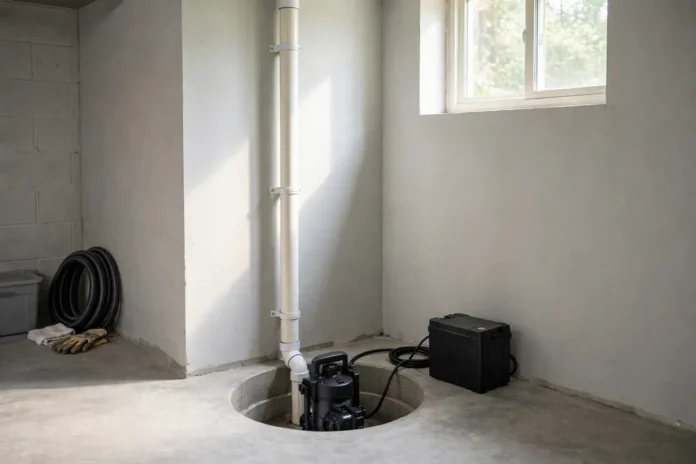
Unplug the pump before putting any hands in the pit, then lift the cover and look inside. Over a season the basin collects silt, gravel, sand and the occasional lost screw or toy, all of which can jam the float or clog the pump’s intake. Scoop out loose debris by hand, wipe down the sides if slime has built up, and clear the pump’s inlet screen at its base.
While the pit is open, look at the pump itself. Check the power cord for damage, confirm the unit sits level and upright on the pit floor, and make sure the float can move freely through its full range without catching on the basin wall, the discharge pipe or the cord. A surprising share of sump failures are simply a float that could not rise.
The Bucket Test: Make the Pump Prove It Works
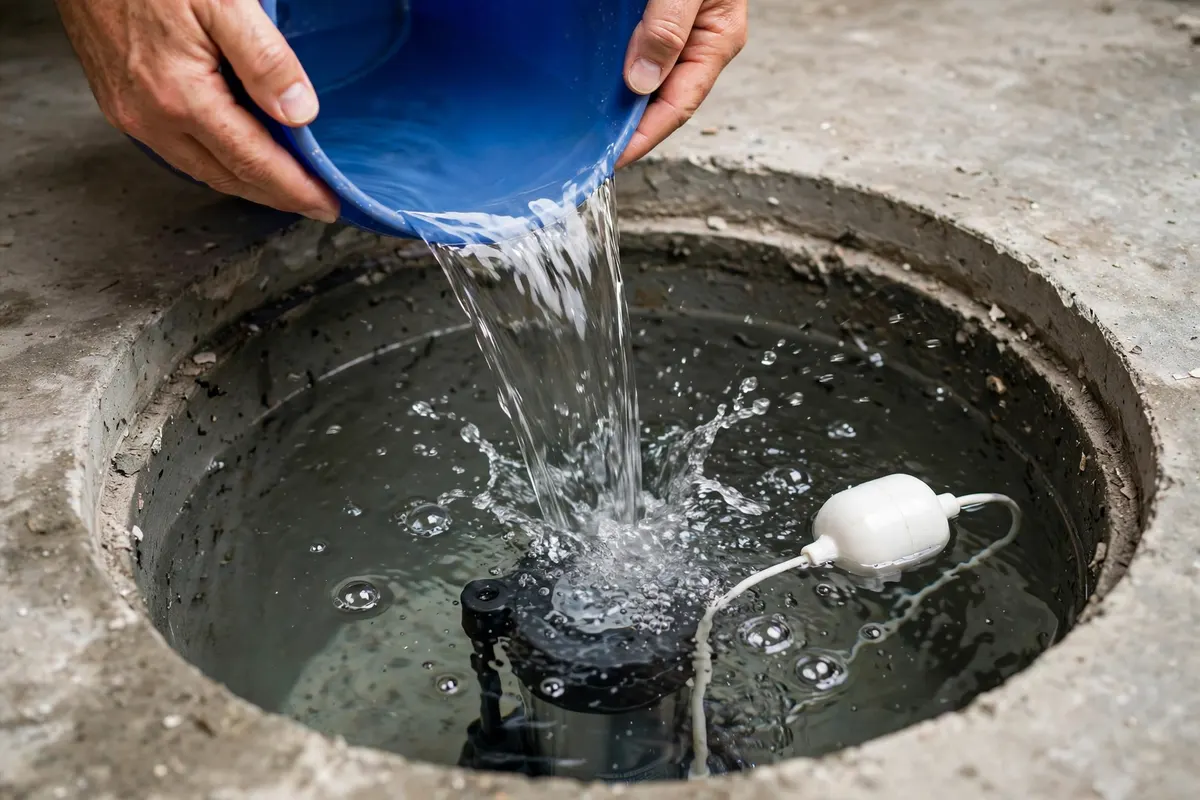
A visual check is not enough — a pump can look fine and still fail under load. The real test is simple. With the pump plugged back in, slowly pour a large bucket of clean water — roughly five gallons — into the pit. The water level should rise, the float should lift, and the pump should switch on by itself. Watch three things: how quickly it starts, how fast it empties the pit, and whether it switches off cleanly once the water is down.
Repeat the pour once more. A healthy pump handles both cycles the same way. Warning signs: a humming motor that does not move water, grinding or rattling noises, a pump that empties the pit very slowly, water draining back into the pit when the pump stops (a failing check valve), or a float that must be lifted by hand. Any of these means the pump or valve needs repair or replacement now, while the basement is dry and there is no weather deadline.
Follow the Discharge Line Outside
The pump can work perfectly and still flood the basement if the water has nowhere to go, so walk the discharge line from the pit to where it exits the house, then go outside and find the outlet.
The outlet should be clear of mulch, leaves and soil, and should release water well away from the foundation — several feet at a minimum, sloping downhill where the ground allows — so the pumped water does not soak back toward the house and get pumped again. In cold weather, an outlet buried in snow or blocked by ice can back the whole system up, so note where it is before snow covers it. Inside, look for leaks or loose joints along the pipe while the bucket test runs, and check that the check valve on the discharge line is installed and working; without it the pump works twice as hard. Gutters feed the same ground around the foundation, so the discharge check pairs naturally with the guidance to clean gutters before winter — both jobs keep roof and ground water moving away from the house instead of toward the basement walls.
Power, Alarms and the Backup Plan
Storms that fill sump pits are the same storms that knock out power, and a standard sump pump does nothing at all without electricity. Start with the basics: the pump should be plugged into a working outlet, ideally a GFCI-protected one, and not into an extension cord arrangement. Test the outlet, and never unplug the pump for another use without plugging it straight back in — more than one basement has flooded behind a pump that was unplugged and forgotten.
Then consider the backup layer. A battery backup pump sits beside or above the main pump and takes over during an outage; if one is already installed, check its battery — look for the date on it, confirm the charger shows it is maintaining a charge, and run the backup through the same bucket test by unplugging the main pump. Backup batteries are consumables with a life of a few years, and a dead one fails silently. A high-water alarm is the cheaper safety net: a simple sensor that sounds when water rises higher than it should. Neither addition costs much next to one flooded basement.
The Winter-Specific Risks
Cold weather adds two failure modes that a summer check never sees. First, the discharge line itself can freeze where it leaves the house or runs through an unheated space, especially if the pipe has a low spot where water sits between cycles. A line that slopes steadily away from the house, with no sagging sections, is the main defence; persistent freezing is a job for a plumber, not a DIY experiment. Second, the pit’s water supply changes character: melting snow and rain-on-snow events can deliver water for days at a stretch, and heat escaping through a poorly insulated roof melts the snowpack from underneath, sending extra meltwater down to the foundations during a thaw — one more reason the checks in this attic insulation guide matter before winter. So a marginal pump that survived short summer storms may run almost continuously in a thaw. If the bucket test showed a slow or tired pump, replace it before that season rather than during it. Pumps are wear items — many last roughly seven to ten years — and a unit of unknown age in a house that depends on it is a reasonable candidate for proactive replacement. While winterising, it is worth remembering that the same freeze risk applies above ground to pipes and outdoor taps, covered in this guide to prevent frozen pipes.
Frequently Asked Questions
How often should a sump pump be checked?
At minimum twice a year — once before the wettest season and once in spring — plus a quick test after any long dry spell, since a pump that sits unused for months can seize or have its float stick.
How much water is needed for the bucket test?
About five gallons — one large bucket — poured in slowly. That is usually enough to raise the float and trigger a full cycle. Pouring slowly matters: dumping it in at once can splash the float and give a misleading result.
What does it mean if water flows back into the pit after the pump stops?
The check valve on the discharge line is failing or missing. The valve keeps the water in the vertical pipe from draining back into the basin after each cycle. Without it the pump re-pumps the same water repeatedly, wears faster and can fall behind in a storm.
Does a sump pump need a dedicated circuit or special outlet?
It needs a reliable, working outlet — GFCI protection is the usual recommendation for basement and damp locations — and it should not share a casual extension cord or power strip. If the outlet trips or the circuit is heavily loaded, have an electrician look at it rather than working around it.
What backup works when the power goes out?
A battery backup pump is the common answer: it monitors the main pump and runs on its own battery during an outage. Water-powered backup pumps exist where municipal water pressure suits them. Either way, the backup needs its own bucket test, and its battery needs replacing every few years as the manufacturer directs.
When should a sump pump be replaced rather than repaired?
When it runs but moves water slowly, makes grinding or rattling noises, cycles erratically, or is approaching the end of its typical working life of roughly seven to ten years — and always before the wettest season rather than in the middle of it. A pump is far cheaper than the water damage from one failed storm night.